Openers · London
Garage Door Remote and Keypad Programming
The remote opens the door only when you are almost underneath it.
In plain words
Built-in garage buttons in a car's mirror or overhead console are remotes like any other, often with one extra step. On many rolling-code openers the car first learns the signal from a working handheld remote held close to it, then the opener learns the car: the technician presses the learn button and, in the window that follows, presses the vehicle button until the door moves. A fresh battery in the handheld remote makes the first step reliable, though some vehicle systems follow a different sequence with no handheld remote, so the instructions are confirmed first. An older system sometimes needs a small bridge module.
How the visit goesThe new car has three buttons in the mirror for garage doors. You held the old remote up to it as the manual said, the light in the car changed, and yet the door ignores it completely. The handheld remote works fine.
Garage Door Remote and Keypad Programming
How the visit goes
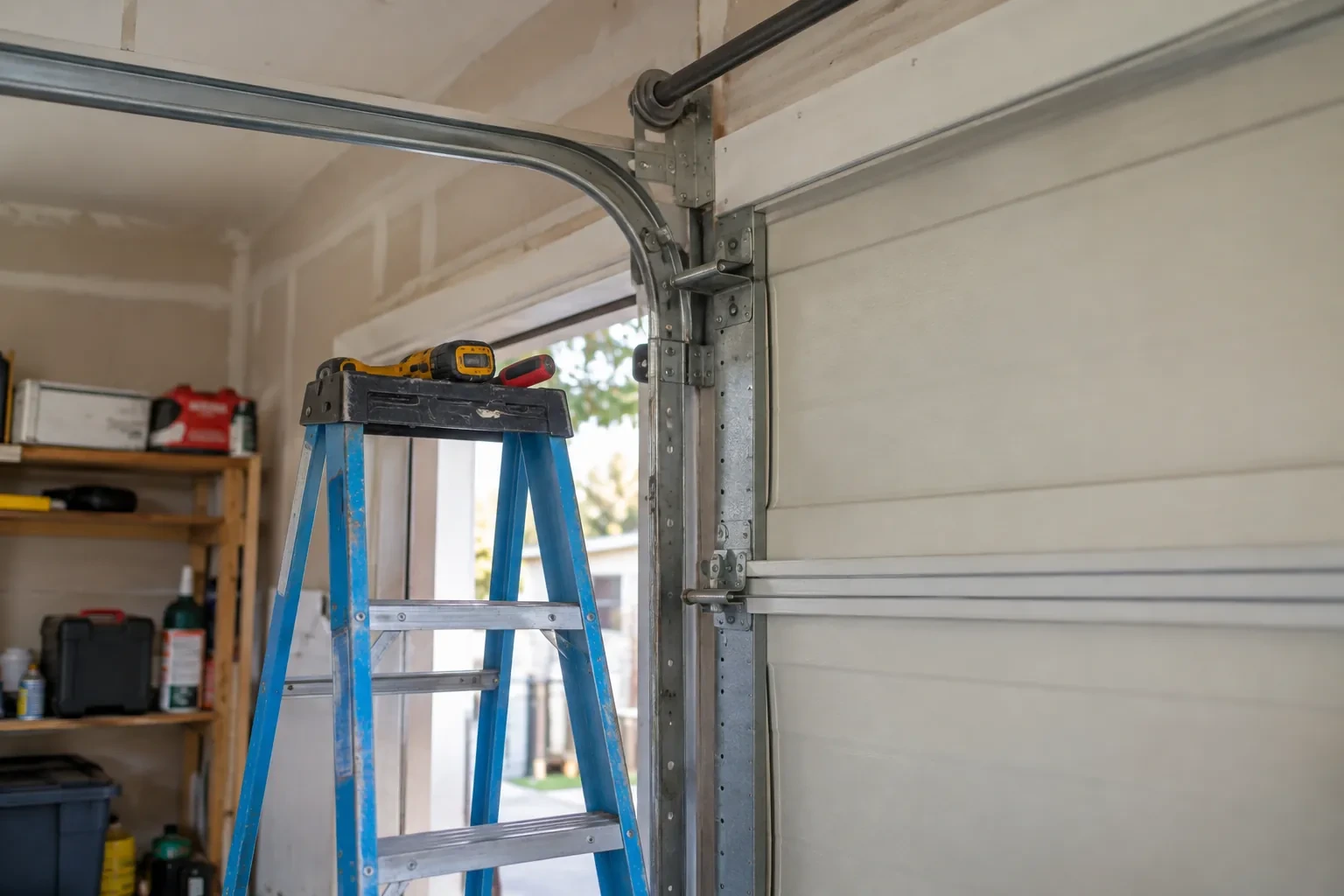
One control or all of them?
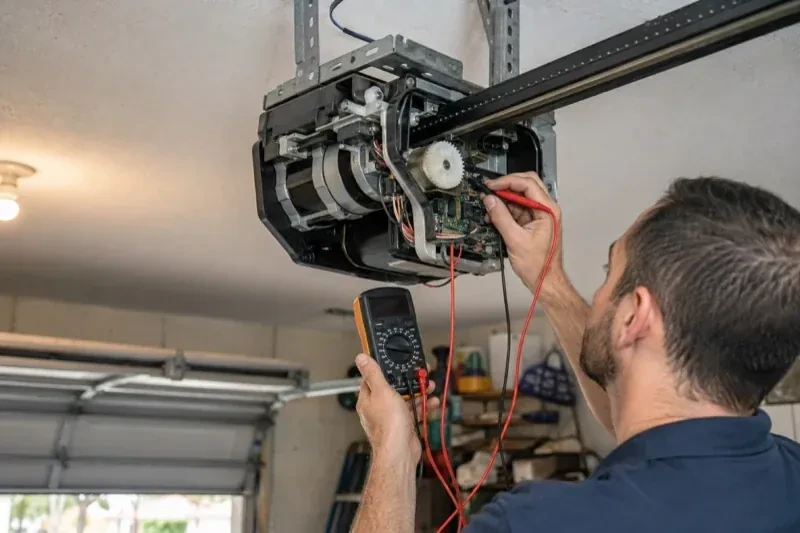
The pattern of failure points to the cause. When a single remote has gone quiet and the rest work, the trouble is inside that remote: a flat cell, corroded contacts, a worn button or a lost pairing. When every wireless control fails together while the wall button works, the technician looks at the opener's side: lock mode, a cleared memory, an antenna pushed into the housing, interference from bulbs, or a receiver that has stopped listening. A known-good remote from the truck is tried against the unit to settle the question. Sorting this early keeps the fix aimed at the right end of the radio link.
Setting up the outdoor keypad
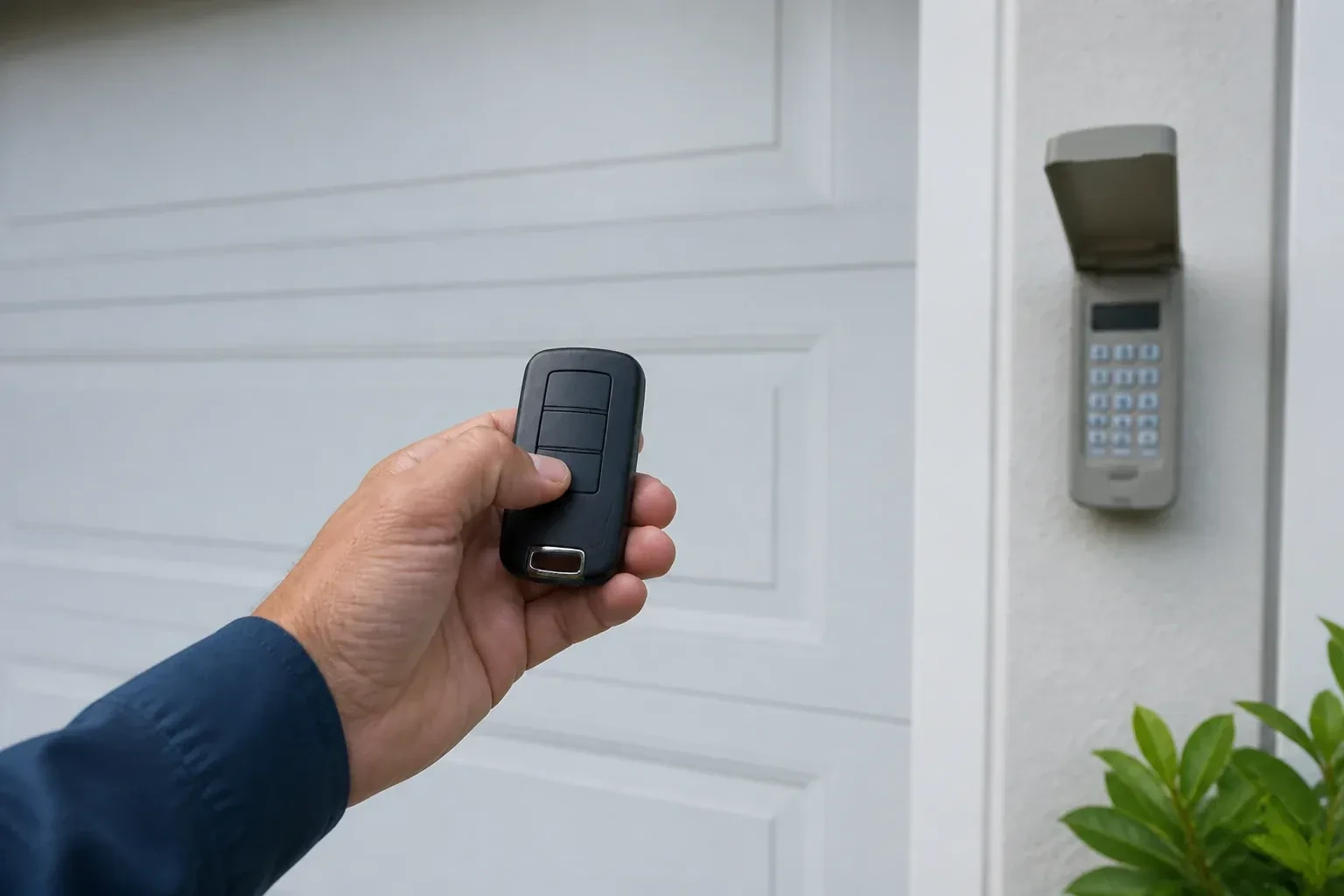
The keypad is programmed on the bench before it goes on the wall. Fresh cells of the specified type are fitted, the keypad is put into its programming mode, and the code the household chose is entered, four digits on many models and up to eight on others. The opener's learn button is pressed and the code is confirmed at the keypad until the door moves. Where the model allows, a temporary code for a cleaner or a visitor is set to expire after a chosen number of hours or openings. The keypad is then mounted beside the door at a height a child cannot reach, with the door in plain view.
Adding a control yourself next time
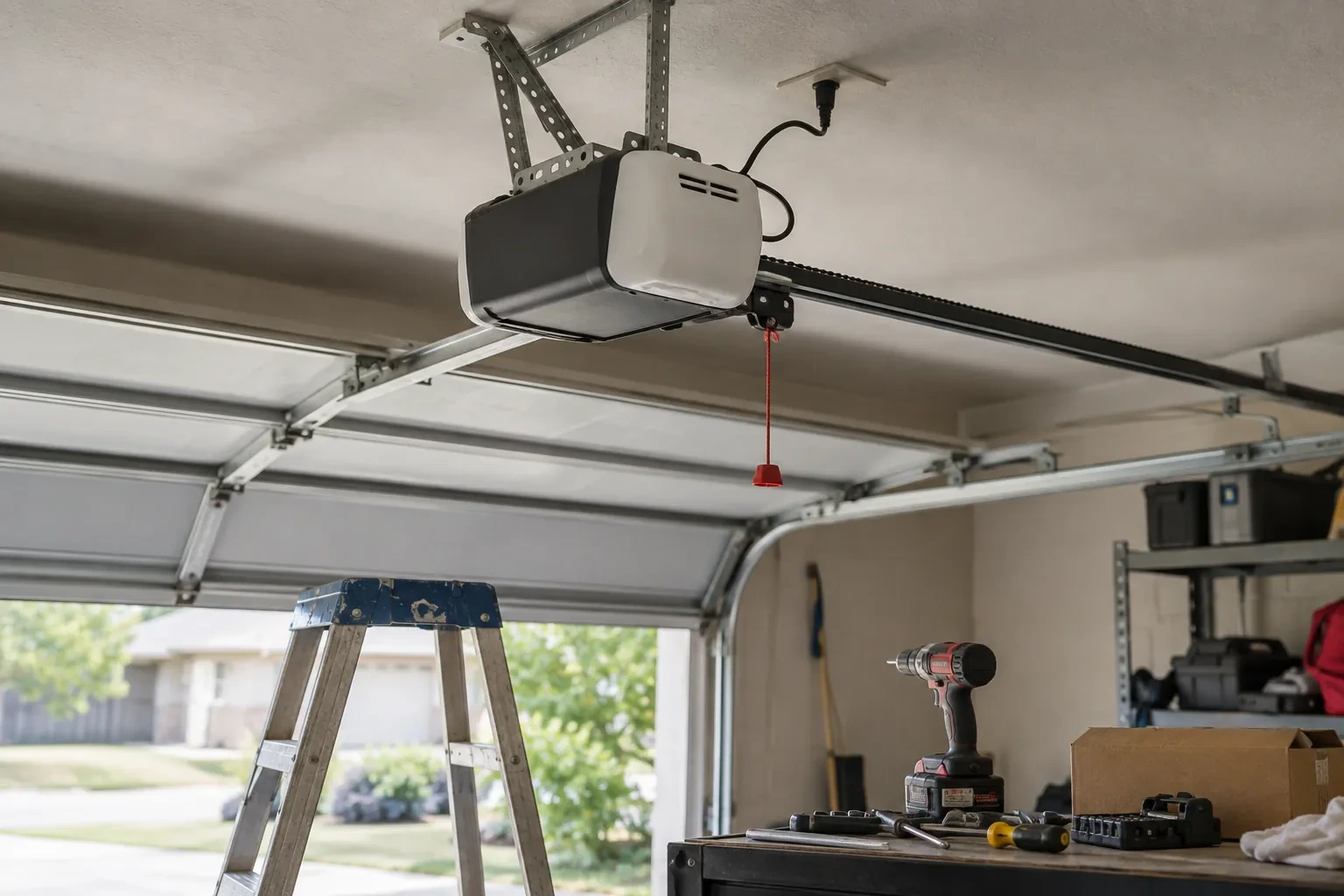
Because you watched the pairing, you know where the learn button lives under the light cover, what a short press does and, just as importantly, your opener's own erase sequence. Confusing the two is the cause of many surprise lockouts. You have the compatibility details for your opener written down, so the next remote you buy is the right generation, and you know that unplugging the opener during a long absence does not erase anything. Most households can add a remote themselves after seeing it once.
Garage Door Remote and Keypad Programming
In the van
Keypad mounting screws and anchors
In-vehicle compatibility bridge module
Low-interference replacement bulbs
Universal multi-generation remote
Receiver transformer and two-conductor wire
Garage Door Remote and Keypad Programming
What affects the quote
Shared or managed building
In a condominium or rental building, coordinating with the property manager and working on a common door adds steps to the visit.
Add-on receiver for an older opener
Converting a fixed-code opener means a receiver kit, wiring to the wall-button terminals and new remotes, quoted as an upgrade rather than a programming call.
Number of controls
Each remote, keypad and vehicle button is programmed and tested individually, so a single replacement remote and a household with three cars, two keypads and a gate are different visits.
What to have ready
- Are you adding a control, replacing a lost one, or starting fresh after a move?
- Have the bulbs in the opener been changed to LEDs recently?
- Does the wall button move the door normally right now?
Garage Door Remote and Keypad Programming: questions
QuestionsWhy does my remote work only when I am right under the door?
Short range is a signal problem, not a pairing problem. LED bulbs in the opener's own sockets can emit radio noise that swamps the receiver, an antenna wire tucked into the housing cannot hear well, and a coin cell near the end of its life transmits weakly before it dies. Swapping the bulb, letting the antenna hang free and fitting a fresh cell usually restore range; if not, the receiver is checked.
How many remotes can one opener store?
It depends on the unit. Older head units and add-on receivers hold a handful of devices, often fewer than ten, while newer openers store dozens of remotes, keypad codes and vehicle buttons. When a memory is full, the oldest entry may be overwritten or the new device refused. Taking stock of which controls are still in use, and clearing the ones that are not, keeps space for the devices that matter.
The wall button works but none of the remotes do. Is that a programming job?
Sometimes, but the technician rules out two things first. Lock mode on the wall control tells the opener to ignore every remote, and gives itself away by a steadily blinking wall indicator and two flashes of the opener light whenever a remote is pressed; holding the lock button releases it. A memory cleared by a long press on the learn button is the other cause, and that one is a programming job.