Springs · London
Garage Door Hinge Replacement
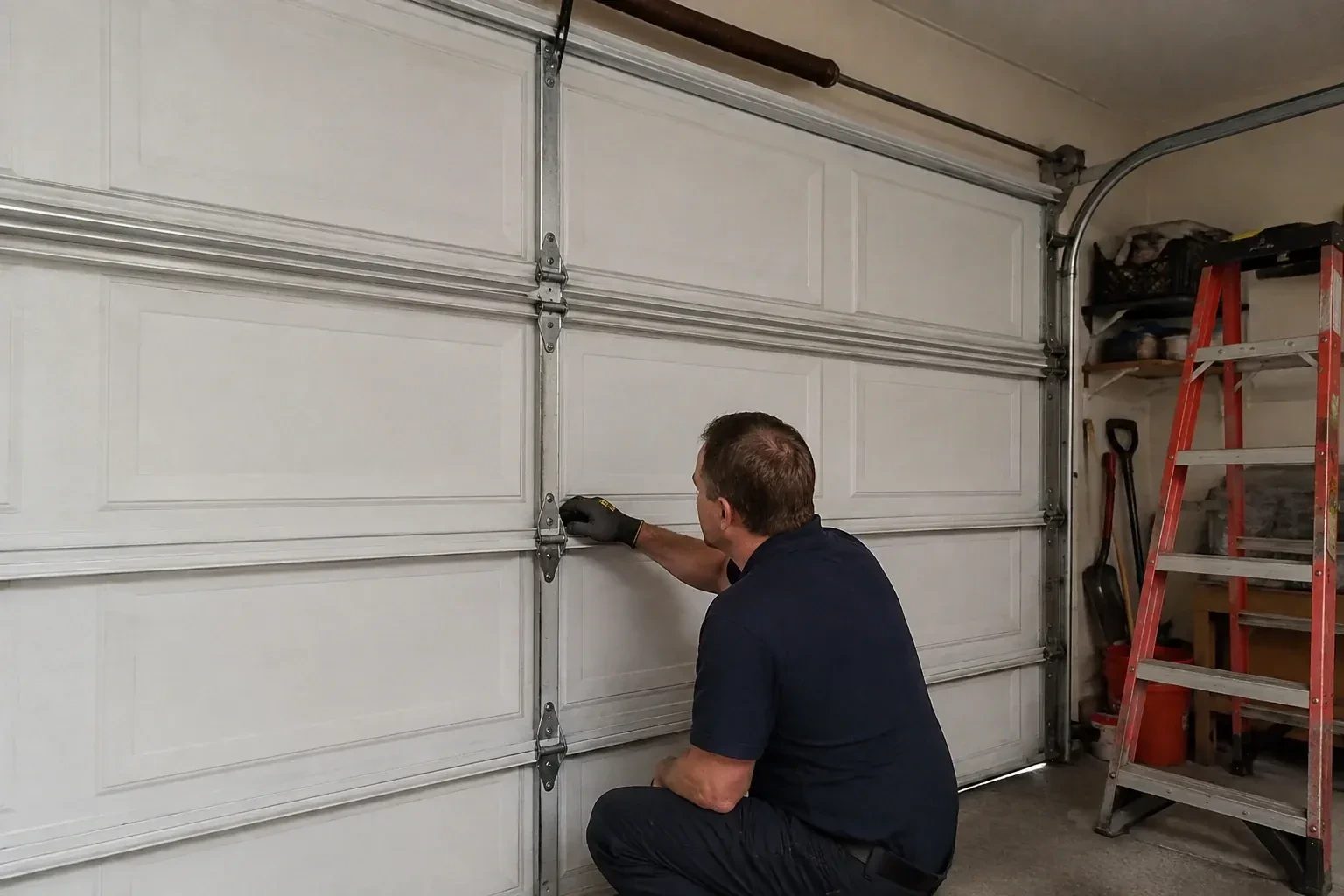
Pressing a hand against one of the middle hinges makes it rock on the panel.
In plain words
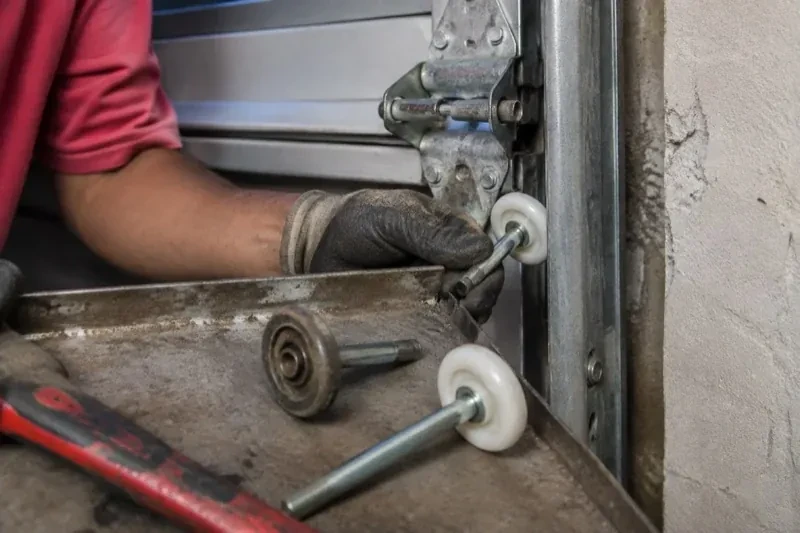
Not every hinge on the door is the same part. The edge hinges are numbered: 1 at the joint above the bottom panel, then 2, 3 and sometimes 4 or 5 going up. Each number stands the roller a little further off the door face, which is what lets the door lean snugly against the jambs when closed even though the tracks angle away from it. Centre hinges carry no roller and share the geometry of a 1. Reading the stamped number on the old hinge, or counting the joint from the floor, is how the replacement is chosen so the door keeps sealing evenly along both sides.
How the visit goesThe car nudged the door on the way in. There is a dent low on one end, and above it the hinge that carries the roller is bent so the panel edges rub together and squeal as the door lifts.
Garage Door Hinge Replacement
How the visit goes
The holes and the stile behind them
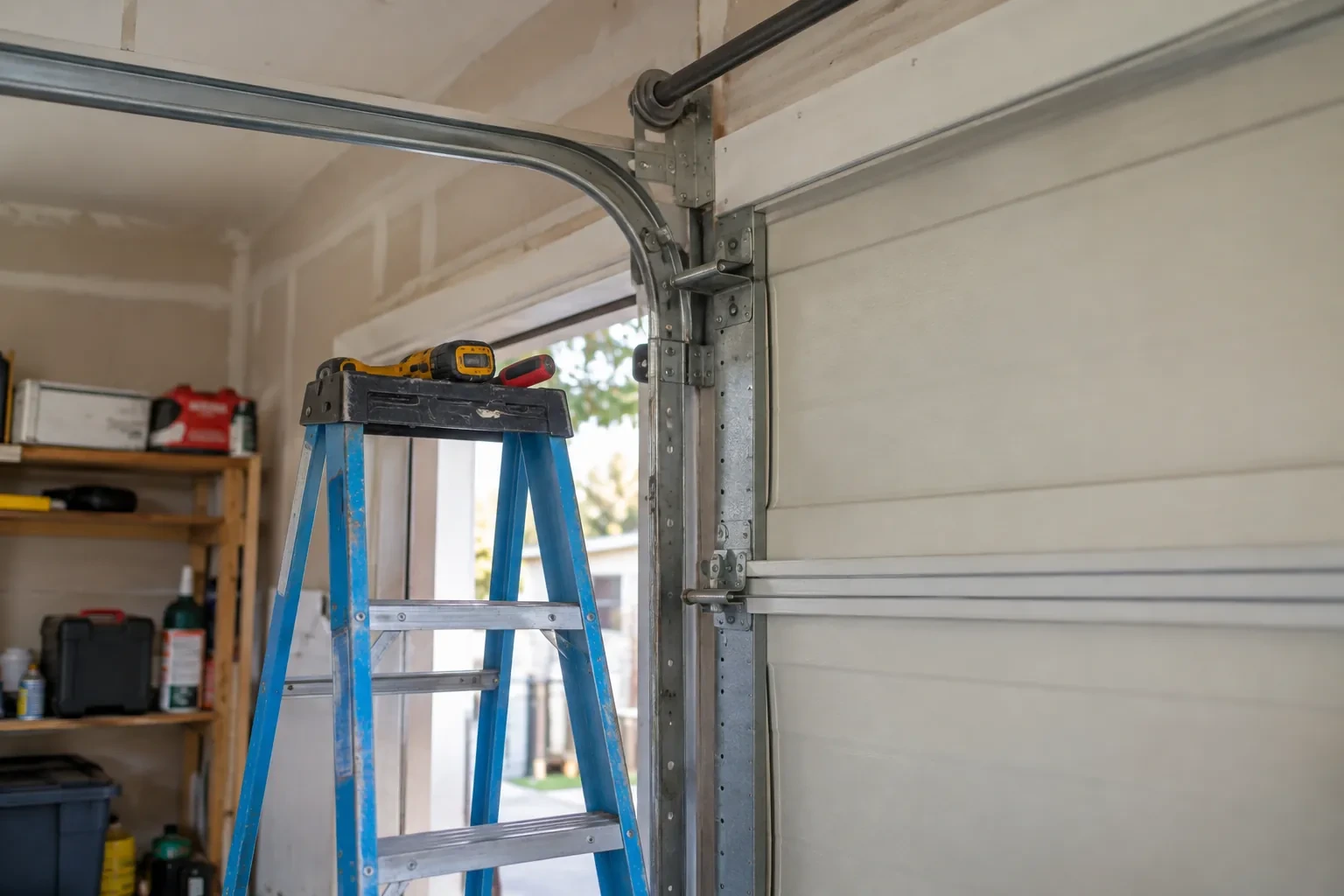
A hinge only holds if its fasteners do. The technician tests each screw for grip and looks at the stile it threads into: the folded steel channel at the panel edge on a steel door, the hinge support plate behind the skin where one is fitted, or the solid timber of a wood door. Holes that have stretched, rusted or torn are noted, because a new hinge on a stripped hole rocks just like the old one. Where the metal is thin or the wood is soft, the plan changes from screws to a through-bolt with a nut and washer, or a backer plate that spreads the load across fresh material.
Fresh anchoring for tired holes
Where screws spin or a hole has torn, the fix is a better anchor. The technician chooses from three approaches. First, shift the hinge slightly to sound metal within the stile, where the hole pattern allows it. Second, step up to a larger self-drilling screw that bites fresh threads in the existing hole. Third, drill through the panel and fit a bolt with a nut and washer, or a backer plate across the inside of the stile, so the load spreads across fresh material rather than a torn edge. On a wood door, a split stile is filled or reinforced before the hinge goes back on.
A monthly look from the inside
The maintenance checklist the door industry publishes asks homeowners to check hinges, brackets and fasteners visually from inside with the door closed, once a month. Stand where you can see both ends of the door and follow each joint with a flashlight: a screw head that stands proud, a hinge leaf lifted off the panel, a fresh crack spreading from a hole, or a rust stain running down from a knuckle. Then watch the door open and confirm the rollers stay in the track. Anything you spot is a small job at that stage. The whole check takes about a minute.
Garage Door Hinge Replacement
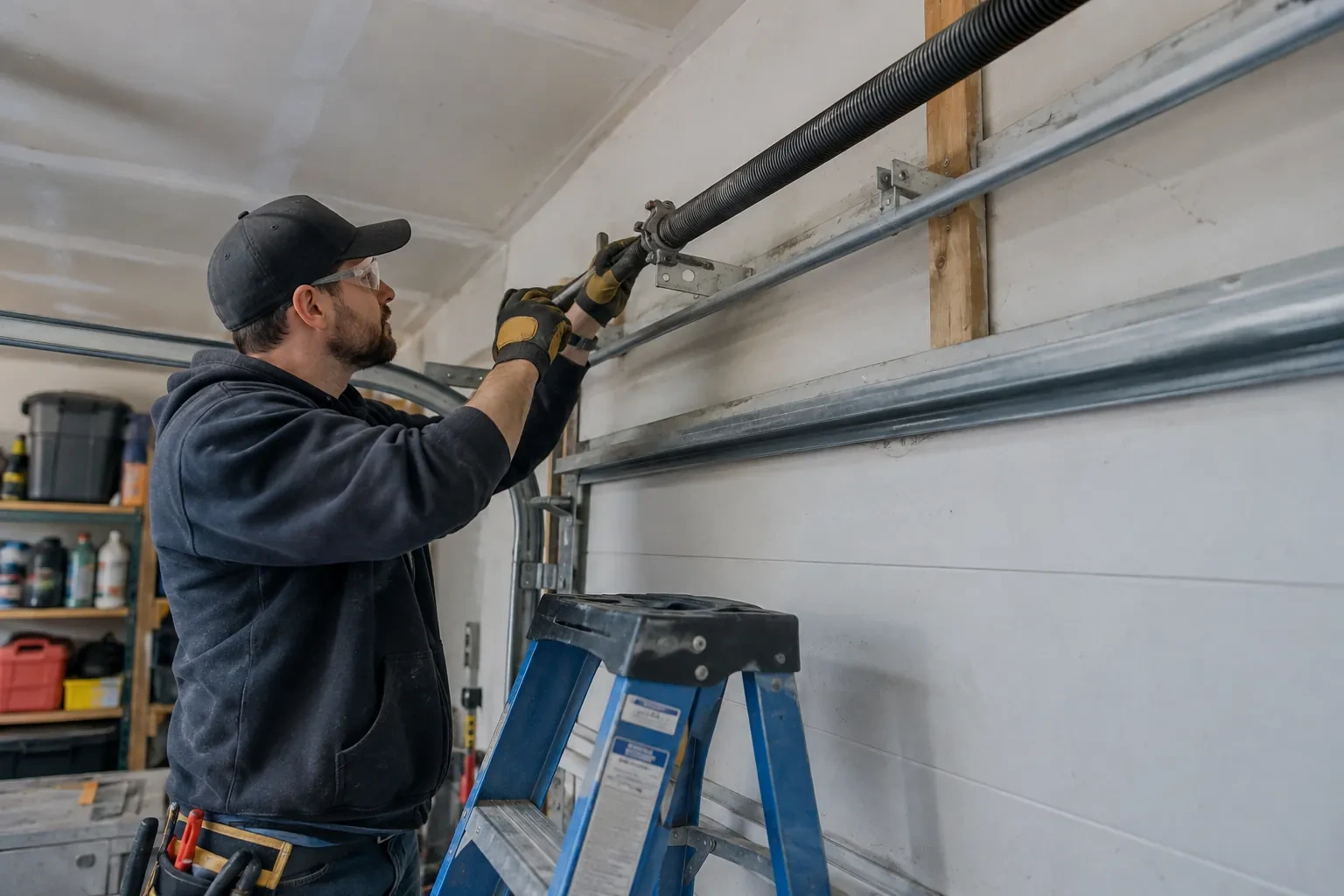
In the van
Replacement rollers
Heavy-gauge hinges for heavy doors
Hex-head self-drilling screws
Carriage bolts, nuts and washers
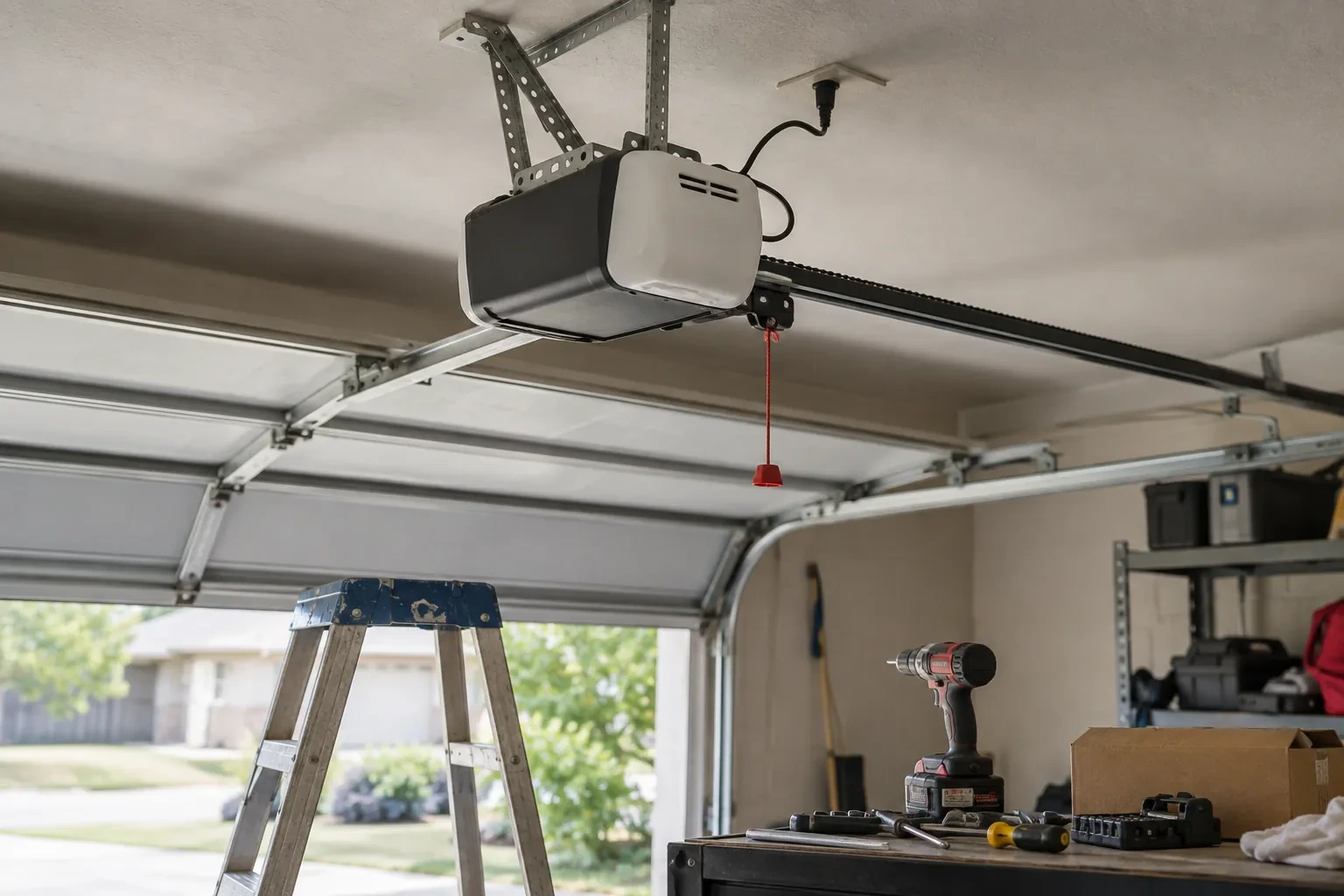
Socket set and impact driver
Garage Door Hinge Replacement
What affects the quote
Gauge and grade of the replacement
Standard 14-gauge hinges are priced differently from heavy 11-gauge parts, and moving a heavy insulated door up a gauge is an upgrade named as its own line in the quote.
Access to the door
Shelving against the door, a car that has to stay inside, or a tall door that needs a stepladder for the upper joints all affect the time quoted.
Supporting the panel while hinges are changed
A heavy insulated panel needs to be braced while its hinges are off, so it does not sag or twist out of place mid-repair. Lighter steel or wood panels usually need no extra support, and the technician decides which applies once the panel is in front of them.
What to have ready
- Has a car, bin or anything else bumped the door recently?
- Is the door steel, wood or insulated steel?
- Is the door a single or a double, and how many panels does it have?
Garage Door Hinge Replacement: questions
QuestionsHow long do garage door hinges last?
Many hinges last the life of the door. Those that fail early are usually on doors that were out of balance, had seized rollers, saw heavy daily use, or sat in slush and salt through many winters. A light hinge on a heavy door also wears sooner. Rather than a fixed number of years, watch for cracks near the holes, a rocking pin, rust at the knuckle and screws backing out.
What are the hinges made of?
Stamped galvanized steel, formed into two leaves joined by a pin or a rolled tube. The zinc coating is what resists rust in a garage that sees wet cars and salt, and it is why a scratched or bent hinge starts to brown at the damaged spot. Edge hinges include a tube that holds the roller stem. Thickness is given as a gauge, most residential hinges being 14 or 18.
Can I keep using the door until the hinge is replaced?
It is better to leave the door closed and use another way in and out. A joint with a failed hinge flexes more on every trip, which strains the neighbouring hinges, can pull a roller out of the track and can crease the panel itself. If the door is already open or stuck partway, leave it where it is rather than running the opener again. A closed, still door is what the technician hopes to find.
Related services
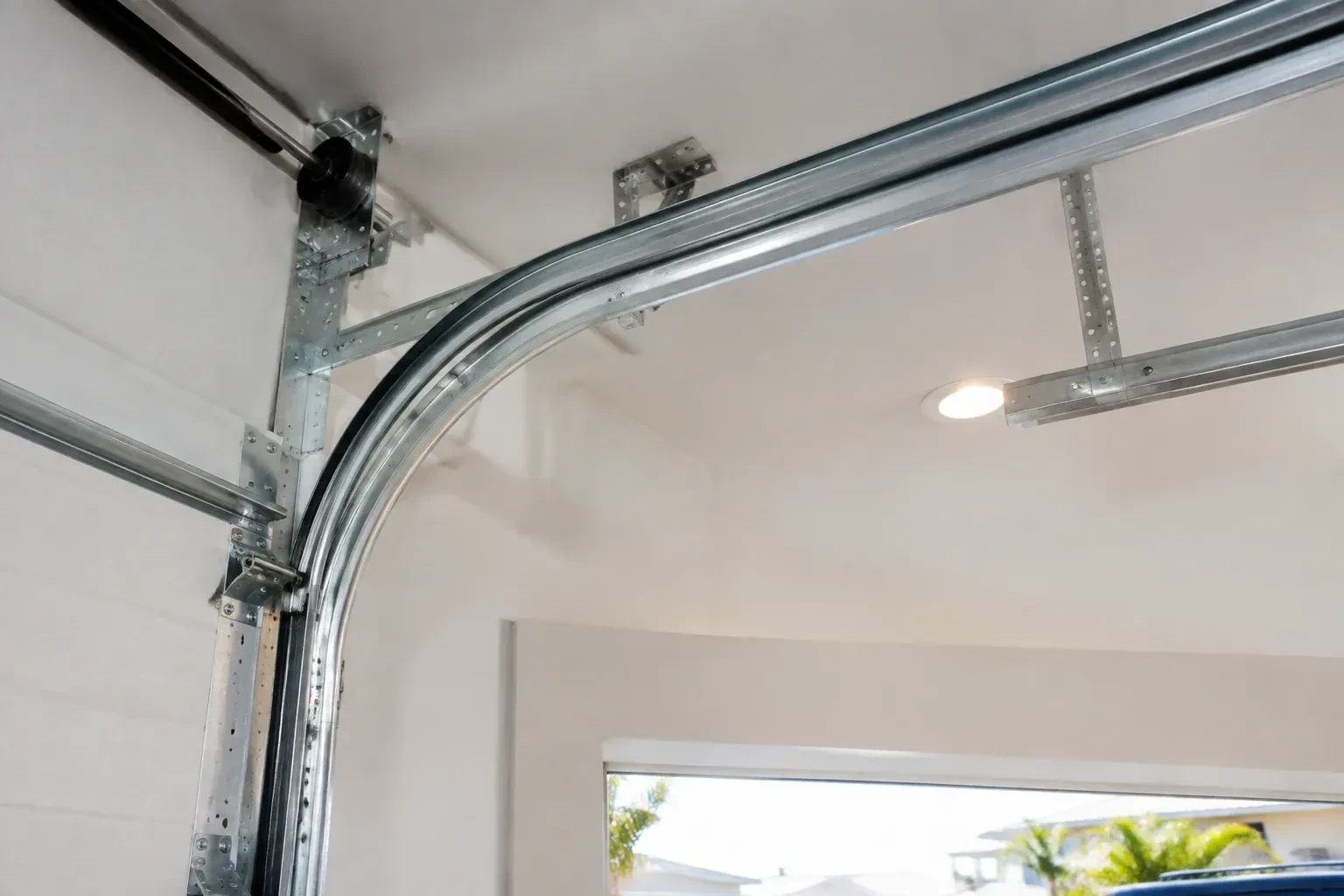
- Garage Door Track Repair or ReplacementAfter a decade of slushy winters the bottom foot of the track is flaking rust.
- Garage Door Cable ReplacementThere was a sharp crack from the garage, and when you went to look the door had dropped on one side and jammed.
- Torsion Spring ReplacementThe door drops the last stretch to the floor rather than settling, and when you stop it halfway by hand it slides down instead of staying put.