Repairs · London
Off-Track Garage Door Reset
The morning after a thaw the opener groaned, the door stayed stuck to the icy floor for a second, then lurched up crooked.
In plain words
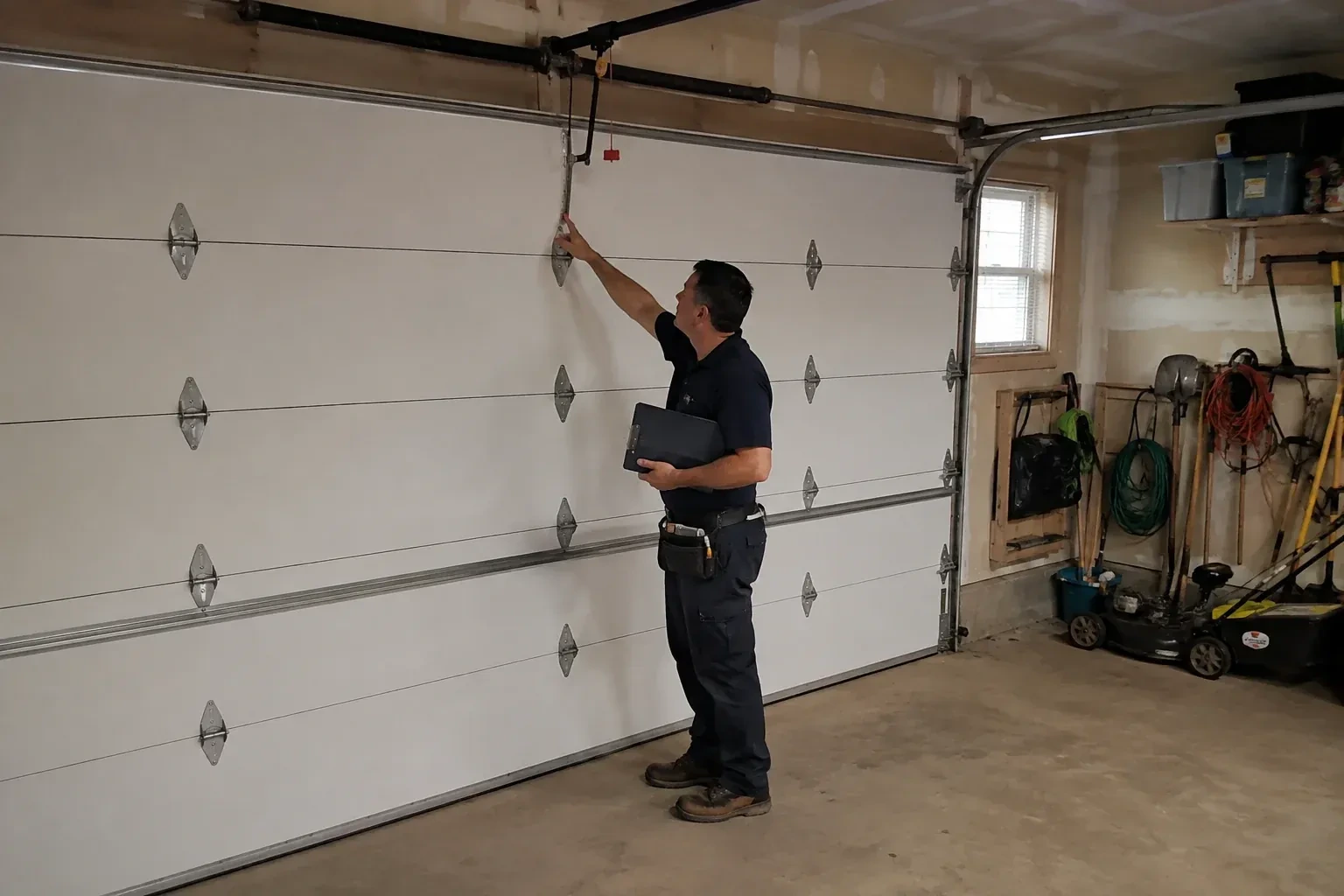
Off-track doors are really two problems in one, and the reset addresses both. The first is the visible one: a roller outside its rail and a door out of square. The second is the cause, which is often a slack or broken lifting cable, a worn roller, a bent hinge or a track bracket that has let go of the wall. Putting the roller back without fixing the cause invites a repeat within weeks. So the visit pairs the re-seating work with a whole-system check of cables, drums, springs, hinges, brackets and track geometry, and replaces the piece that started the trouble.
How the visit goesThe door came down fine but with a scraping noise, and now the vertical track on one side is bowed away from the wall. Two screws have pulled out of the wood and the roller nearest the floor has no rail around it.
Off-Track Garage Door Reset
How the visit goes
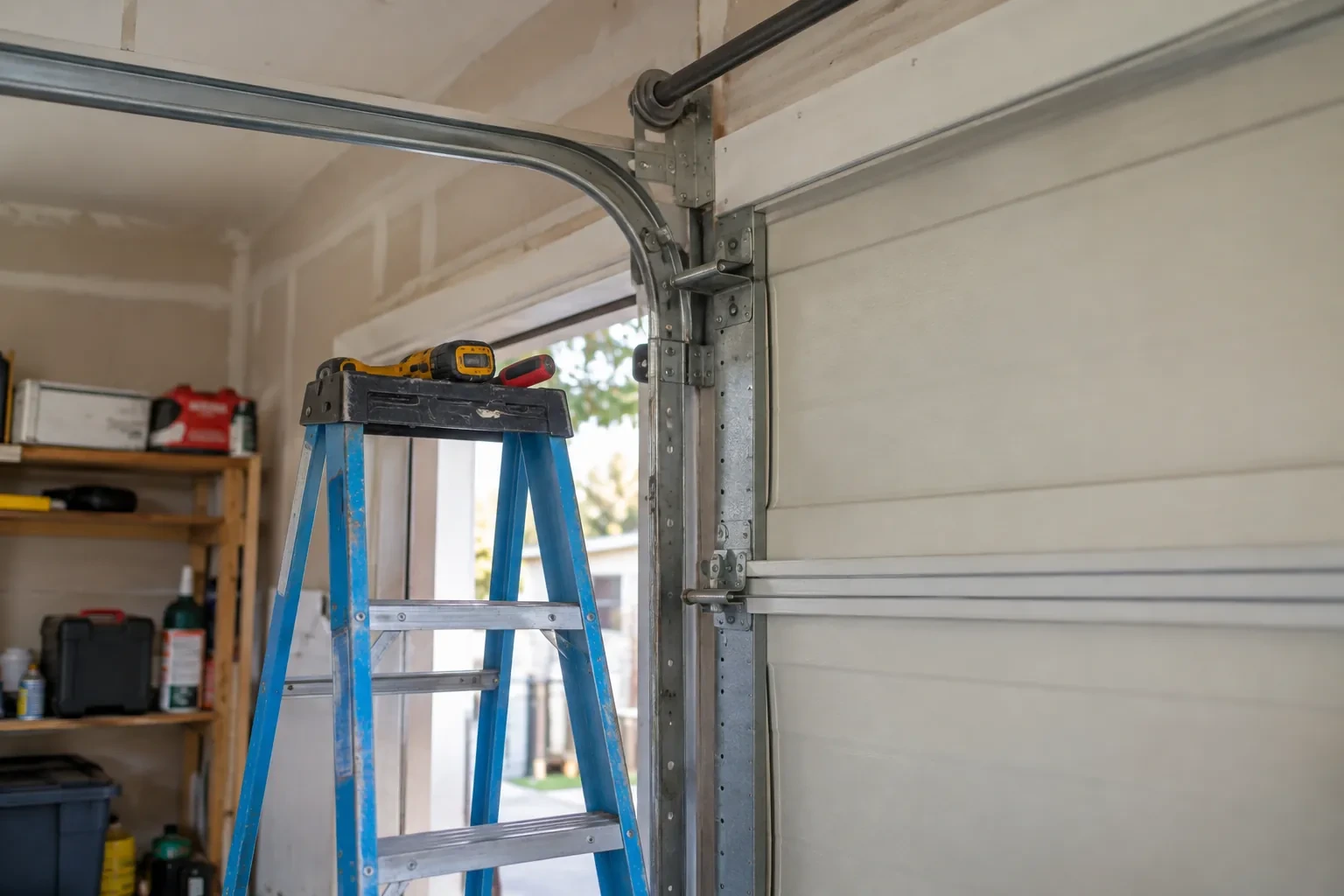
Sections, stiles and hinges after the twist
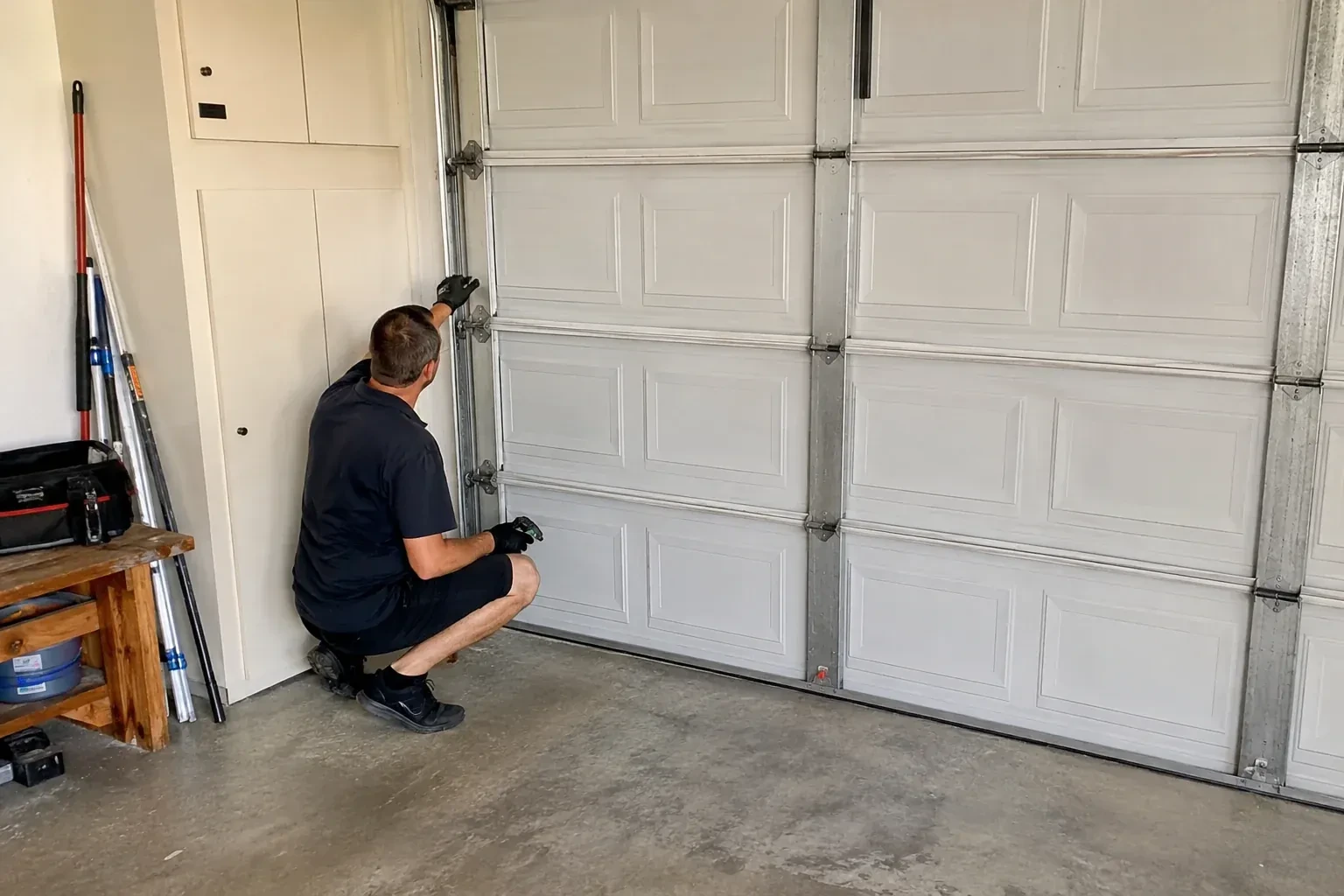
A racked door puts sideways force on parts that only ever expected to move up and down. The technician inspects each graduated edge hinge for bending, each end stile for cracks around the hinge screws, the bottom brackets for distortion and the top fixtures for a stem that has been pushed out of line. Steel sections are checked for creases at the roller positions and wood doors for splitting around hardware. This check separates a door that needs a straight reset from one that needs a hinge or bracket replaced first, so that the rollers go back into a section that can actually hold them.
Extension-spring doors have their own sequence
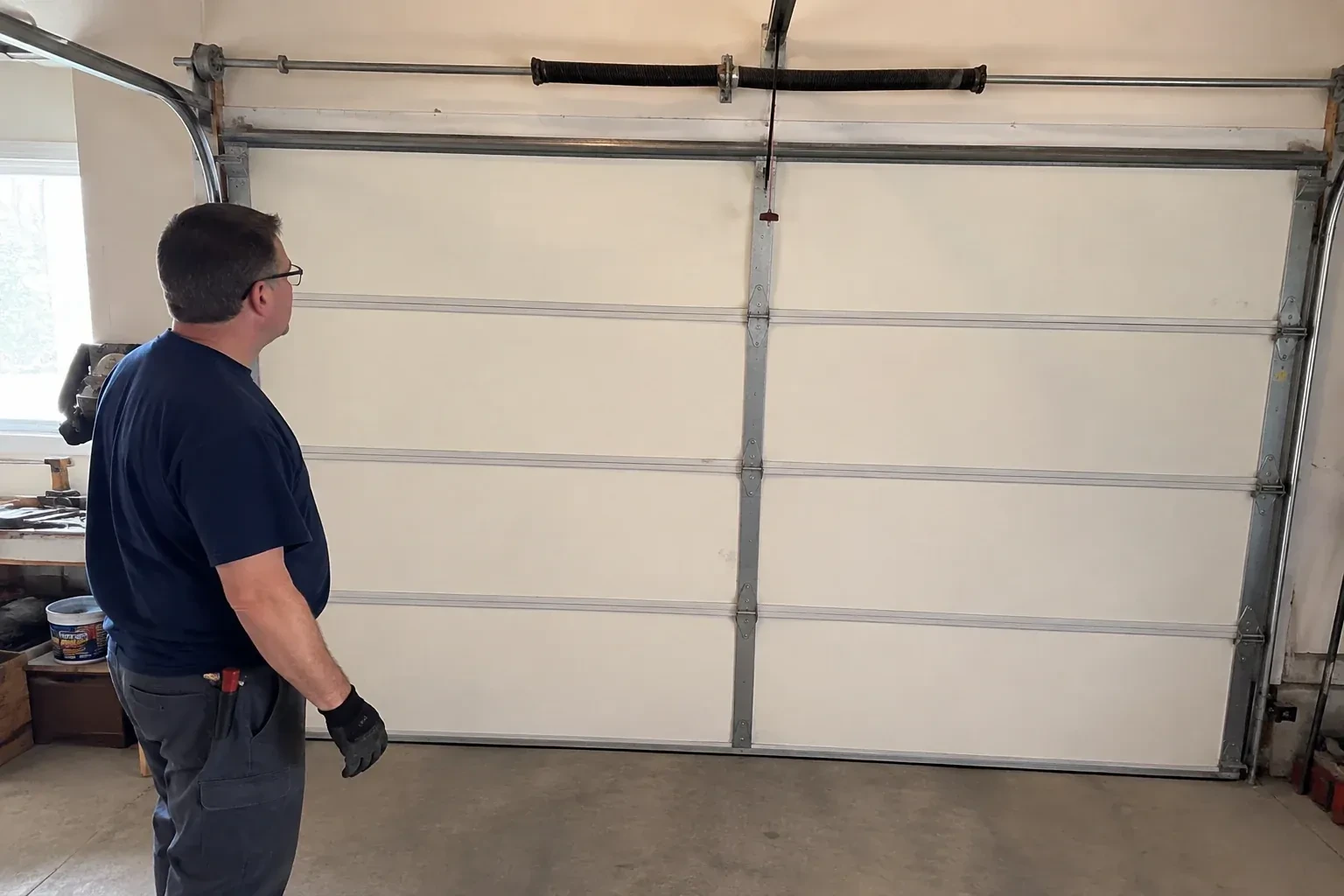
Doors with springs stretched along the horizontal tracks are handled differently from torsion doors. The door is raised fully and clamped so the springs relax, then the cables are traced over their pulleys and the sheave forks and cable clips inspected. A containment cable is fitted through each spring if none is present. Rollers are re-seated with the door open, and the cable lengths are adjusted at the three-hole clips so that both sides lift together. Only then is the door lowered by hand, slowly, watching every roller stay in its rail, and the balance checked at the halfway point before the opener is involved.
The warning signs worth acting on
Doors rarely leave their tracks without notice. A door that starts closing with one corner touching down first, a cable that looks looser than its partner, a new squeal or grinding at the curve, a section that shudders as it passes the top of the track, or an opener that suddenly needs more force are all early signs. Each of them is a small adjustment when caught, and a reset when ignored. After the visit you know what the door sounded and looked like when it was right, which makes the change easy to spot. Calling at the first sign keeps the job to rollers or a bracket.
Off-Track Garage Door Reset
In the van
Vertical or horizontal track section
Level and plumb line
Garage-door silicone lubricant
Lifting cables, matched pair
Torsion spring winding bars
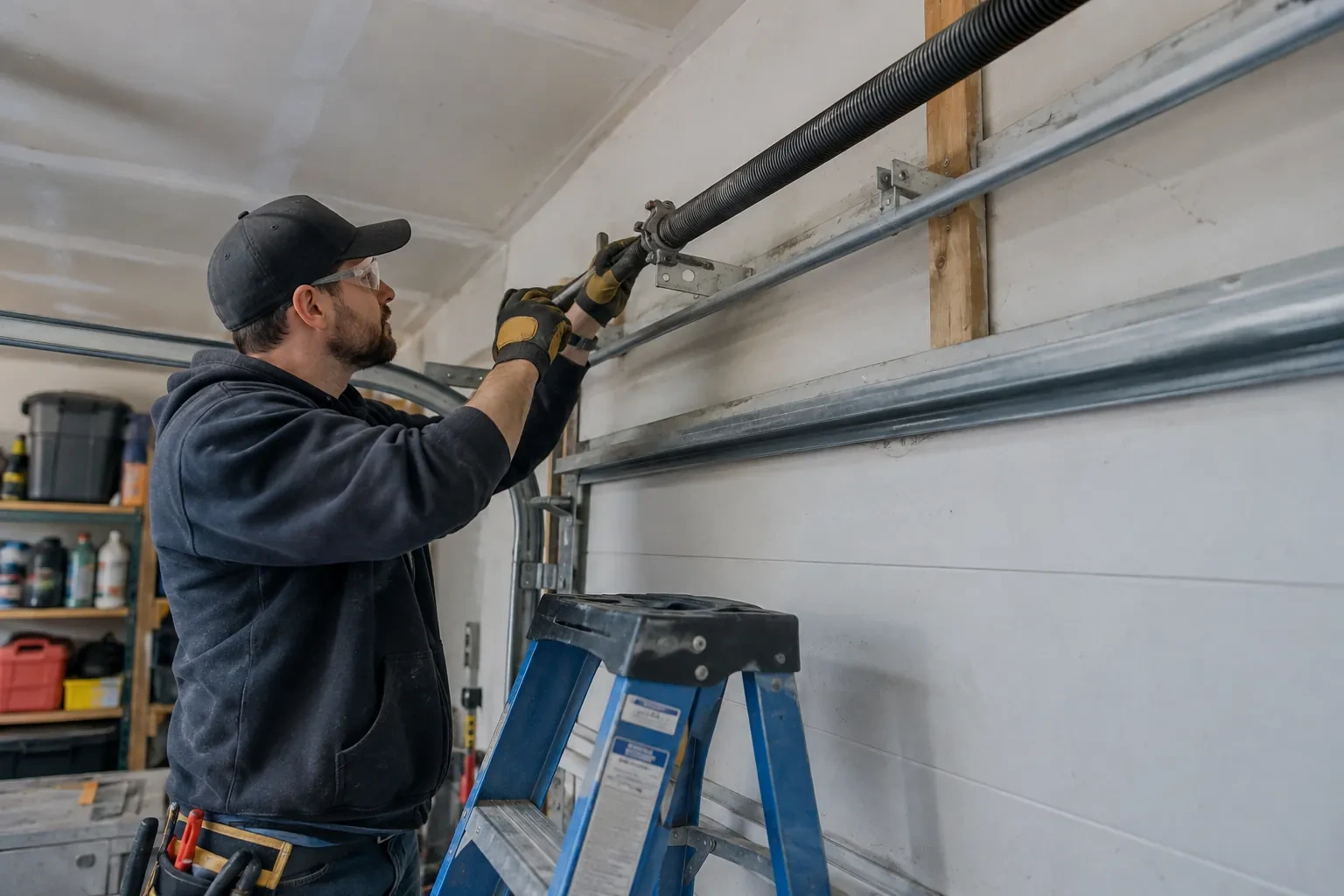
Off-Track Garage Door Reset
What affects the quote
Whether the cables are involved
A cable that simply jumped its drum is rewound; one that is frayed or broken is replaced along with its partner, and the springs are unwound and rewound to do it. Each step is listed separately.
Spring condition found during the check
If the springs are broken, badly worn or mismatched to the door, they are quoted as their own job. You choose whether to do that in the same visit, and the reset itself stands on its own.
Hinges, brackets and fixtures bent in the event
A twisted bottom bracket, a bent graduated hinge or a distorted top fixture is replaced rather than straightened. Each one is a small part but is priced and listed on its own so you see what was changed.
What to have ready
- Roughly how old is the door, and when was it last serviced?
- Is one side of the door hanging lower than the other?
- Did a vehicle or anything else bump the door before this happened?
Off-Track Garage Door Reset: questions
QuestionsMy door has springs along the sides, not above it. Is the reset the same?
The principle is the same but the sequence differs. With side springs the door is first opened all the way and clamped, because that is the position where the springs carry no load; the cables are then checked over their pulleys and evened up at the clips. The technician also checks that a containment cable runs through each spring, which stops a broken spring flying across the garage, and fits one if it is missing.
Are the springs involved in an off-track door?
Frequently, in one of two ways. Springs that are worn, broken or mismatched to the door's weight make the opener carry a load it was never meant to, dragging the sections out of line. And whenever cables must be re-seated or replaced, the spring tension has to be released and rewound to do it. The technician assesses the springs at the start and tells you whether they are part of the fix.
Why does the door need a balance test after being reset?
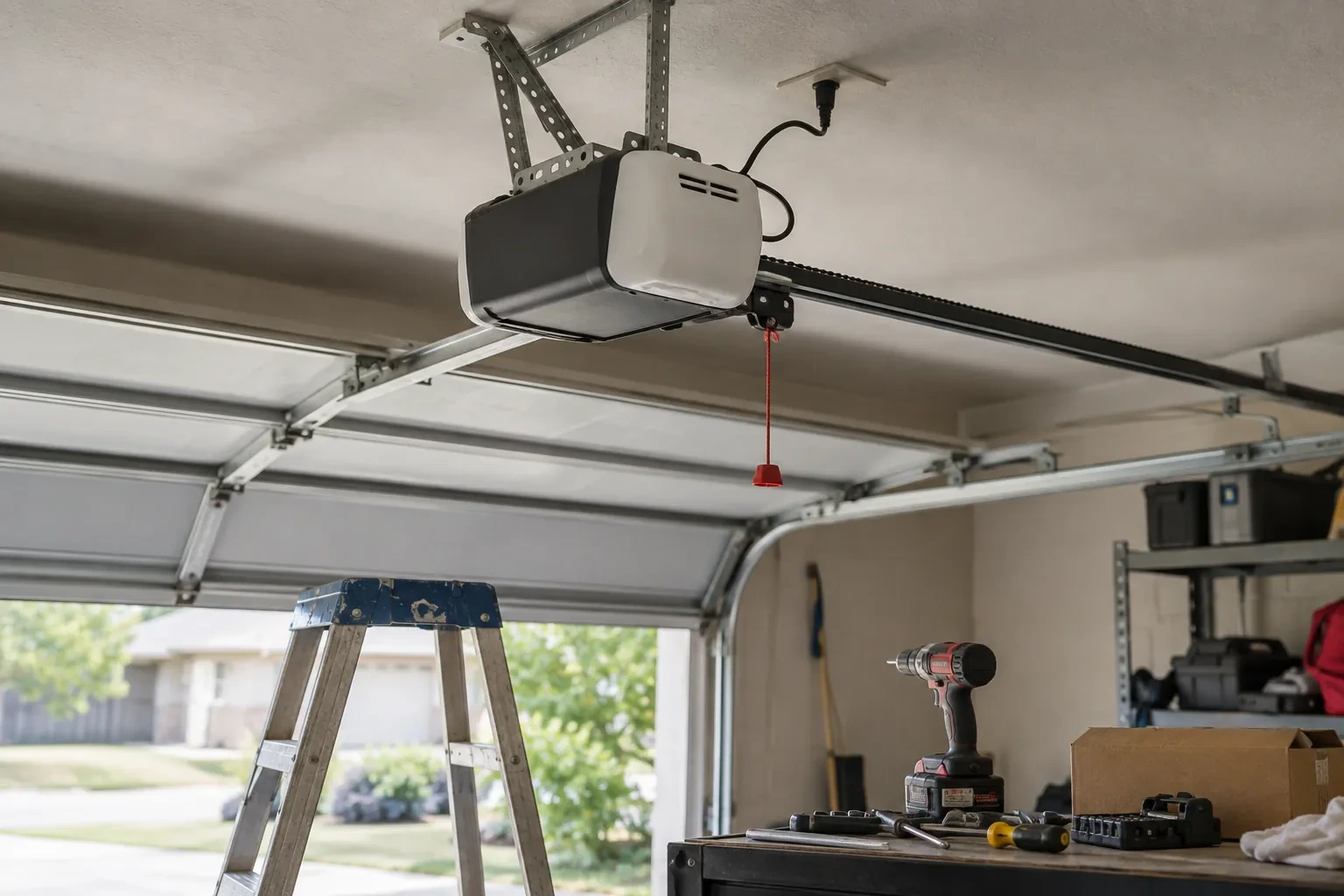
Balance shows that the springs are carrying the door's weight so the opener only guides it. After a reset the door is disconnected from the opener, raised by hand to the halfway point and released; a balanced door holds there with little drift. If it falls or shoots up, the counterbalance needs adjusting before the opener is reconnected, otherwise the motor strains and the rollers are pushed out of line again.