Repairs · London
Garage Door Manual Lock Repair
The outside handle wobbles in your hand and the inside knob spins round and round with nothing attached.
In plain words
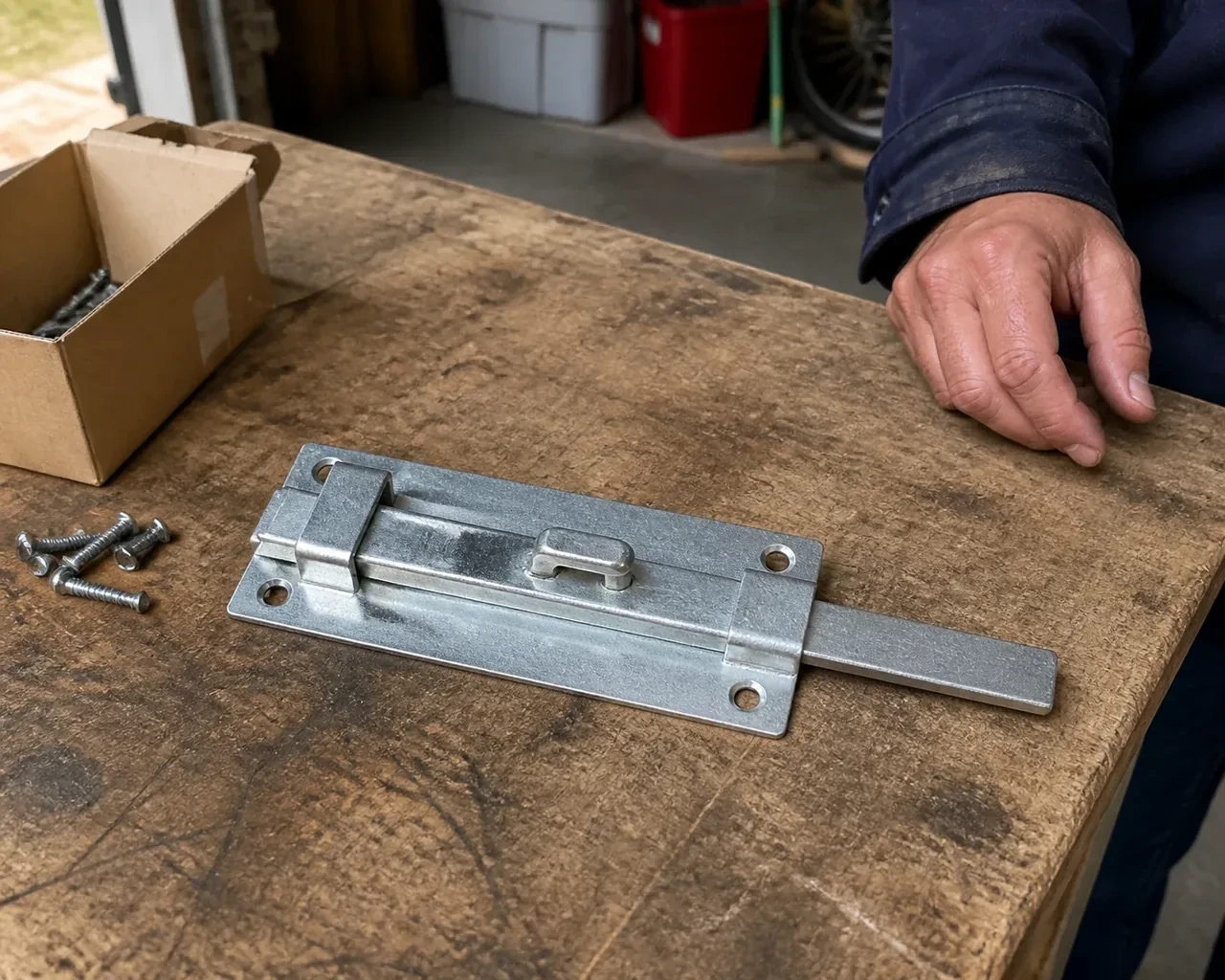
A sectional garage door is usually locked in one of two ways. An inside slide bolt on the door's edge shoots sideways into a slot cut in the vertical track. An outside keyed T-handle or L-handle turns a centre mechanism that throws a bar into each track, or on some models pulls a cable to release spring latches instead. Manual lock repair puts either arrangement back into service: the technician confirms the door closes fully and sits square, then frees, adjusts or replaces the bars, guides, lock body, handle or cylinder, and tests that the lock holds firmly and, just as important, clears the track completely when it is released.
How the visit goesThe outside handle wobbles in your hand and the inside knob spins round and round with nothing attached. The screws that held the lock through the door skin have pulled loose, leaving oval holes, and the whole thing hangs on by little more than paint.
Garage Door Manual Lock Repair
How the visit goes
Which lock the door actually has
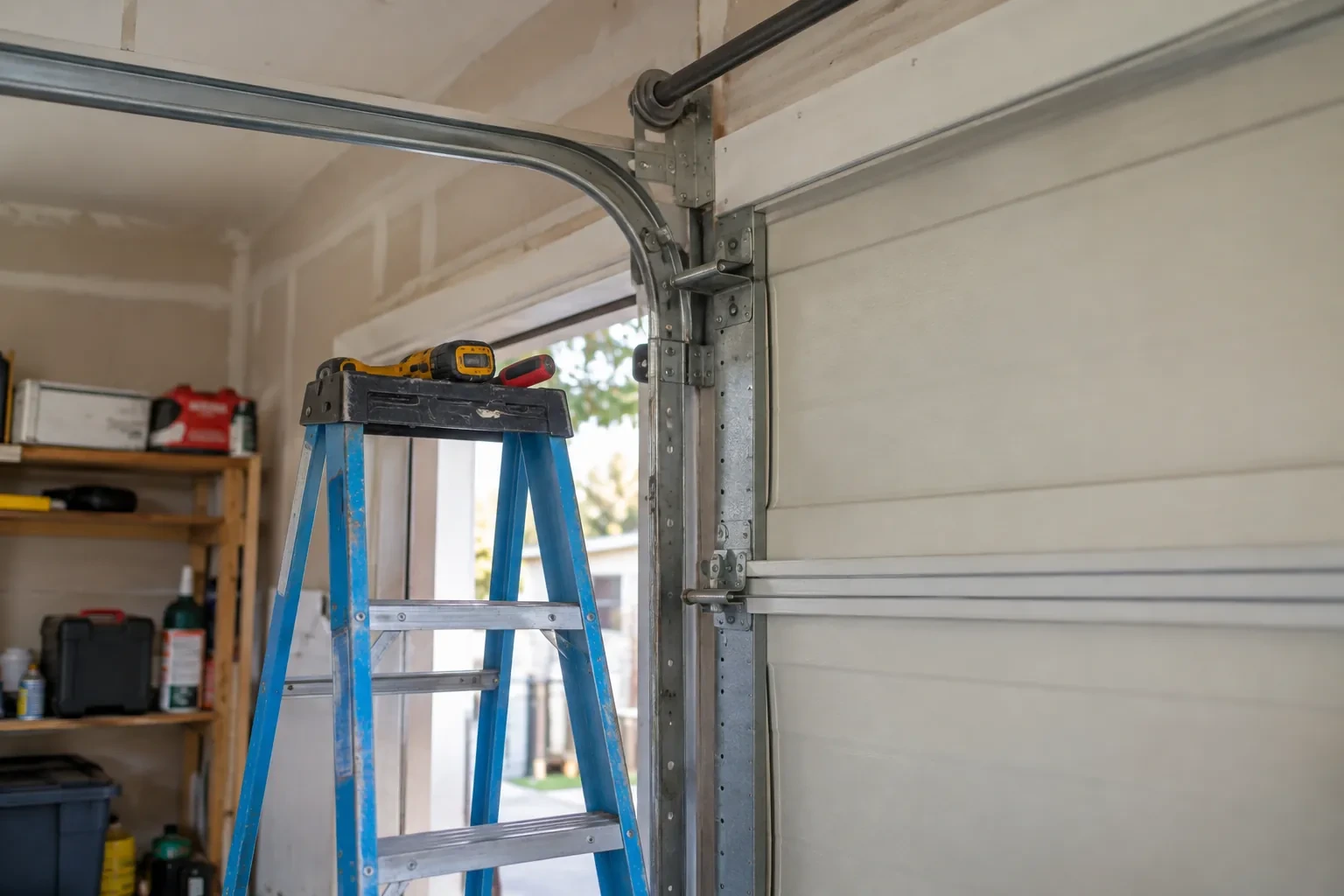
Garage doors carry a few different locks and the first job is to name the one in front of the technician. An inside slide bolt is a short bar on the door's edge that shoots through a slot in the vertical track; some are snap latches that lock on their own when the door closes. An outside keyed T-handle or L-handle works a centre mechanism that throws a bar into each track, or on some models pulls a cable to release a spring latch at each side. Some doors have a keyed cylinder on the side that operates the slide bolt from outside. Each has its own parts and failure points, so naming it correctly sets up everything that follows.
Anchoring the lock in tired material
A lock is only as sound as what it is screwed to. Where screws have pulled through a thin steel skin and left oval holes, the technician fits carriage bolts through the section with a backing plate on the inside, spreading the load across a wide patch of metal. On a wooden door with softness around the handle or along the stile, the decayed wood is cut back and a hardwood filler block or backing plate is let in, and the lock and guides are fixed to that. Holes that have grown are plugged and redrilled. The result is a handle that turns without rocking and guides that hold the bar where it was set.
Other ways to secure the door you now know about
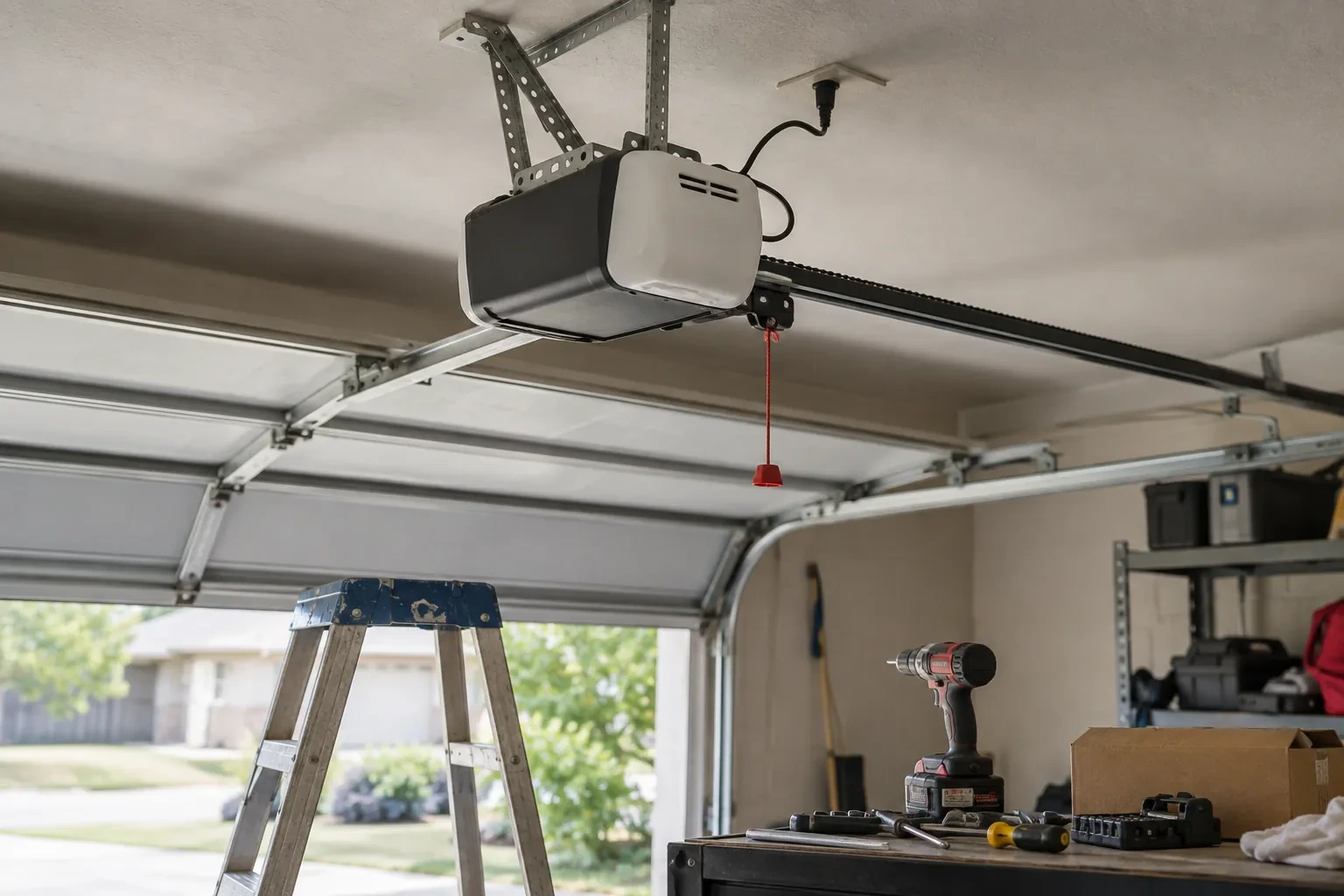
The alternatives to a manual lock are worth knowing. Most wall consoles have a lock-out button that stops every remote from working while you are away, which is the everyday answer for a powered door. Some openers accept an automatic deadbolt that slides a bar into the track each time the door closes and withdraws it before the door opens, so the security of a manual lock arrives without the need to remember it. A keyed outside handle can also be connected to the opener's release for the day the power is out and you are on the wrong side of the door. None of these is required; they are simply options.
Garage Door Manual Lock Repair
In the van
Inside slide bolt or snap latch
Dry graphite or PTFE lubricant
Lock bar guides
Keyed T-handle lock set
Lock cylinder with tailpiece
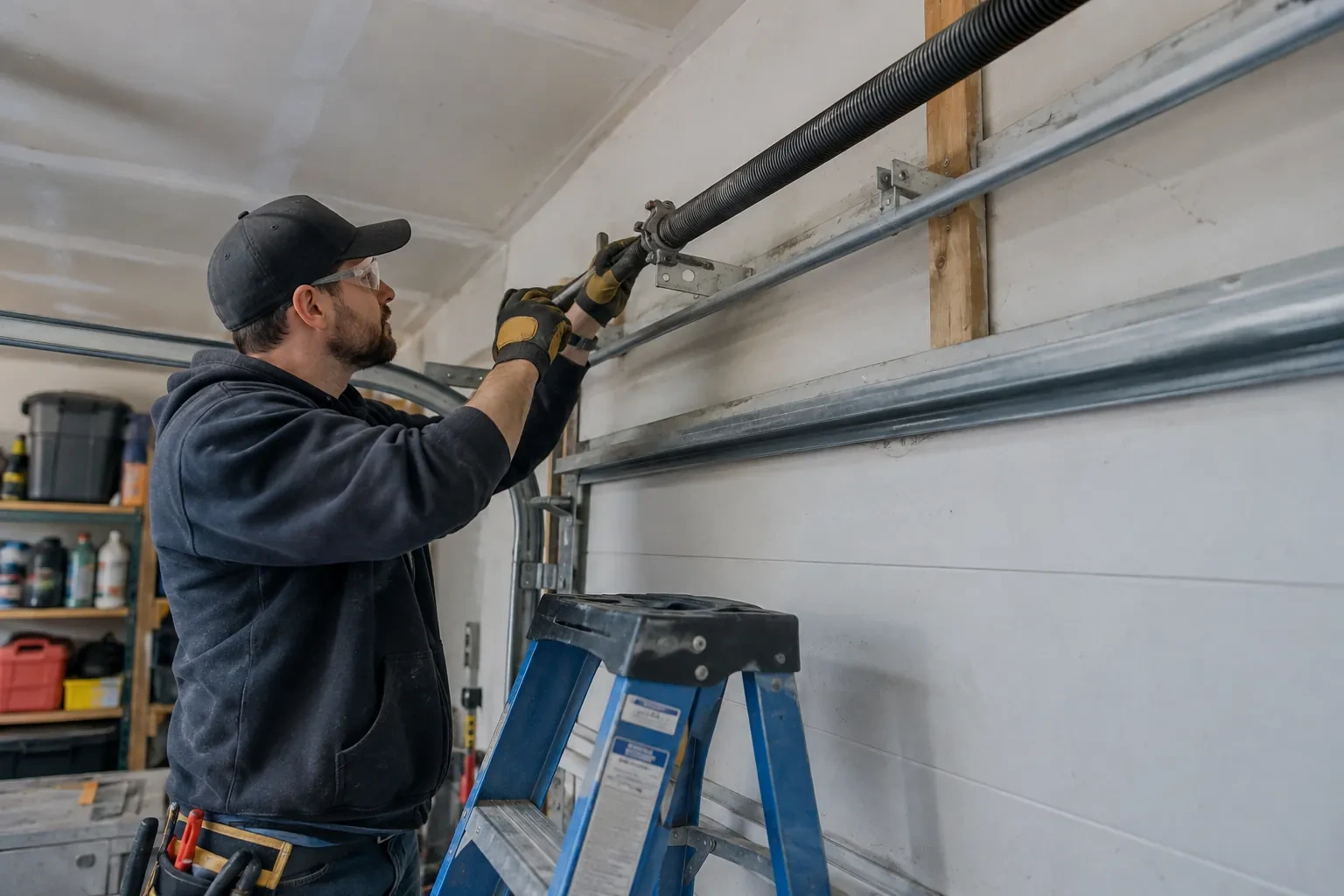
Garage Door Manual Lock Repair
What affects the quote
Door alignment behind the fault
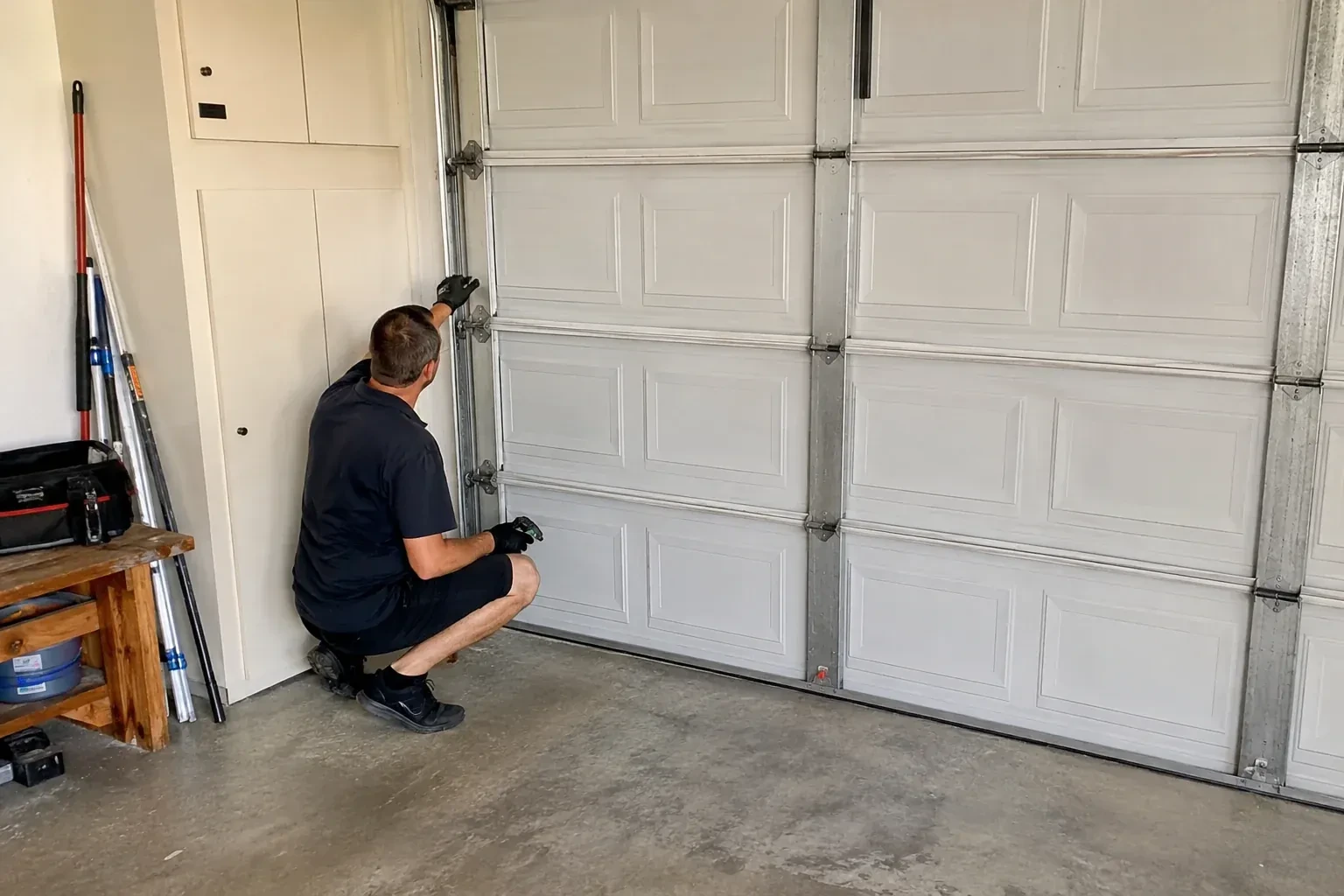
When the bar misses its slot because the door sits high or crooked, the fix reaches into track brackets, opener limits or the door's closed position, and that adjustment is quoted alongside the lock work.
Condition of the bars and guides
Bars that are merely stiff are cleaned and lubricated; bars that are bent are replaced and cut to length, and rusted guides are renewed. The quote follows what the bars turn out to need.
Related hardware noticed on the way
Worn rollers, a loose track bracket or a tired bottom seal seen while the door is being aligned are pointed out and offered as optional items, since they are easy to do in the same visit.
What to have ready
- Is the lock a sliding bar inside, a T-shaped handle outside with a key, or both?
- Is the door steel, wood or aluminum, and roughly how old is it?
- Do you have a key for the lock, and how many keys would you like?
Garage Door Manual Lock Repair: questions
QuestionsWhat kinds of manual locks are found on garage doors?
Two are common on sectional doors. An inside slide bolt sits on the door's edge and shoots sideways into a slot in the vertical track; some are spring-loaded snap latches that lock on their own when the door closes. An outside keyed T-handle turns a centre mechanism that throws a bar into each track, though some models pull a cable to release a spring latch instead. Some doors add a keyed cylinder on the side to work the slide bolt from outside.
The handle turns but the bars stay put. What has broken?
Something in the short chain between the handle and the bars. The square spindle may have twisted or sheared, the set screw holding the inside knob may have let it spin free, the cam inside the centre body may have worn round, or the return spring may have snapped. The inside cover comes off to see which, and the failed part or the whole mechanism is replaced to suit.
Why does my slide lock stop short of the hole in the track?
Because the door is not resting where it rested when the lock was fitted. A heaved or settled slab, a loosened track bracket, a flattened bottom seal, packed snow at the threshold or an opener limit set a little high all move the door a few millimetres, and a few millimetres is all it takes. The technician corrects the door's closed position or resets the guide so the bar finds its slot again.
Related services
- Garage Door Tune-UpSince the first cold snap the door has been sluggish.
- Off-Track Garage Door ResetThe morning after a thaw the opener groaned, the door stayed stuck to the icy floor for a second, then lurched up crooked.
- Garage Door Panel ReplacementRust has crept along the bottom edge of the lowest section.