Openers · London
Garage Door Opener Replacement
You want the ceiling back.
In plain words
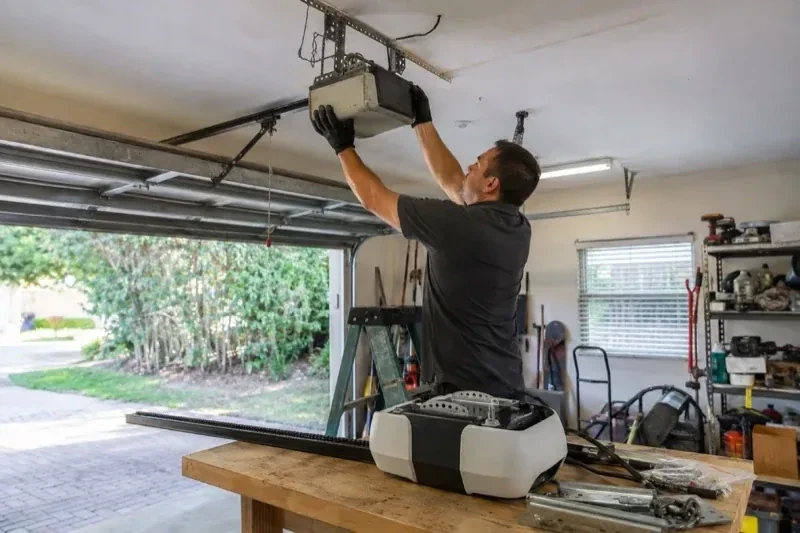
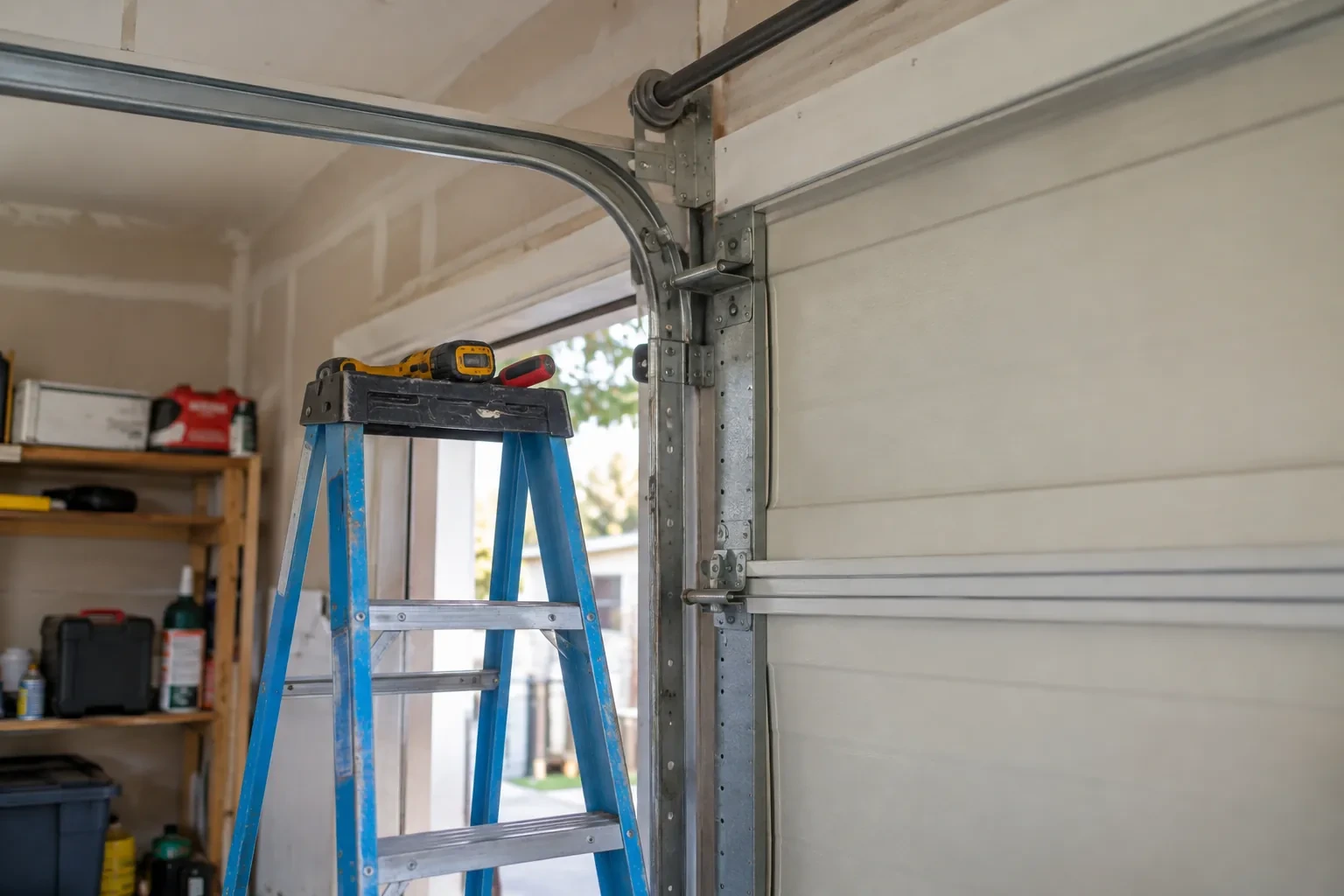
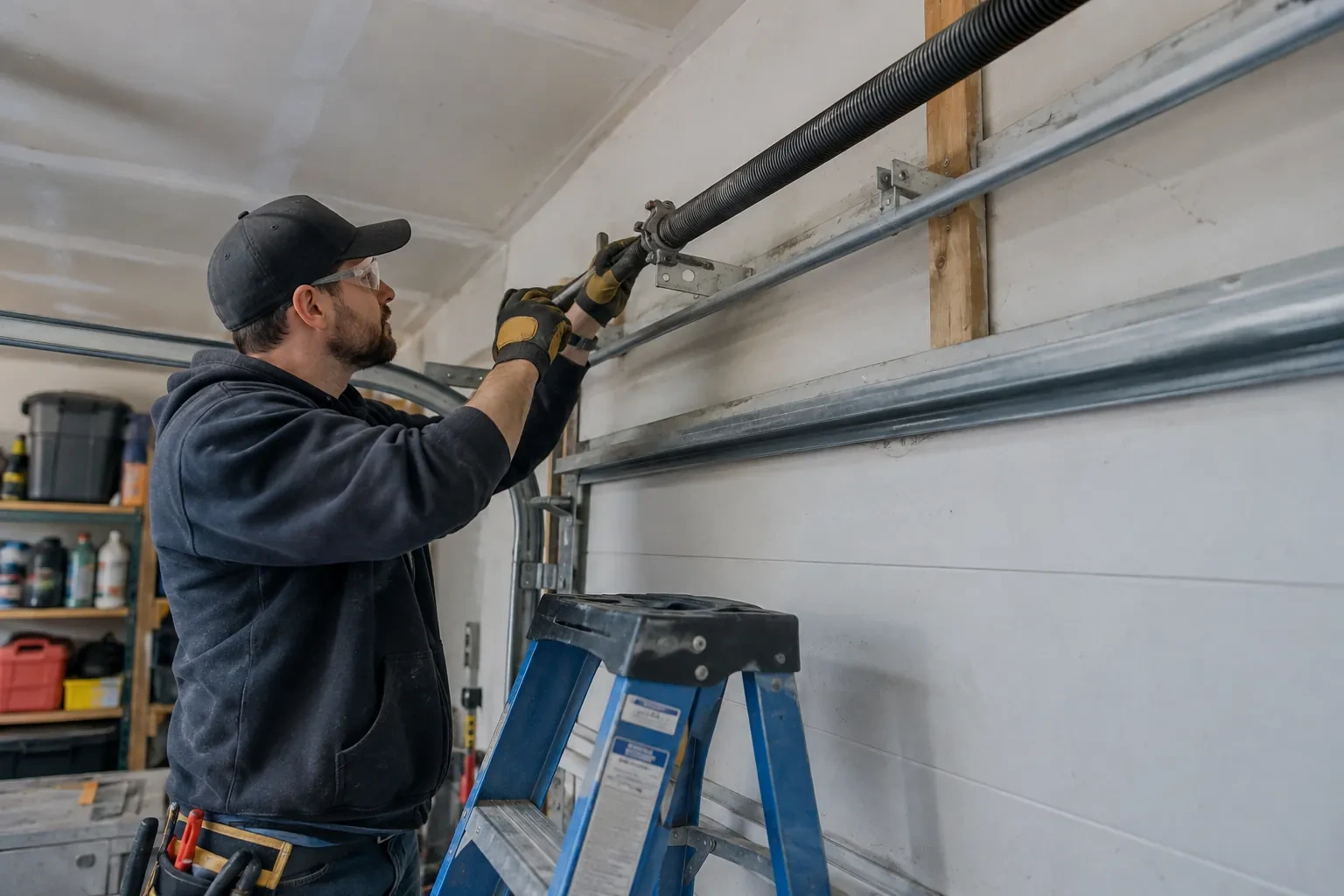
The most useful thing to know about a new opener is how little lifting it does. A garage door weighs as much as a small piano, and the springs hold nearly all of that weight so the door floats in the track. The operator only guides a door that is already balanced. That is why the replacement starts with the door disconnected and lifted by hand: if it holds its position partway up, the new operator will have a long, calm life. If it drops or drifts, the springs are tuned first, so the motor is never asked to do a job it was not built for.
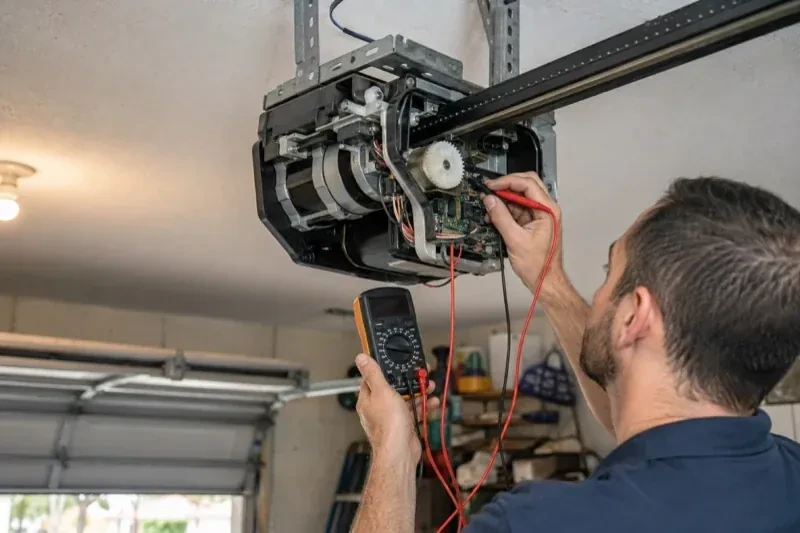
How the visit goesSince the storm the door behaves oddly: it reverses halfway down for no reason, the light flickers, and the travel limits drift so it either slams or stops short. The board inside is discontinued and the last repair only bought a few months.
Garage Door Opener Replacement
How the visit goes
How your household uses the door
A few questions decide which operator and accessories suit you. How many vehicles need remotes, and do any of them have built-in transmitter buttons? Do children come home to an empty house and need a keypad? Is there a bedroom or home office above or beside the garage, which points toward a belt drive and a DC motor? Do you want to check the door from your phone, or have it close on a timer? Has a power outage ever left you stuck outside? The answers steer the technician toward a chain, belt or wall-mount unit and the right set of controls, so the recommendation fits how you actually live.
Sensors, console and wiring
The photo eyes are mounted on both sides of the opening no higher than about 15 cm off the floor, aimed at each other until their indicator lights hold steady, and their wire is stapled neatly along the wall and ceiling to the head. The wall console goes at least 1.5 m above the floor, in clear sight of the door and away from moving parts, so it is out of reach of small children and the door can be watched while it runs. Low-voltage wire is kept clear of the rail and the chain. Finally the head is plugged into its grounded receptacle and powered up for the first time.
Getting the door through winter
A modern operator runs at the smallest force that moves the door, so on a bitter morning when the bottom seal has frozen to the slab it will reverse rather than tear the seal or strain the top section. The right response is to free the seal, by breaking the ice along the threshold or warming it, then press the button again. Keep snow and slush cleared from the threshold, put a silicone wipe on the seal before the cold sets in, and expect the door to sound a little different at minus twenty. An operator chosen for a detached garage is rated for those temperatures, and the seasonal lubricant it was given keeps the hardware moving.
Garage Door Opener Replacement
In the van
Door arm and door bracket
Low-voltage bell wire and staples
Wall control console
Photo-eye sensors
Opener head unit
Garage Door Opener Replacement
What affects the quote
Drive type
A chain drive, a belt drive, a direct-drive unit and a wall-mount operator sit at different points on the equipment list, and the choice is shaped by noise, ceiling space and door weight.
Ceiling height and mounting
A head unit hung from a high or cathedral ceiling needs longer angle iron and more time on the ladder than one mounted under a standard joist, and a finished drywall ceiling takes more care to fasten into.
Power at the head unit
If a grounded receptacle is already close to the operator, nothing is added. If one must be installed or moved, that electrical work is quoted separately by an electrical contractor.
What to have ready
- Is there a grounded receptacle in the ceiling near the opener, or is it running from an extension cord?
- Is the door steel, wood or aluminum, and is it insulated?
- Would you like a keypad outside, phone control, a camera or battery backup?
Garage Door Opener Replacement: questions
QuestionsWill the new opener cope with an unheated garage in winter?
Yes, when it is chosen for it. Manufacturers publish an operating temperature range for each model, and the technician matches that to a detached or unheated garage. The force setting is tuned so the door moves in the cold without the operator being oversensitive, the hardware gets a cold-rated lubricant, and a backup battery is kept charged by the unit. Clearing ice from the threshold remains the one winter chore.
What is the red cord for?
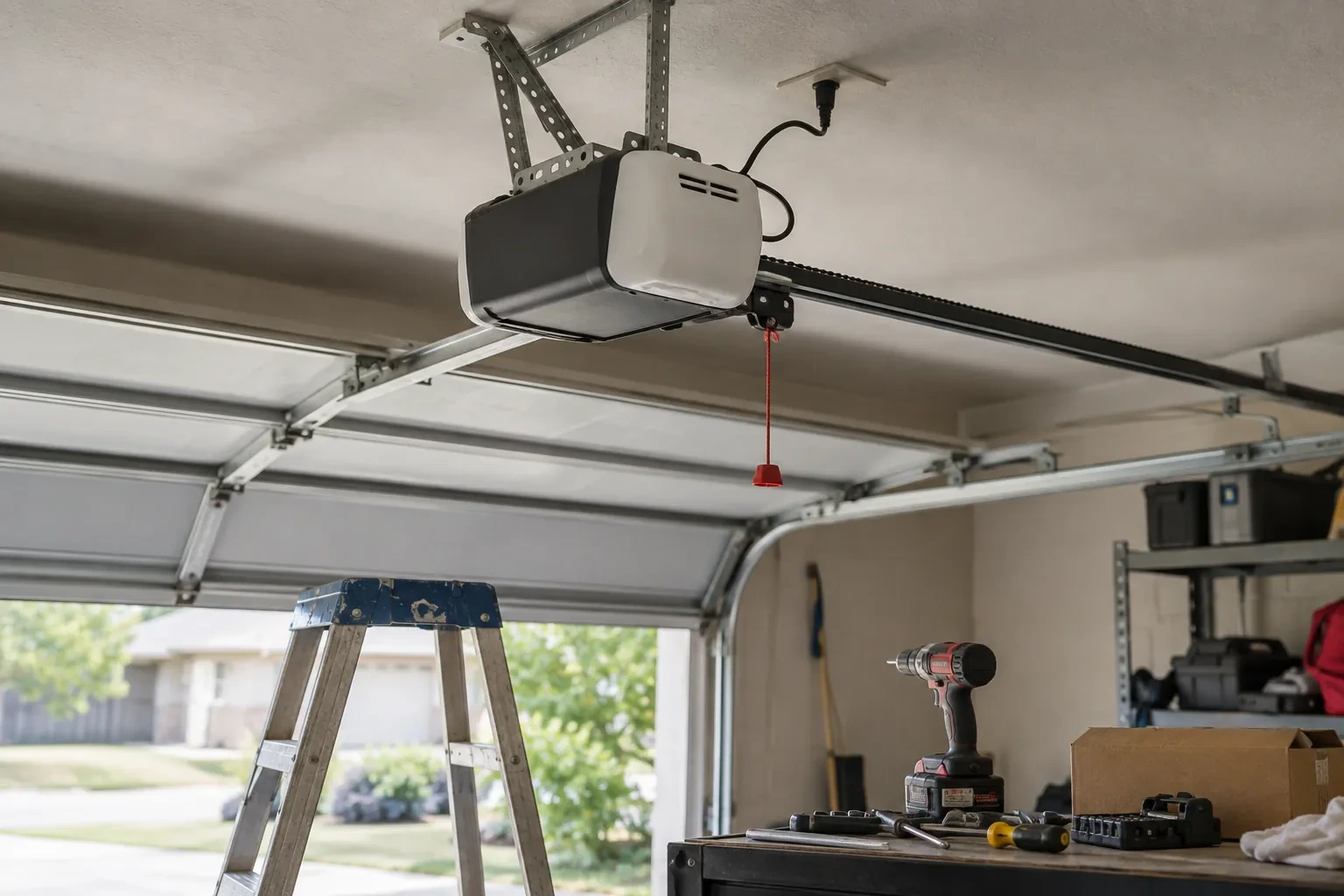
It is the manual release. A tug on the red handle unhooks the trolley from the door arm so the door can be raised and lowered by hand while the power is off or the operator is being serviced. It hangs high enough to clear a vehicle roof but low enough to reach without a ladder. To reconnect, most units need only be run once and the trolley picks the arm back up; a few take a second tug.
Why does the technician test the door by hand before anything else?
Because the opener depends on the springs. With the old unit disconnected, a balanced door lifts with moderate effort and stays put at roughly waist height. A door that drops or drifts is telling the technician the springs need adjusting, and doing that first means the new operator is never asked to haul a heavy door, which would shorten its life and mask a problem that belongs to the door.
Related services
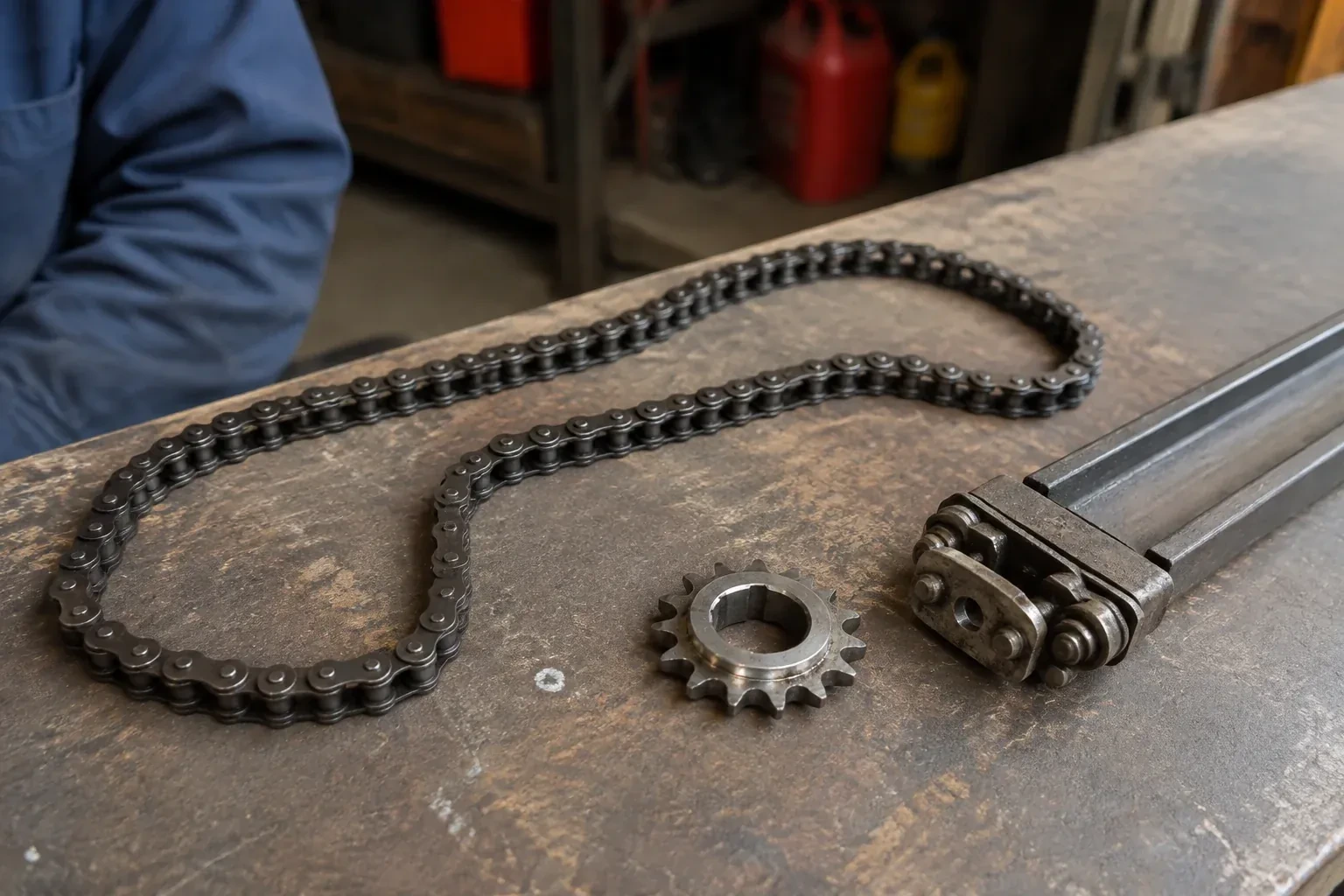
- Chain-Drive Opener RepairThe motor runs, you can hear it working, but the door never moves.
- Belt-Drive Opener RepairPress the remote and the motor runs its full cycle, lights on, the usual whir, but the door does not move a centimetre.
- Photo-Eye Sensor Alignment or ReplacementOn bright mornings the door will not close, then by lunchtime it behaves itself.