Openers · Byron
Garage Door Remote and Keypad Programming in Byron
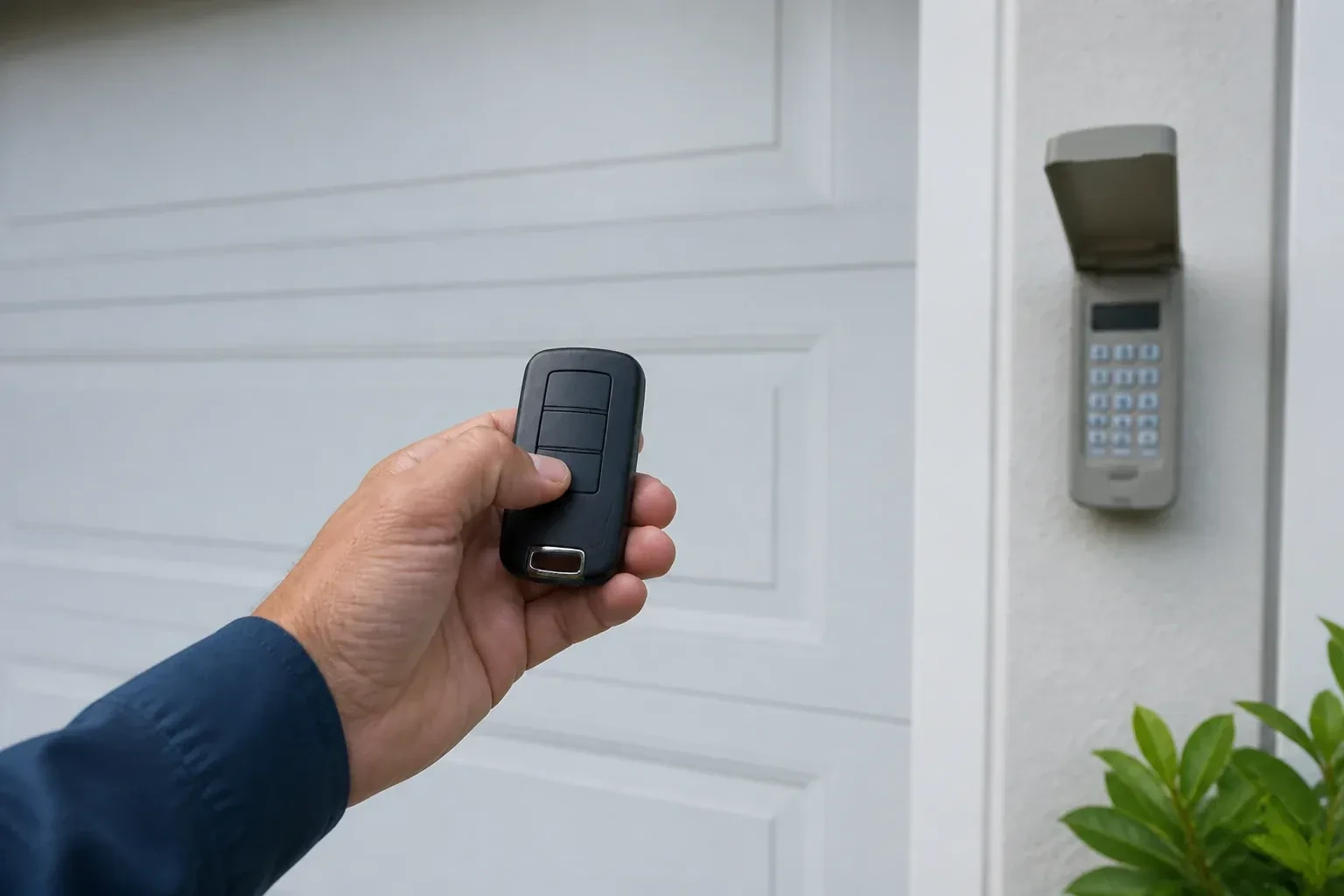
The remote opens the door only when you are almost underneath it.
In plain words
Over the years a garage accumulates controls: a remote in each car, one on a hook by the door, a keypad outside, a button in a vehicle you sold. Programming is the moment to take stock. The technician lists what exists, what works and what is missing, decides with you what should stay, and rebuilds the opener's memory to match. Each retained device is tested at the door and labelled for the door it drives. You leave with a short record of what opens the garage and what was removed, without any secret code written on it.
How the visit goesYou bought a new remote at the hardware store, followed the little leaflet twice, and the opener light never blinked. The old remote still works. The new one does nothing at all, from the driveway or standing directly under the motor.
Garage Door Remote and Keypad Programming
How the visit goes
Is the opener itself ready?
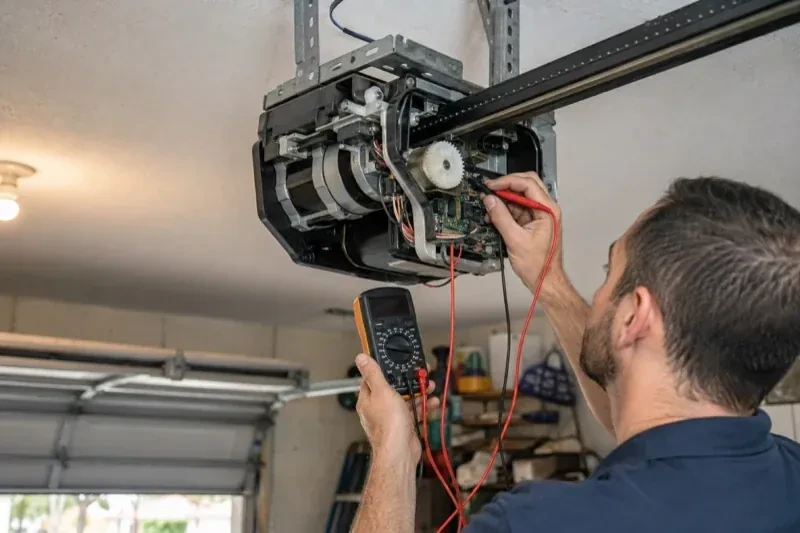
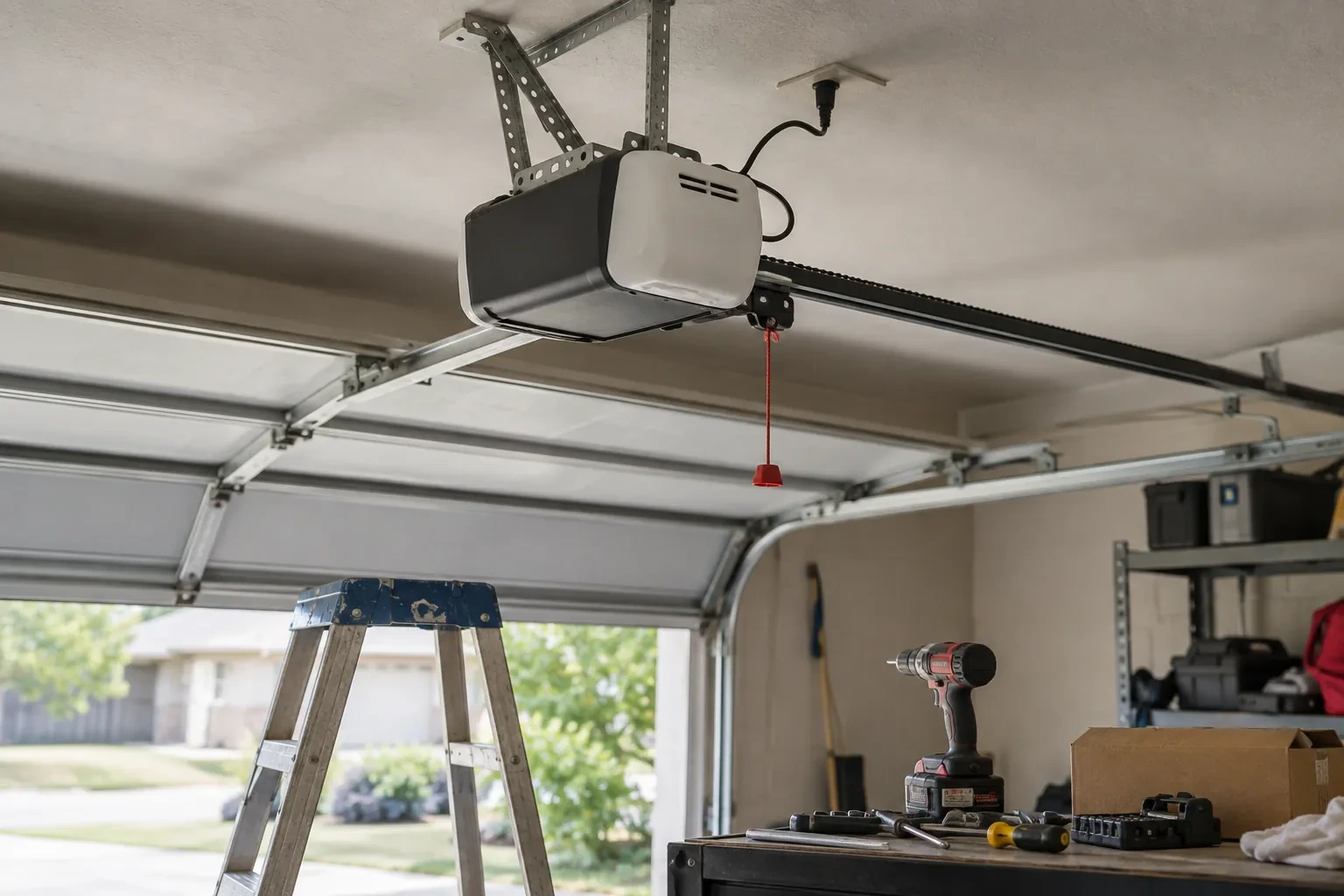
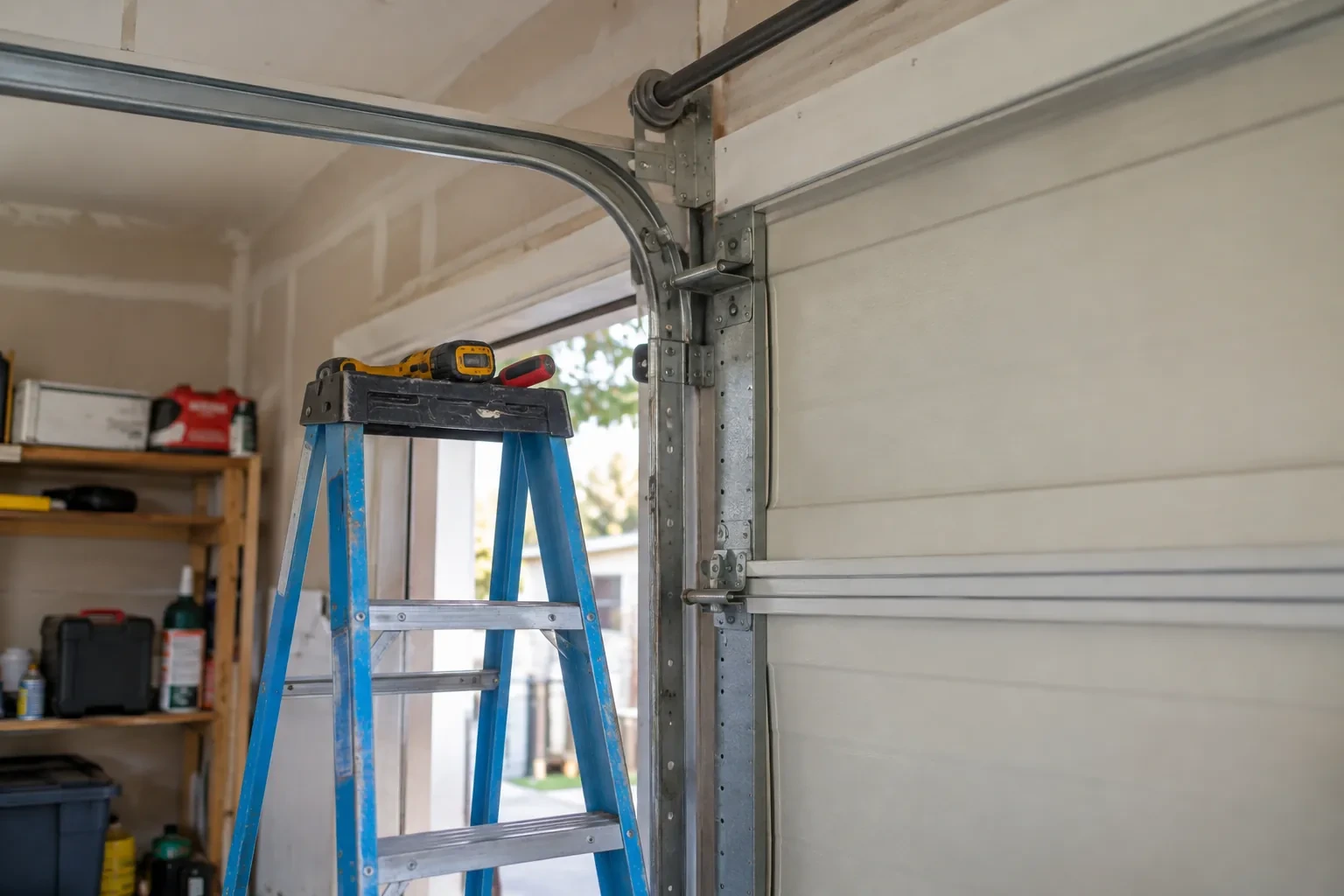
Programming only takes when the opener is in a state to accept it, so the first minutes are spent on the unit rather than the remote. The technician confirms the head unit has power and responds to the wall control, checks that the lock indicator is not blinking, and looks at the photo-eye lights near the floor to see the beam is aligned. The door is run through a cycle to be sure it travels and reverses properly. If the wall button moves the door and the remotes do not, the fault is on the wireless side and programming is likely to help; if nothing moves the door, the visit becomes a repair first.
Releasing lock mode and other simple resets
Some remotes are dead because the opener has been told to ignore them. The wall control's lock or vacation feature does exactly that, and shows itself as an indicator that blinks continuously and an opener light that flashes twice when a remote is pressed. The technician holds the lock button until the blinking stops and every remote comes back at once. A single remote with a stuck button, a bent battery clip or corroded contacts is opened and repaired or replaced. These are quiet fixes, but they are done deliberately and tested, because a household that thinks it has a programming problem often has a switch problem.
Batteries, and when to change them
Each remote and keypad leaves with a fresh cell of the type the maker specifies, and you know what those types are, since a coin cell in a remote and the small cells in a keypad are different. The first sign of a fading remote is shrinking range rather than sudden silence, so a remote that needs you closer than it used to is asking for a battery. Outdoor keypads are hardest on cells in the cold months; changing them each autumn saves a frozen-morning surprise. Rechargeable cells are not recommended for many keypads, and the record notes that.
Garage Door Remote and Keypad Programming
In the van
Keypad mounting screws and anchors
In-vehicle compatibility bridge module
Low-interference replacement bulbs
Universal multi-generation remote
Receiver transformer and two-conductor wire
Garage Door Remote and Keypad Programming
What affects the quote
Time of the call
A weekday daytime appointment and an evening, weekend or holiday visit cost the same amount for programming remotes and keypads. The technician confirms the exact figure once the number of controls and the opener model have been checked in person.
Receiver or logic board fault found
If a known-good remote also fails, the receiver or board is the cause; its diagnosis and replacement are quoted separately from programming.
Range and interference work
Swapping bulbs, freeing the antenna and re-testing range from the street is a small addition when remotes work only up close.
What to have ready
- Which controls fail: one remote, all remotes, the keypad, or the car buttons?
- Is the light on the wall control blinking steadily?
- Does the opener connect to a phone app, and whose account is it under?
Garage Door Remote and Keypad Programming: questions
QuestionsWhy does my remote work only when I am right under the door?
Short range is a signal problem, not a pairing problem. LED bulbs in the opener's own sockets can emit radio noise that swamps the receiver, an antenna wire tucked into the housing cannot hear well, and a coin cell near the end of its life transmits weakly before it dies. Swapping the bulb, letting the antenna hang free and fitting a fresh cell usually restore range; if not, the receiver is checked.
How many remotes can one opener store?
It depends on the unit. Older head units and add-on receivers hold a handful of devices, often fewer than ten, while newer openers store dozens of remotes, keypad codes and vehicle buttons. When a memory is full, the oldest entry may be overwritten or the new device refused. Taking stock of which controls are still in use, and clearing the ones that are not, keeps space for the devices that matter.
The wall button works but none of the remotes do. Is that a programming job?
Sometimes, but the technician rules out two things first. Lock mode on the wall control tells the opener to ignore every remote, and gives itself away by a steadily blinking wall indicator and two flashes of the opener light whenever a remote is pressed; holding the lock button releases it. A memory cleared by a long press on the learn button is the other cause, and that one is a programming job.