Springs · London
Garage Door Track Repair or Replacement
After a decade of slushy winters the bottom foot of the track is flaking rust.
In plain words
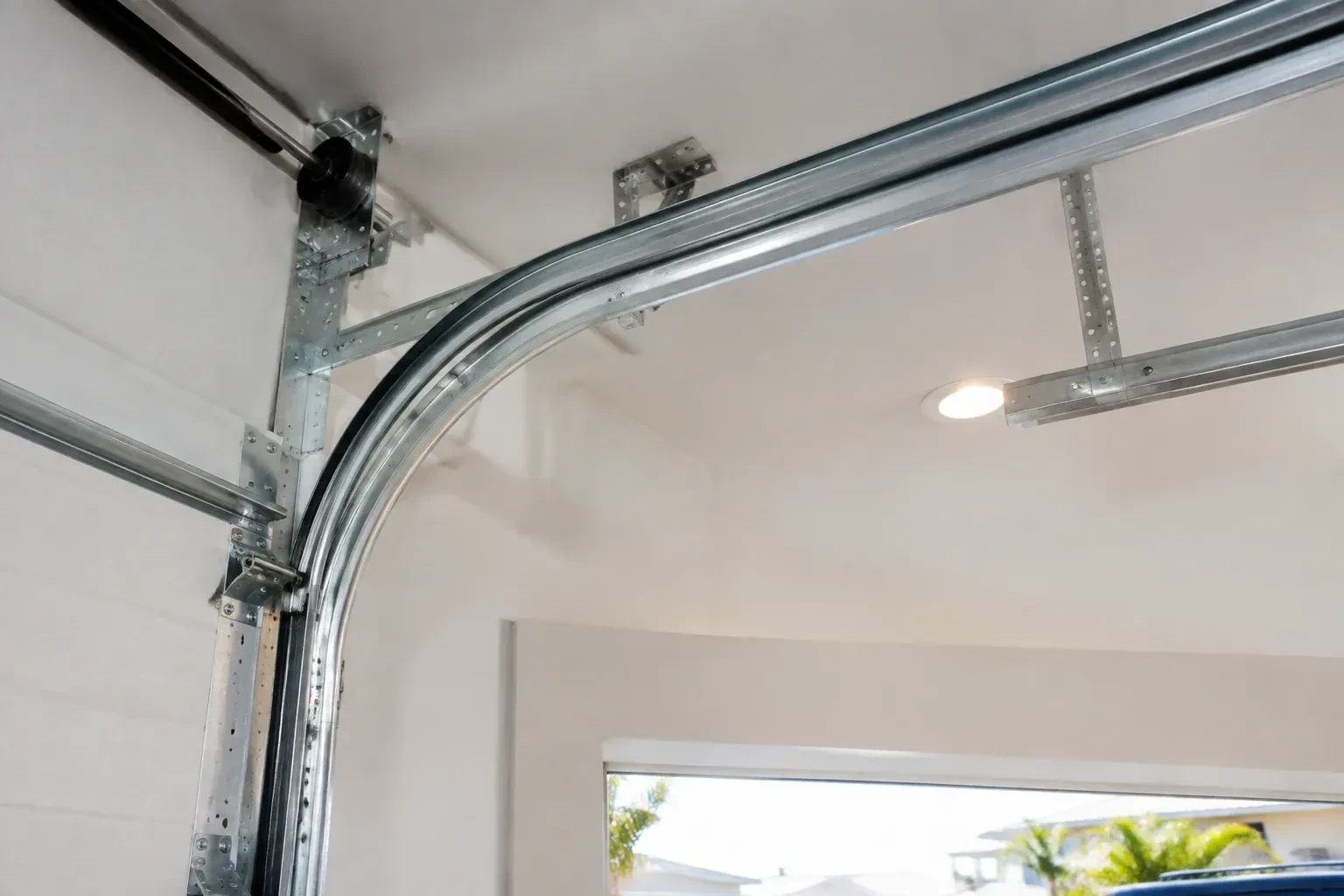
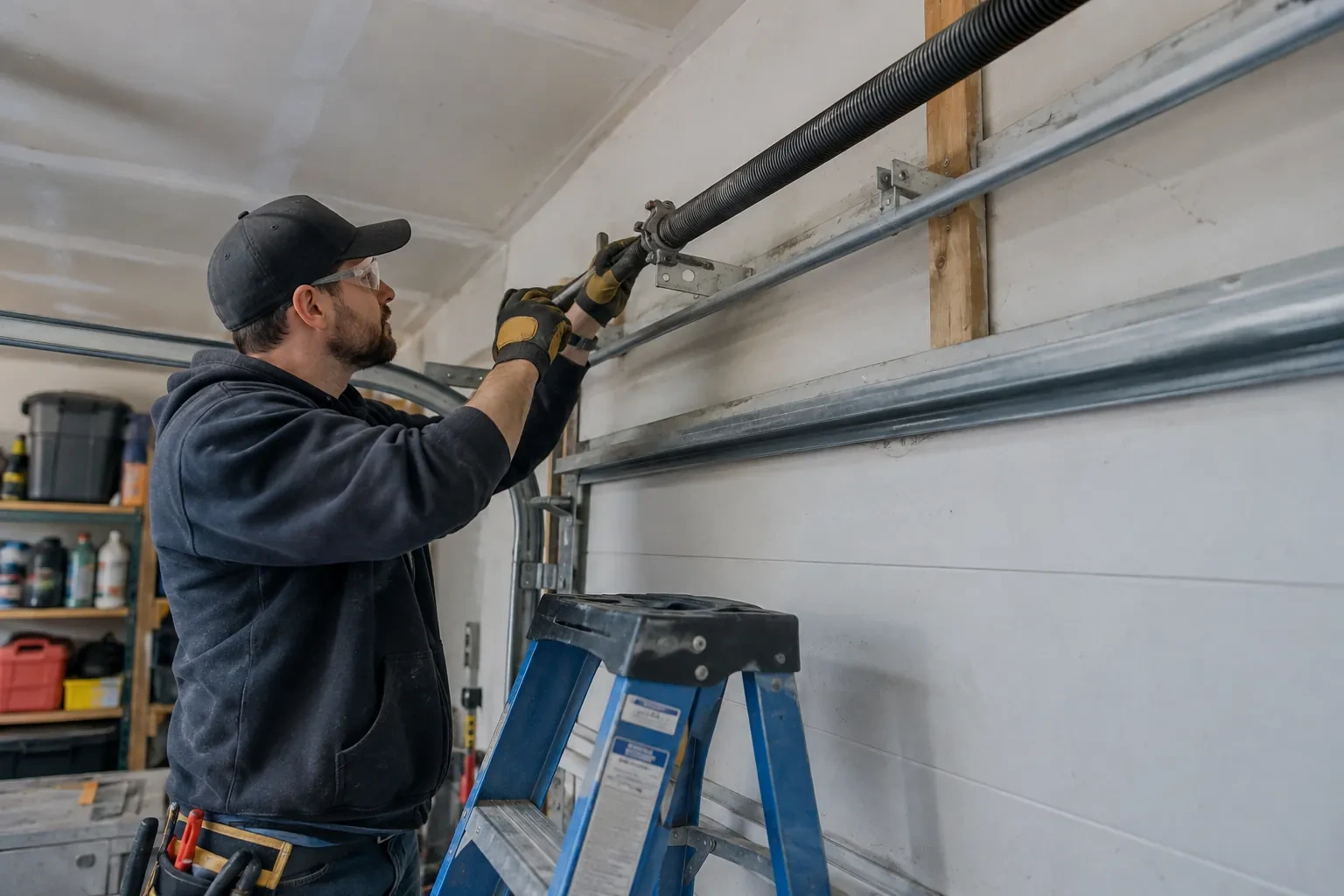
The track is the pair of steel channels that guide every roller on a sectional garage door: a vertical run fixed to each jamb, a curve overhead, and a horizontal run hung from the ceiling. Track repair puts a bent, spread, loose or corroded run back to the shape and position the door needs, and replacement renews the pieces that are beyond straightening. The technician secures the door, measures the track against the door and its lift type, corrects or replaces what is damaged along with its brackets and fasteners, and finishes with a balance and travel test so the door runs squarely again.
How the visit goesThe door climbs crooked, one side clearly ahead of the other. Nothing looks broken, but the two tracks sit different distances from the door, and one leans in toward the opening near the top.
Garage Door Track Repair or Replacement
How the visit goes
Jamb brackets, lag screws and the wood behind them
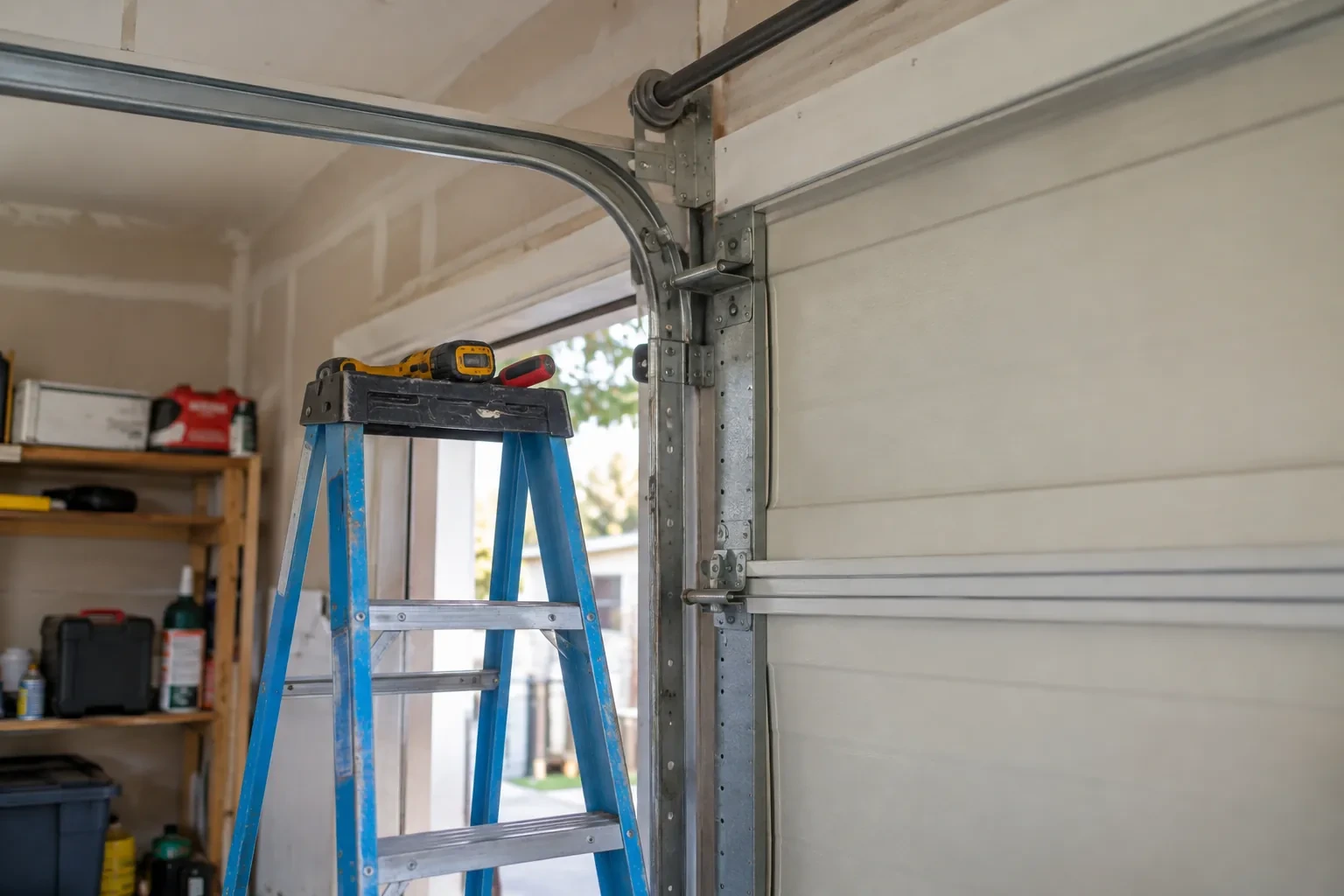
Every fixing along the vertical track is tested by hand and by eye. Jamb brackets that rock, lag screws that turn without tightening, and a continuous angle standing off the wood all mean the track has been free to move. The technician then looks at the jamb itself, probing the bottom foot for softness where splash and salt have soaked in, and checking for splits around the screw holes. In an older garage the wood is often the real fault, and no amount of tightening holds a screw in punky timber. Where that is the case, sistering or replacing the lower jamb goes onto the plan alongside the track.
Closing a channel that has spread
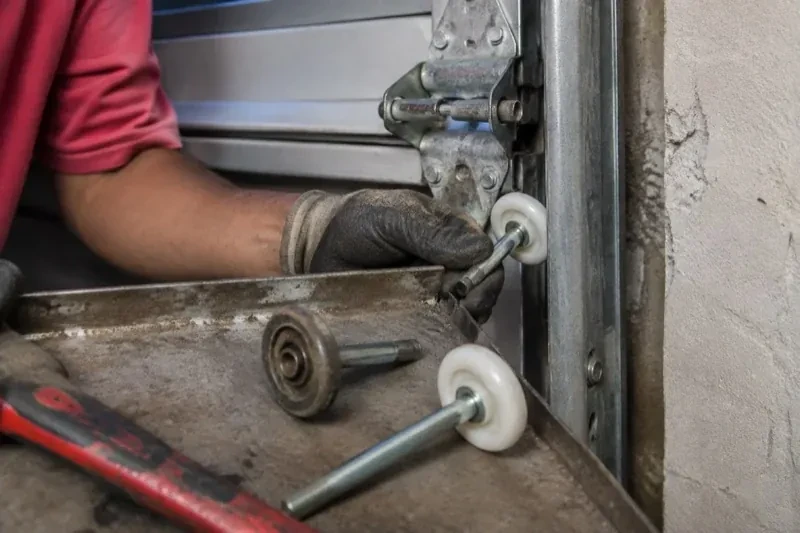
When worn rollers have pried the lip of the track open, the channel is squeezed back to its original width along the affected length. The technician measures the opening against an undamaged stretch, then closes it in stages with track pliers or a clamp and block, checking with a roller after each pass. The lip is dressed so no burr remains to nick the wheel. Because the spread came from rollers dragging on one edge, the wheels that did it are replaced in the same visit, otherwise the new profile opens again within a season. The corrected length is then re-fixed to its bracket so the shape holds.
Keep the track clean, lubricate the rest
Follow your door's own manual on the track: many makers want it kept dry and clean, since grease there collects grit and sawdust and lets a roller skid rather than turn, which is exactly how tracks get worn and spread, while others call for a lubricant at the bend specifically. Wipe the inside of each channel with a rag a couple of times a year, and clear any leaves or cobwebs from the horizontal runs. The moving parts get their own lubricant too, the roller bearings, hinge pins and springs, in the type and points the manual specifies. That division of labour keeps the newly set track smooth for a long time.
Garage Door Track Repair or Replacement
In the van
Top fixtures
Vertical track, two-inch or three-inch
Jamb brackets or continuous angle
Lag screws and track bolts
Jamb lumber and construction screws
Garage Door Track Repair or Replacement
What affects the quote
Damage to sections and bottom hardware
When a bumper strike has also dented the bottom section or bent a bottom bracket, that repair is described and priced separately from the track so you can decide each on its own.
Door size and weight
A tall or double door has longer runs of track and heavier loads on the brackets, and a heavy insulated or wood door may call for heavier-gauge track and more substantial hangers.
Snow or ice around the track needing clearing first
A track buried under snow or glazed with ice has to be cleared before the technician can see what is actually bent or worn underneath. That extra step is common in winter and is worked into the visit rather than treated as a separate call.
What to have ready
- Is there one spring above the opening, or springs along the tracks?
- Do you have the door's manual or a label with its model?
- Do you know what caused it, such as a car, a ladder or stored items?
Garage Door Track Repair or Replacement: questions
QuestionsHow often should the track and its fasteners be checked?
A glance each month from inside the garage, with the door closed, is enough to catch a bracket standing off the jamb or a hanger starting to lean. Twice a year, snug the bracket bolts and lag screws, wipe out the channel, and watch the door make a full trip to confirm every roller stays in the track. The industry guidance also suggests an annual visit by a trained door technician, who checks the track with the rest of the system.
My door rubs the frame on one side. Is that a track problem?
Often, yes. The vertical track is meant to stand a fraction further from the jamb at the top than the bottom, so the closed door seals on its stop and swings clear as it rises. If a bracket has loosened or the track was set flat to the wood, the door drags along the stop moulding every trip. Resetting the spacing and taper, and tightening the brackets into sound wood, usually ends the rub.
What is the track made of, and what sizes are there?
It is galvanized steel folded into a channel that the roller wheels ride in. Residential doors almost always use two-inch track, with three-inch reserved for heavier or wider doors. The curved piece comes in a radius, commonly 12 or 15 inches, that sets how much headroom the door uses. Replacement pieces are ordered to the same profile, gauge and radius as the rest of the set.
Related services
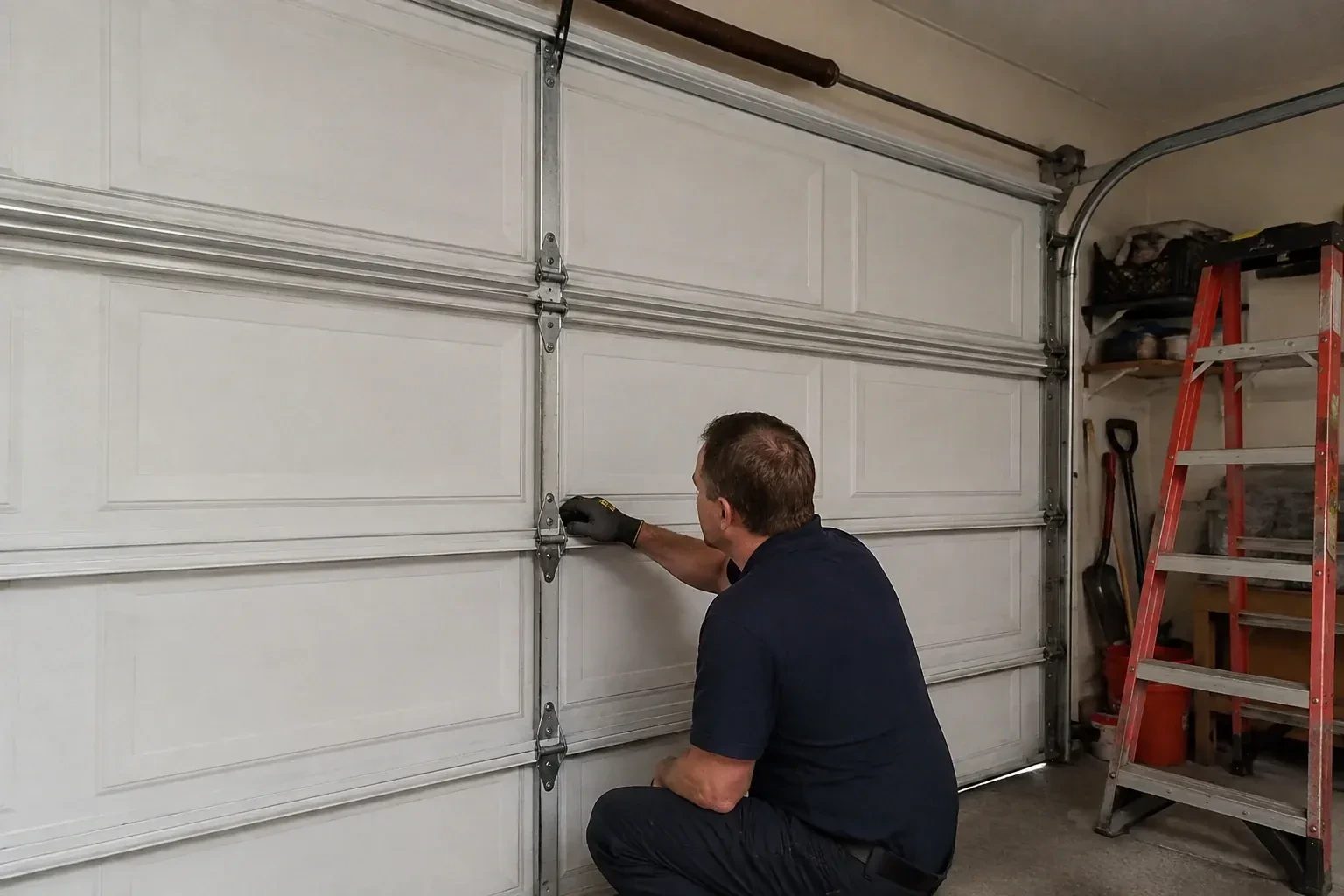
- Garage Door Hinge ReplacementPressing a hand against one of the middle hinges makes it rock on the panel.
- Garage Door Cable ReplacementThere was a sharp crack from the garage, and when you went to look the door had dropped on one side and jammed.
- Torsion Spring ReplacementThe door drops the last stretch to the floor rather than settling, and when you stop it halfway by hand it slides down instead of staying put.