Repairs · Southcrest Estates
Garage Door Bottom Seal Replacement in Southcrest Estates
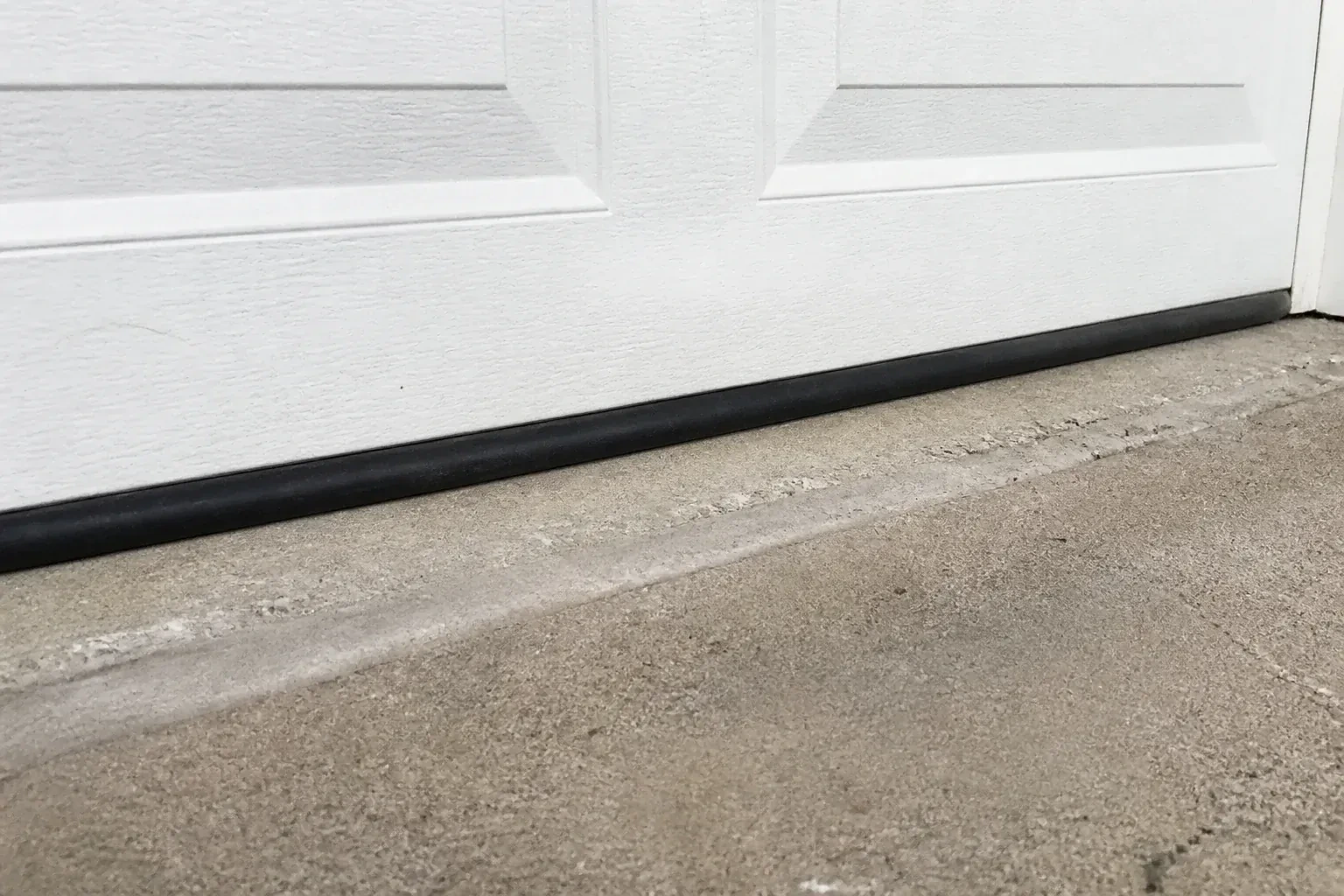
One end of the bottom seal has slipped out of its channel and hangs down like a loose shoelace.
In plain words
In this climate the bottom seal lives a hard life. Meltwater from the car pools at the threshold and freezes the seal to the slab, and the next press of the remote tears it or drags it out of its channel. Road salt stiffens the vinyl and eats the aluminum retainer; deep cold turns a supple strip rigid. Replacement puts a cold-rated profile on a sound retainer, sized to meet the floor without over-compressing, and the technician shows how a wipe of silicone each autumn and a clear threshold keep the new strip from bonding to the ice. The door closes softly onto rubber again, not onto a frozen ridge.
How the visit goesOne end of the bottom seal has slipped out of its channel and hangs down like a loose shoelace. Each time the door closes it folds under, each time it opens it flaps, and the gap beside it keeps growing.
Garage Door Bottom Seal Replacement
How the visit goes
How the opener meets the floor
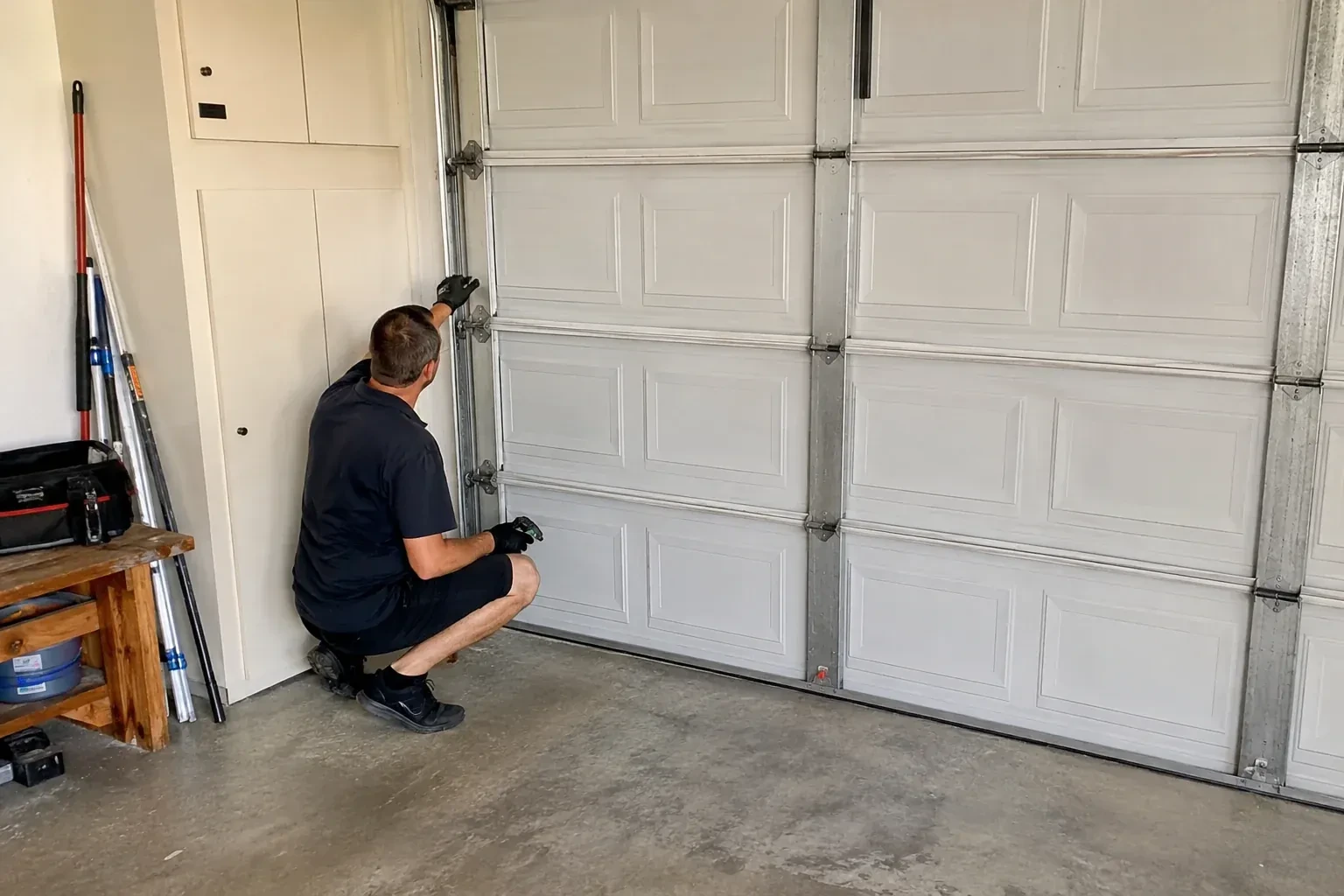
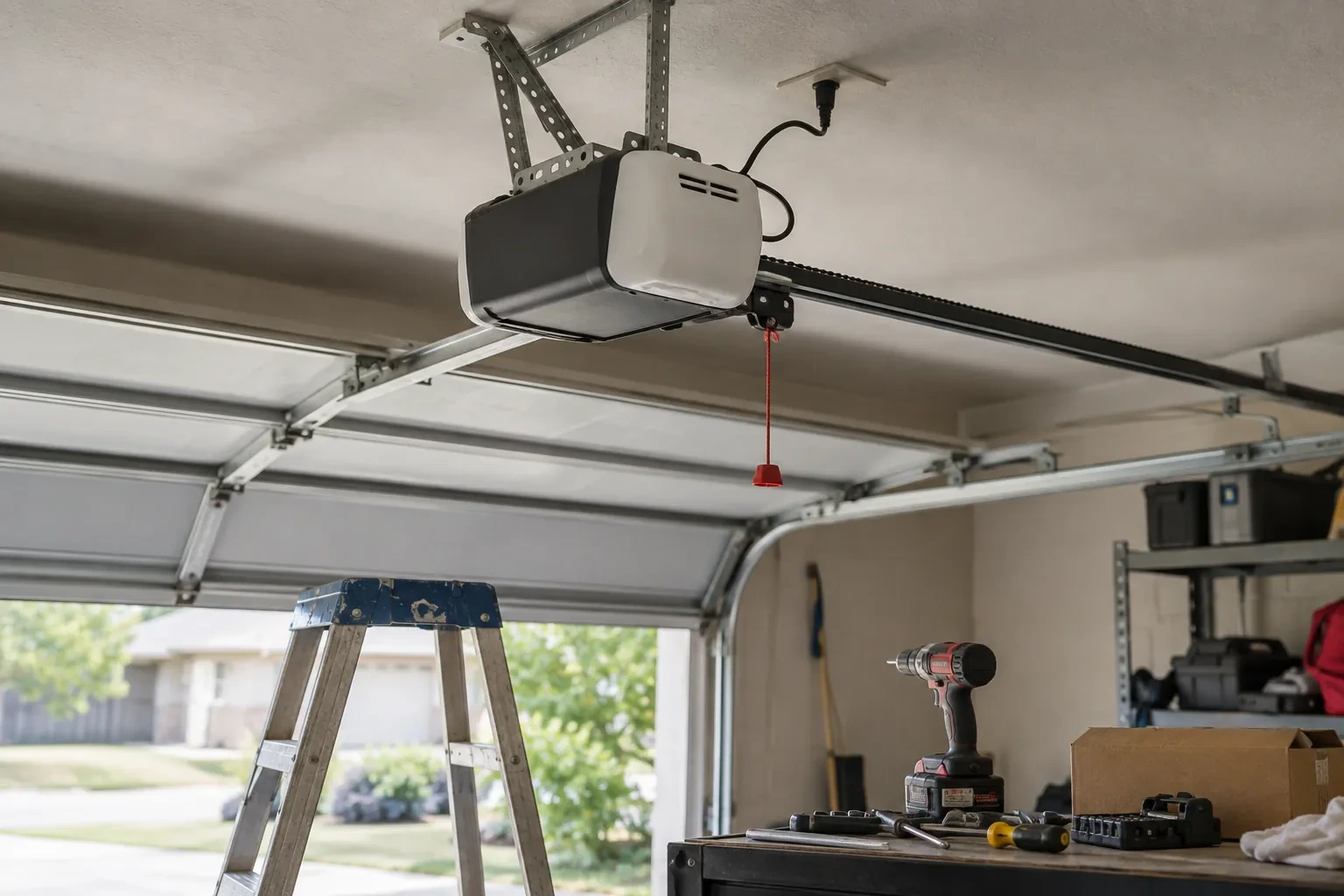
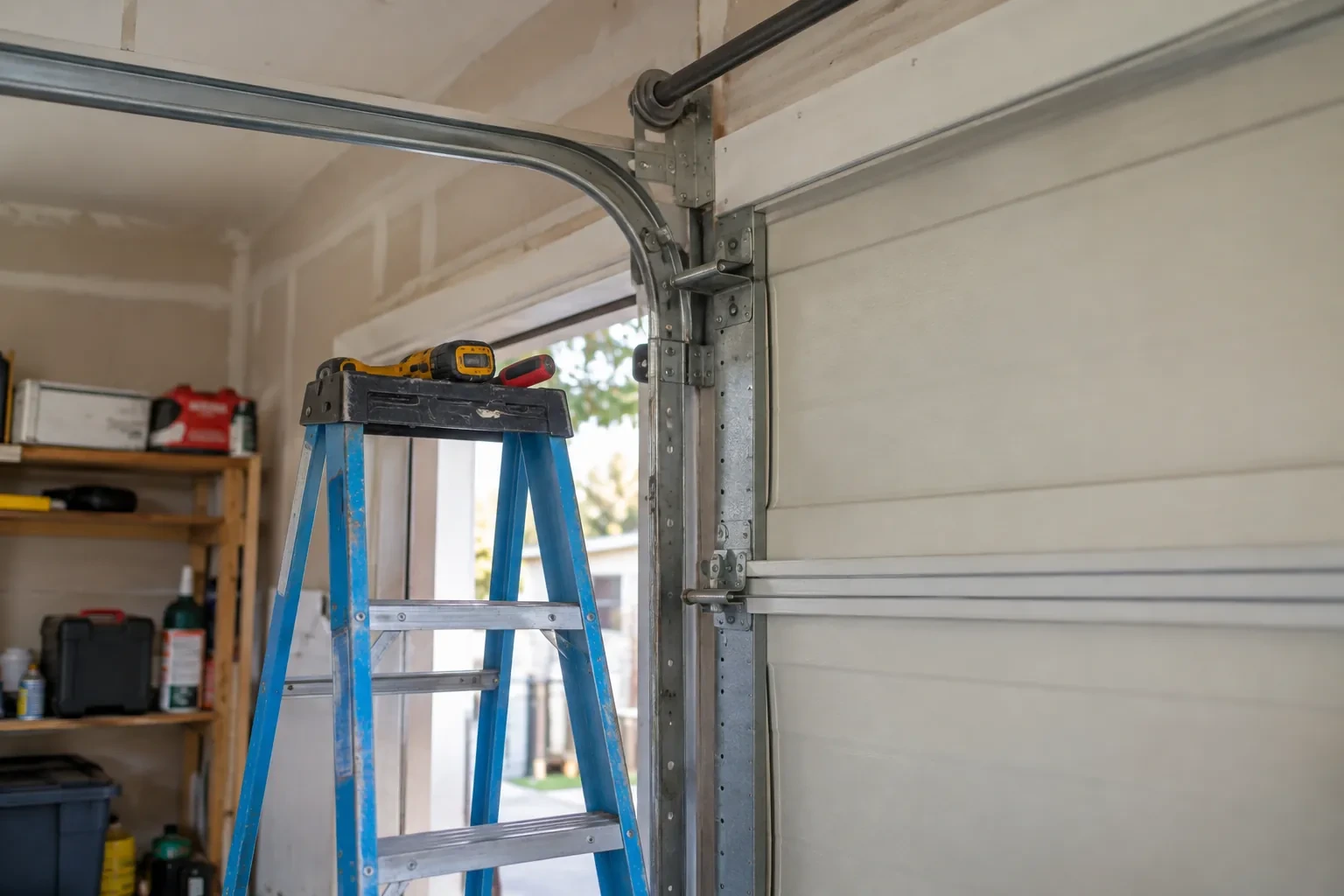
Before the old seal comes off, the technician watches the door close under power. Where the door stops, how firmly it lands, and whether the bottom section flexes as it settles all show how the down limit and force are set. A door that stops short leaves a gap regardless of the seal; one set to press hard flattens a new seal in a season and can bow the section. The current settings are noted so they can be reset once the new, taller strip is in place, and the photo eyes and reversing behaviour are checked at the same time so the finished door is tested against a known starting point.
Taking the old seal out
With the door secured, the ends of the old strip are freed from any caps or folds and the seal is drawn out of its channels from one end. A supple seal slides; a hardened one is coaxed with a flat blade and a little silicone, or cut into short lengths and removed a piece at a time. Old nails come out of a wood rail with a claw. The channels are then cleaned of grit, rust flakes, salt crust and any remnants of the previous strip with a wire brush and a scraper, because a clean channel is what lets the new seal feed through without tearing.
What to look for each season
Once a season, close the door, turn off the lights and look along the floor. You are checking for a line of daylight, a corner where the seal hovers, an end that has slipped from its channel, and cracks along the fold of the bulb. Run a hand along the strip for stiff or brittle patches. Then watch the door close under power once and notice how it lands. A change in any of these is worth a call while the fix is a seal or an adjustment rather than a torn strip dragged through a winter. The check takes less time than reading this paragraph.
Garage Door Bottom Seal Replacement
In the van
Threshold seal and adhesive
Silicone spray lubricant
Bulb or U-style bottom seal
Bead-style bottom seal
Nail-on vinyl strip for wood doors
Garage Door Bottom Seal Replacement
What affects the quote
Door out of level
If one corner of the door hangs low because of cable or spring tension, levelling the door is separate work done before the seal goes in and is priced on its own.
Number of doors
Two single doors are two seals, two inspections and two opener resets. The travel is shared, so doing both in one visit costs less than two separate calls.
Threshold seal added
Where a floor threshold is recommended, its length, its type, whether rubber or aluminum-backed, the adhesive and the floor preparation before it is laid appear as a line of their own.
What to have ready
- Is the door steel, wood, or insulated with a plastic bottom cap?
- Are the side and top weather strips also worn or torn?
- Is the door a single or a double, and roughly how wide?
Garage Door Bottom Seal Replacement: questions
QuestionsShould I choose the tallest seal available?
Not as a rule. The seal should fill the measured gap with a little compression to spare. A profile far taller than the gap gets squashed flat, wears at the fold, bows the bottom section and can make the opener reverse. Where the floor dips at one end, a taller bulb is the right call for that door; where the floor is flat, a standard height lasts longer. Measuring first is what settles it.
What happens during the visit?
The technician maps the gap with the door closed, checks the door is level and the bottom section straight, and identifies the retainer and profile. The opener is disconnected and the door clamped at working height. The old seal comes out, the channels are cleaned, a new seal is cut and fed in, and any retainer work is done. The door is then closed under power, the opener reset, and the reversing and photo-eye tests run.
Is this something I can do myself?
Many homeowners do, and a technician's value lies in the parts that go wrong: identifying the exact profile so the seal seats, freeing a strip that has fused into its channel, spotting a retainer or door-level problem behind the gap, and resetting the opener's limit and force so the door lands gently and still reverses on an obstruction. If you would rather have it measured, fitted and tested in one go, that is what the visit is for.
Related services
- Garage Door Tune-UpSince the first cold snap the door has been sluggish.
- Off-Track Garage Door ResetThe morning after a thaw the opener groaned, the door stayed stuck to the icy floor for a second, then lurched up crooked.
- Garage Door Panel ReplacementRust has crept along the bottom edge of the lowest section.