Springs · Southcrest Estates
Garage Door Cable Replacement in Southcrest Estates
There was a sharp crack from the garage, and when you went to look the door had dropped on one side and jammed.
In plain words
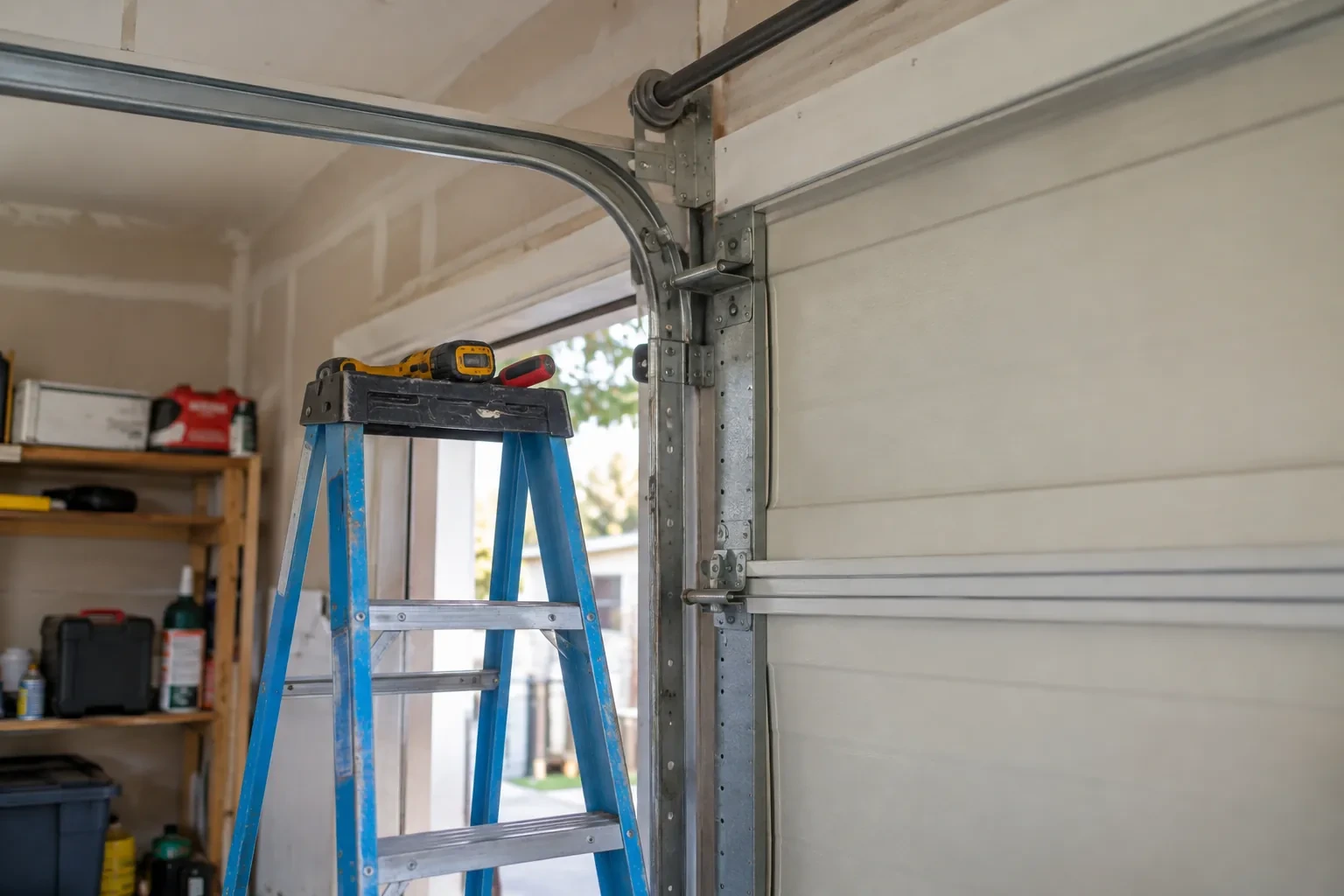
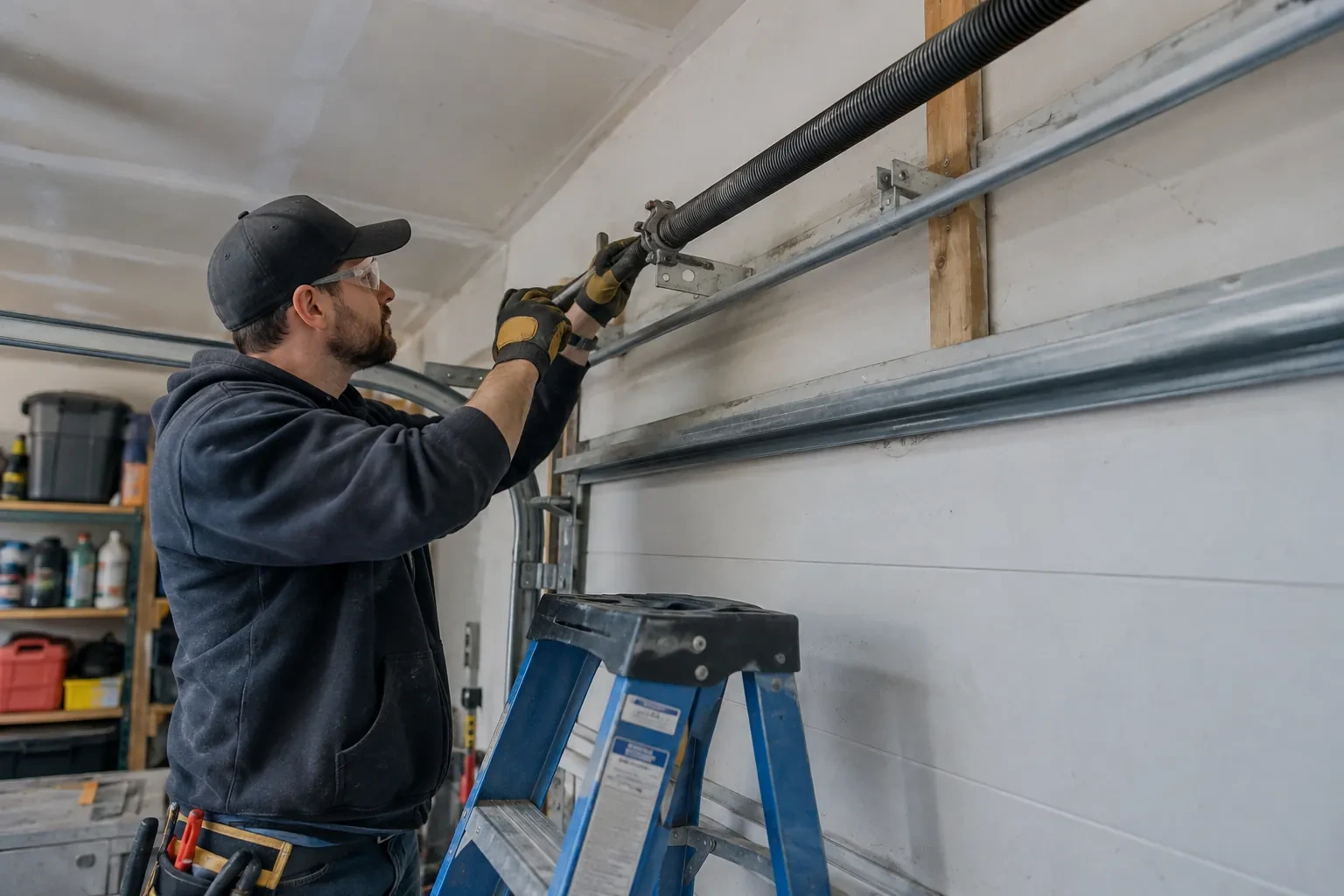
Garage door cables carry the weight of the door as tension held by the springs, which is why the work follows a careful, well-rehearsed sequence rather than simply hooking a cable back on. On a torsion system the technician clamps the door, disconnects the opener and unloads the springs with winding bars before any cable, drum or bracket is touched; on an extension system the door is instead raised fully and clamped so its pulley-mounted springs relax. Once the system is unloaded, replacing the cables is straightforward: the correct length is set, and the counterbalance is tensioned and locked off by the method that system calls for.
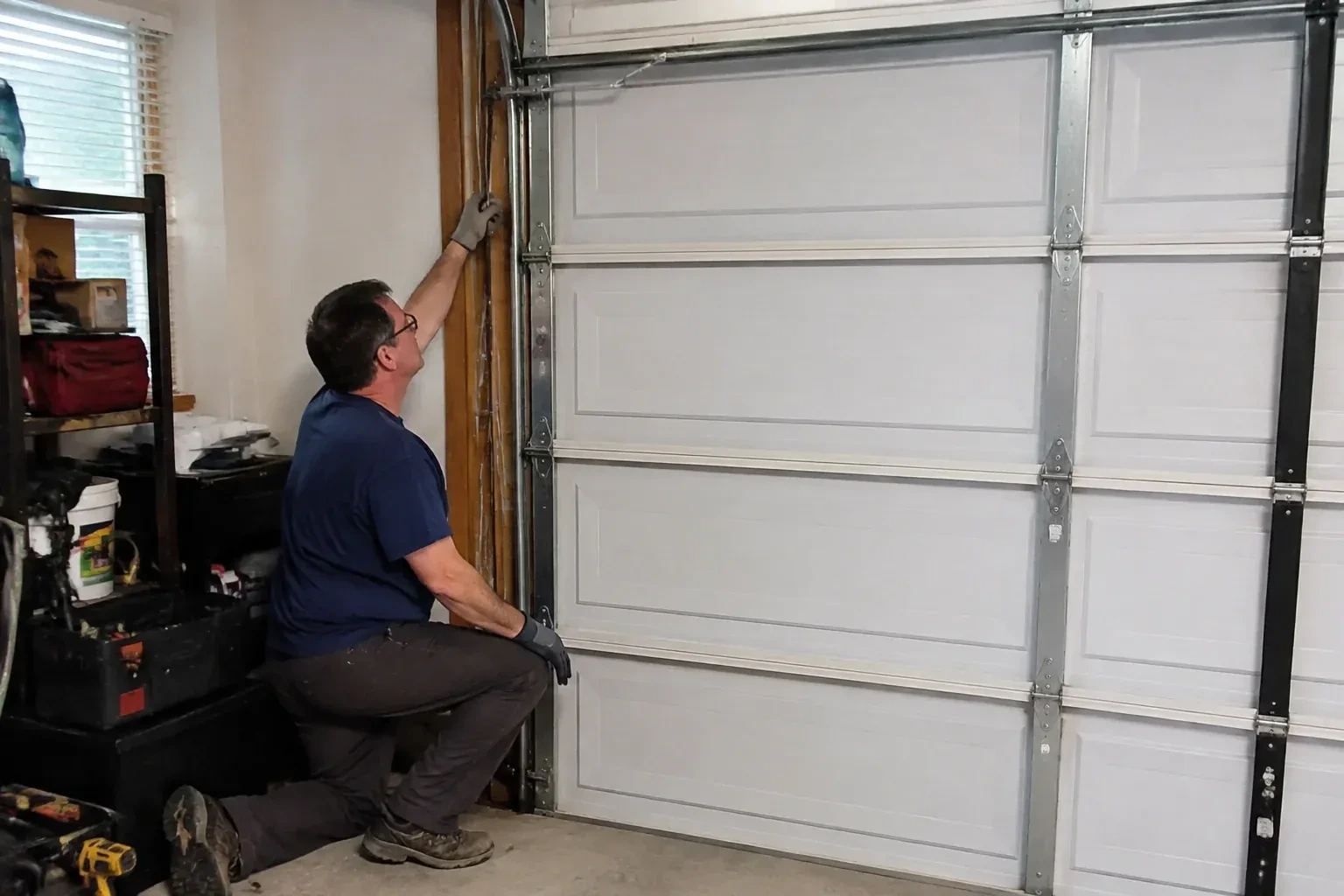
How the visit goesYour older door has springs along the tracks, and one cable has slipped off its pulley and dangles slack. The door lifts crooked and needs a shoulder to close, when it used to glide.
Garage Door Cable Replacement
How the visit goes
Why the last cable failed
A new cable fitted onto the same problem does not last, so the technician wants the cause. Frayed wires along the length point to rubbing against a bent track or a rough drum. Rust at the loop points to slush at the floor. A cable that jumped its drum usually follows the door closing on something, a spring that has lost tension, or a drum that slipped. A snapped cable on a door that was level beforehand often means age and corrosion rather than misalignment. You will be asked what happened before the failure, because a shovel in the opening or a bump from the car is a fact only you can supply.
Removing the old cables
Each drum's set screws are backed off so the drum spins freely on the shaft, and the old cable is unwound from its groove and the stop slipped out of its slot. At the floor, the loop is lifted off the bottom bracket pin, or the clevis pin and cotter pin are withdrawn where the door uses them. The old cable is kept for a moment to measure against its replacement and to show you the wear that caused the call. On an extension door the cable comes off its pulleys and the adjusting clip at the track hanger. Both sides are stripped before anything new goes on.
Keeping salt and slush off the bottom hardware
The new cables will last longest if the bottom brackets stay reasonably dry. Through winter, push slush away from the door's inside edge rather than letting it pool against the bottom section, and wipe the road salt off the brackets and the lowest stretch of cable when a mild day comes. A light spray of silicone lubricant on the cable loops and bracket pins in late autumn sheds meltwater. Park so the car does not drip directly onto the corners of the door. None of this is a chore, and it addresses the one spot where cables in this climate almost always fail first.
Garage Door Cable Replacement
In the van
Silicone garage-door lubricant
Track clamps or locking pliers
Bottom brackets with cable pin
Galvanized aircraft-type lift cables
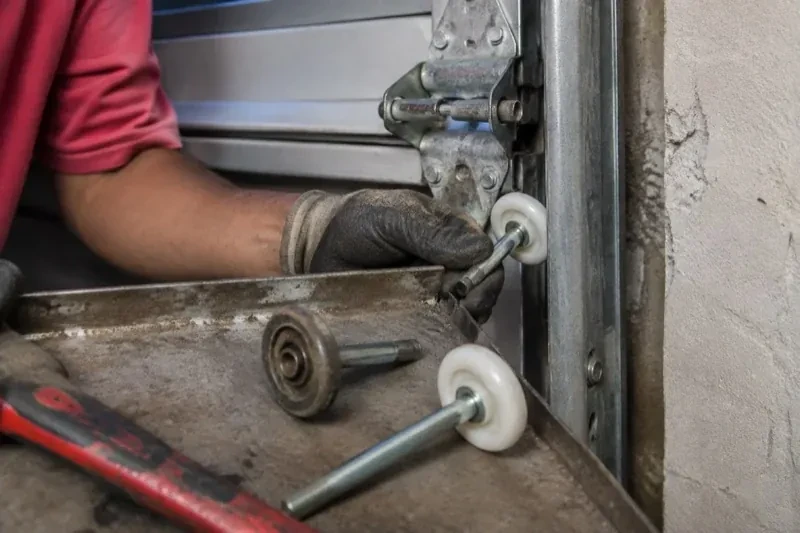
Bottom rollers and hinges
Garage Door Cable Replacement
What affects the quote
Opener adjustment afterwards
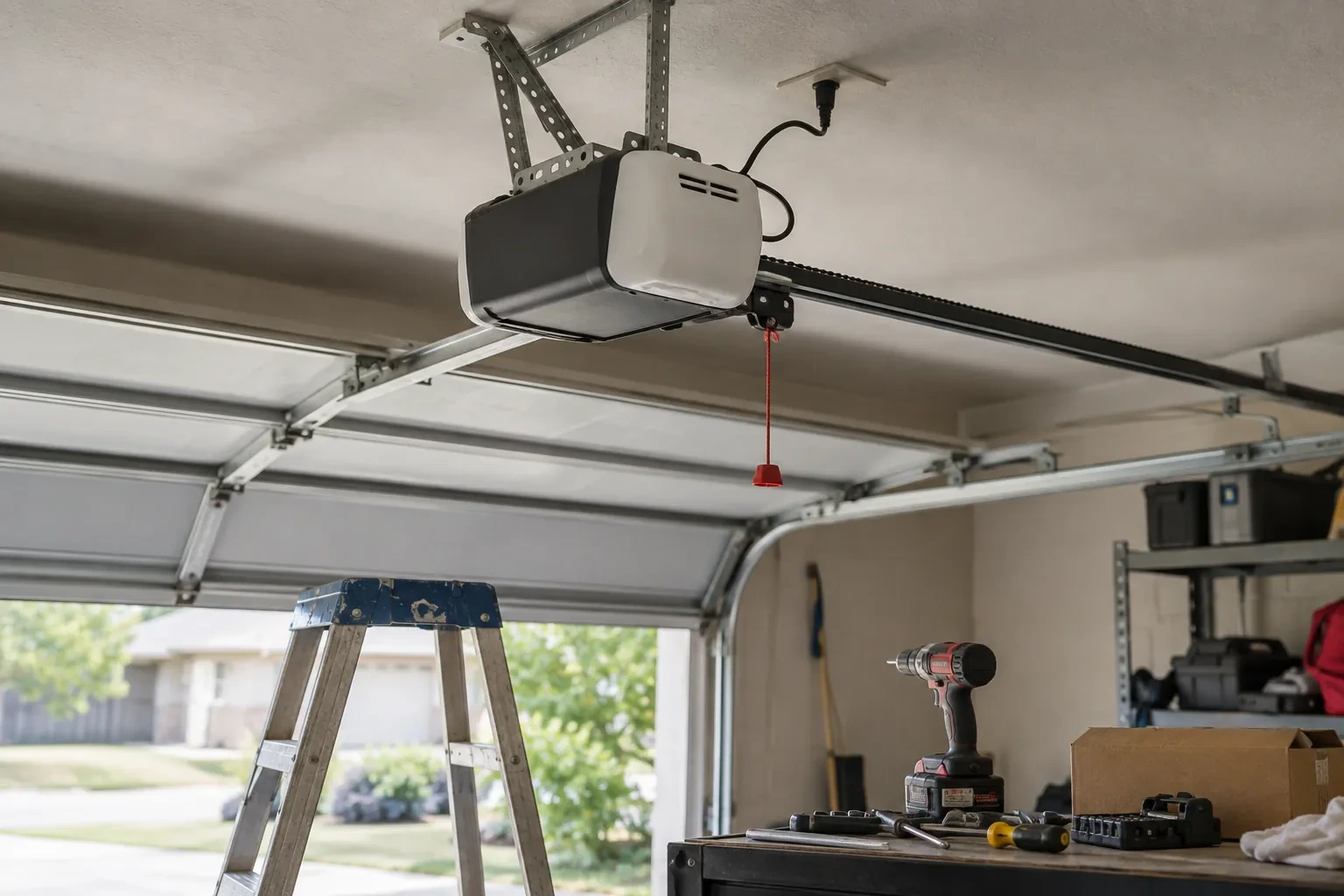
A newly balanced door often needs the opener's travel limits and force settings reset and its reversing tested. That short adjustment is named in the quote when it is needed.
Oversized, commercial or high-lift doors
Doors taller or wider than a standard residential opening, or fitted with high-lift hardware, use heavier cables and drums and take longer to set up, which the quote reflects.
Door height and lift type
Cable length follows the door height and whether the hardware is standard lift, low headroom or high lift. Taller doors and high-lift conversions take longer cables and specific drums.
What to have ready
- Is the door sitting level, or is one corner higher than the other?
- Is the door closed, fully open, or stuck partway?
- Do you have the door's manual or a label showing the model?
Garage Door Cable Replacement: questions
QuestionsWhat are garage door cables made of?
They are galvanized aircraft-type wire rope: many fine steel wires twisted into strands, and the strands laid around a core, which gives a cable that bends around a small drum thousands of times without fatiguing. One end carries a swaged stop or a loop for the drum, the other a loop that fits over the bottom bracket pin. Diameter and length are chosen for the door's weight and height.
Is cable work different on a door with extension springs?
The idea is the same and the route is different. Instead of winding onto a drum, the cable runs from the bottom bracket up over a pulley at the front of the track, back over a pulley on the spring, and to an adjusting clip. The technician relaxes the springs by opening and clamping the door, replaces worn pulleys along with the cable, sets both clips the same, and confirms a containment cable runs through each spring.
What stops the door from falling if a cable lets go?
It depends, and not reliably. The other cable and its spring may hold that corner so the door tips and wedges in the track rather than falling square, and the rollers binding can add some resistance, but neither is dependable: the door can still drop unexpectedly on the failed side. Some doors also carry a broken-cable device on the bottom bracket that grips the track if a cable fails. Because the door may not be held at all, the technician clamps and supports it before doing anything else.
Related services
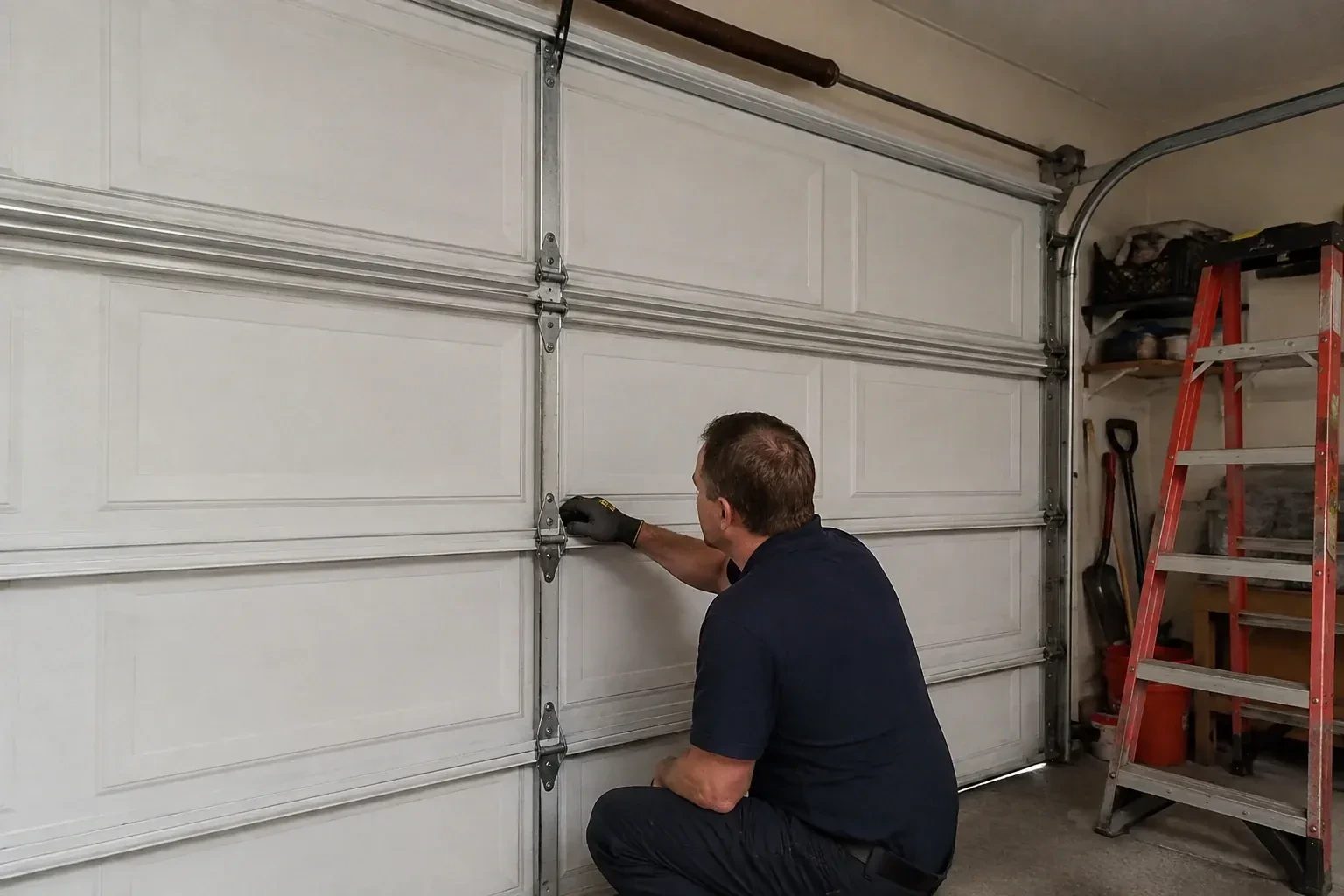
- Garage Door Hinge ReplacementPressing a hand against one of the middle hinges makes it rock on the panel.
- Garage Door Track Repair or ReplacementAfter a decade of slushy winters the bottom foot of the track is flaking rust.
- Torsion Spring ReplacementThe door drops the last stretch to the floor rather than settling, and when you stop it halfway by hand it slides down instead of staying put.