Springs · Southcrest Estates
Garage Door Hinge Replacement in Southcrest Estates
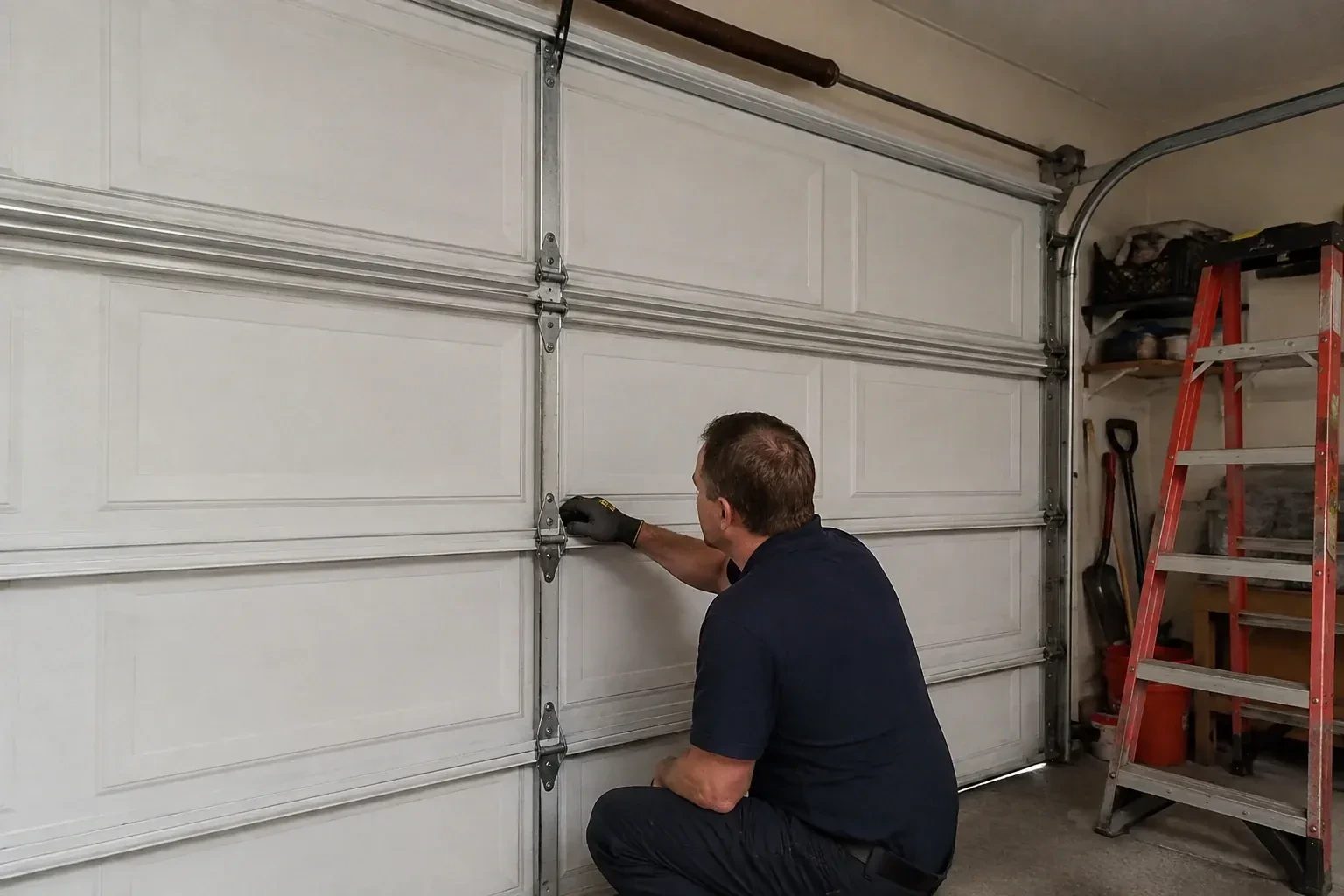
Pressing a hand against one of the middle hinges makes it rock on the panel.
In plain words
Hinges come in different thicknesses, and the visit is a chance to fit the right one. Steel gauge runs backwards: a larger number means thinner metal, so an 18-gauge hinge suits a light single door while 14-gauge is the heavier residential standard and 11-gauge is commercial stock. A heavy insulated double door, a door used many times a day, or a door whose hinges keep cracking at the knuckle benefits from moving up a gauge. The technician also checks that the hinge width and hole pattern match the door's stiles, since patterns vary between makers. You leave with hinges suited to the door's weight.
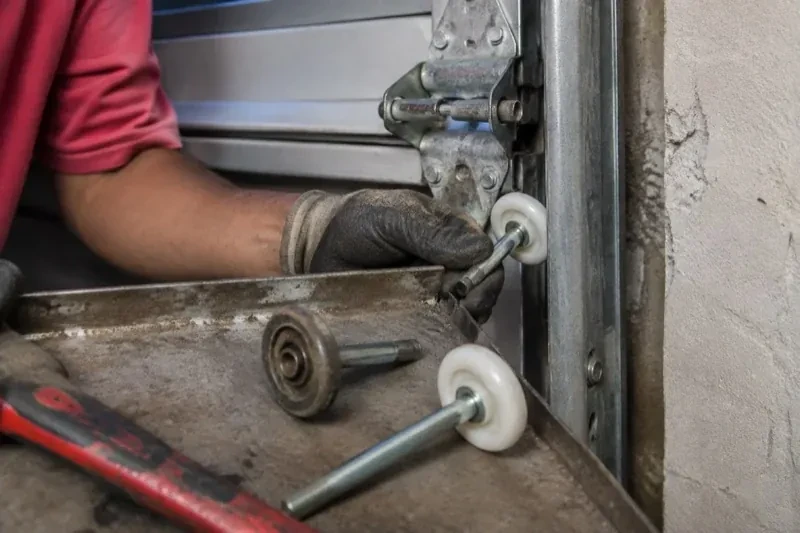
How the visit goesThe roller at the top of the second panel is leaning outward and only half of the wheel is still in the track. Behind it, the hinge that should hold it flat against the door has a screw missing and another hanging by a thread.
Garage Door Hinge Replacement
How the visit goes
The holes and the stile behind them
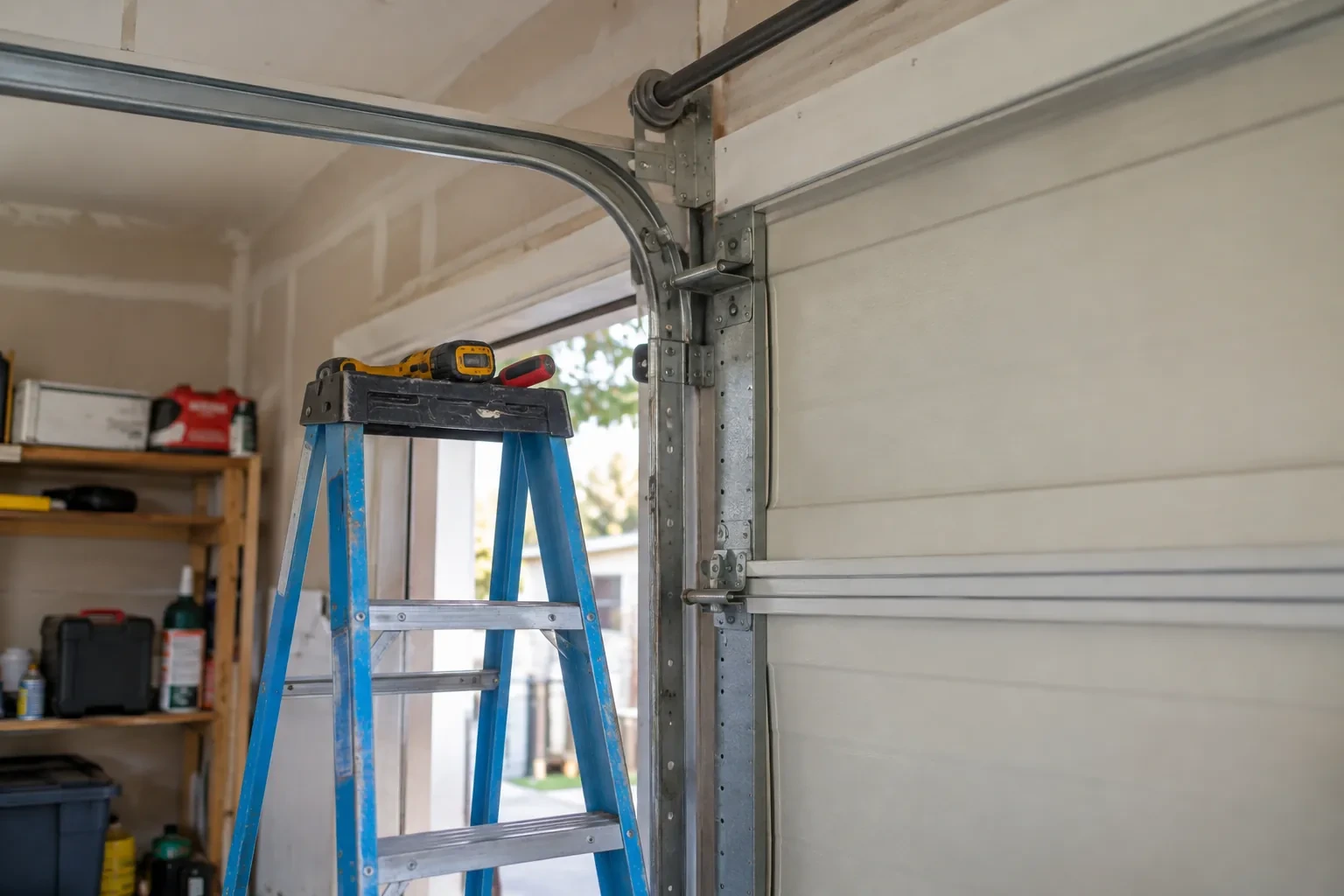
A hinge only holds if its fasteners do. The technician tests each screw for grip and looks at the stile it threads into: the folded steel channel at the panel edge on a steel door, the hinge support plate behind the skin where one is fitted, or the solid timber of a wood door. Holes that have stretched, rusted or torn are noted, because a new hinge on a stripped hole rocks just like the old one. Where the metal is thin or the wood is soft, the plan changes from screws to a through-bolt with a nut and washer, or a backer plate that spreads the load across fresh material.
The right number, gauge and pattern
Every replacement hinge is matched three ways. The number matches the joint, read from the old hinge or counted from the floor, so the roller sits at the correct offset. The gauge matches or improves on the original: 18 for a light door, 14 for the heavier residential standard, and thicker still where a heavy insulated door or heavy use calls for it. The width and hole pattern match the stile, since a hinge from one maker may not line up with another's panels. Where the door has a mix of numbers from earlier repairs, the technician corrects them so all edge hinges follow the proper sequence.
Lubricating the knuckles twice a year
Hinges want a light film of lubricant on the pin where the two leaves meet. Spring and autumn are the natural moments. Use a silicone or white lithium spray made for garage doors, put a short burst on each hinge knuckle and on the roller stems, then run the door a few times to spread it. Heavy grease or general oil holds grit and salt against the steel, so it is avoided. Leave the track itself dry and simply wipe it clean, since lubricant there collects dirt and lets the wheels slide. Ten hinges take about as long as making a coffee.
Garage Door Hinge Replacement
In the van
Replacement rollers
Heavy-gauge hinges for heavy doors
Hex-head self-drilling screws
Carriage bolts, nuts and washers
Socket set and impact driver
Garage Door Hinge Replacement
What affects the quote
Supporting the panel while hinges are changed
A heavy insulated panel needs to be braced while its hinges are off, so it does not sag or twist out of place mid-repair. Lighter steel or wood panels usually need no extra support, and the technician decides which applies once the panel is in front of them.
A full hardware tune-up while the technician is there
Some people use the visit to have every hinge screw snugged, all rollers checked and the whole door lubricated. That service is optional and quoted as one line.
Opener adjustment afterwards
A door that folds freely again sometimes needs the opener's force and travel settings reset and its reversal retested. That adjustment is named when it is needed.
What to have ready
- Is the door closed, open or stuck partway right now?
- Is the door a single or a double, and how many panels does it have?
- Can you read a number stamped on the hinges near the edge?
Garage Door Hinge Replacement: questions
QuestionsHow long do garage door hinges last?
Many hinges last the life of the door. Those that fail early are usually on doors that were out of balance, had seized rollers, saw heavy daily use, or sat in slush and salt through many winters. A light hinge on a heavy door also wears sooner. Rather than a fixed number of years, watch for cracks near the holes, a rocking pin, rust at the knuckle and screws backing out.
What are the hinges made of?
Stamped galvanized steel, formed into two leaves joined by a pin or a rolled tube. The zinc coating is what resists rust in a garage that sees wet cars and salt, and it is why a scratched or bent hinge starts to brown at the damaged spot. Edge hinges include a tube that holds the roller stem. Thickness is given as a gauge, most residential hinges being 14 or 18.
Can I keep using the door until the hinge is replaced?
It is better to leave the door closed and use another way in and out. A joint with a failed hinge flexes more on every trip, which strains the neighbouring hinges, can pull a roller out of the track and can crease the panel itself. If the door is already open or stuck partway, leave it where it is rather than running the opener again. A closed, still door is what the technician hopes to find.
Related services
- Garage Door Track Repair or ReplacementAfter a decade of slushy winters the bottom foot of the track is flaking rust.
- Garage Door Cable ReplacementThere was a sharp crack from the garage, and when you went to look the door had dropped on one side and jammed.
- Torsion Spring ReplacementThe door drops the last stretch to the floor rather than settling, and when you stop it halfway by hand it slides down instead of staying put.