Repairs · Manor Park
Garage Door Bottom Seal Replacement in Manor Park
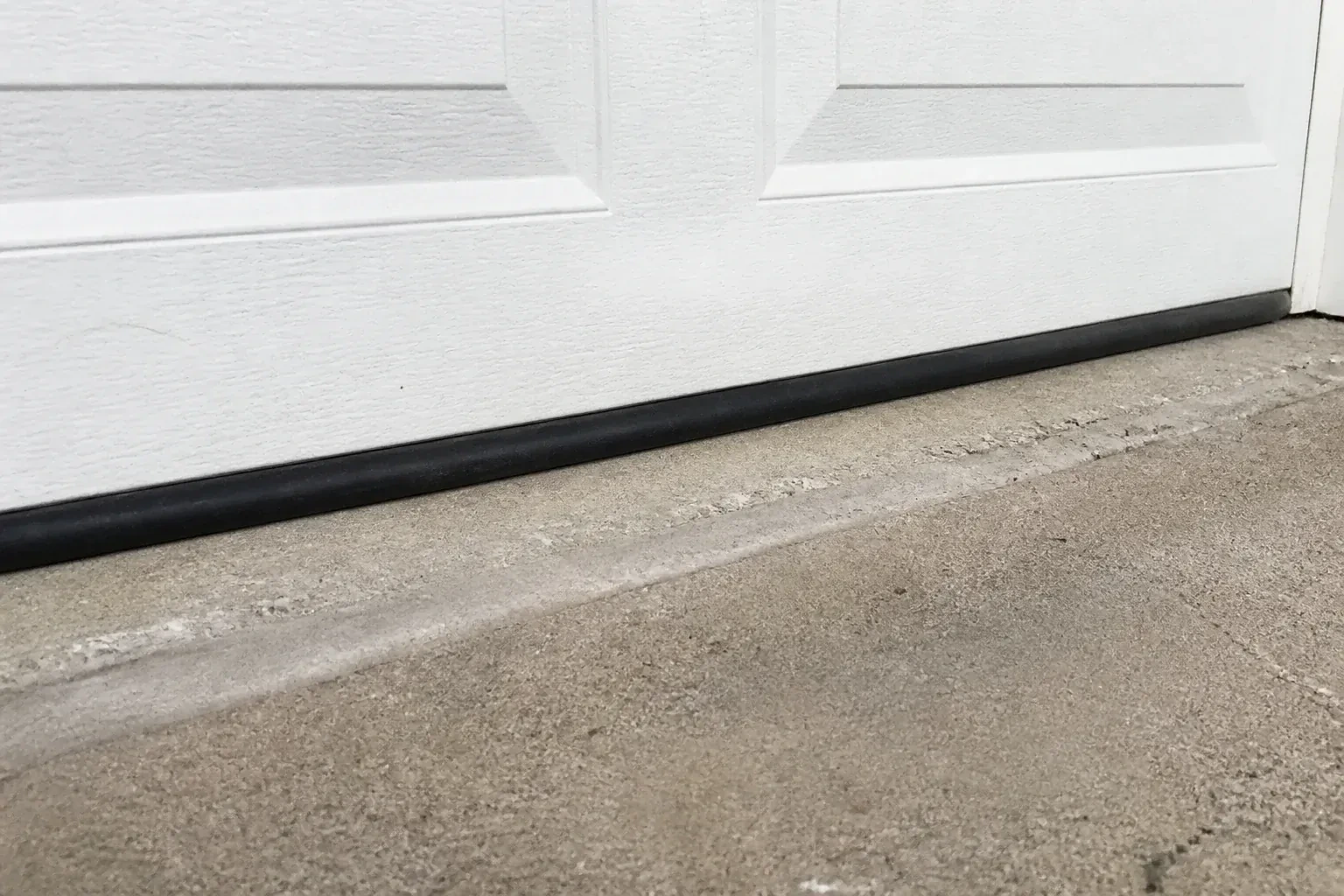
One end of the bottom seal has slipped out of its channel and hangs down like a loose shoelace.
In plain words
Not every gap under a garage door is the seal, so the service begins with finding out what the gap is. A strip of light the whole width usually means a seal that has flattened or hardened. A gap at one corner only points to a door hanging out of level or a slab that has settled there. A gap in the middle suggests a bowed bottom section or a crowned floor. Reading these before choosing a seal means the new strip is sized to fill the space that is really there, and any door or floor issue is named and dealt with rather than hidden behind a thicker bulb.
How the visit goesEvery mild afternoon the snow melts off the car, runs to the door, and by morning the rubber strip along the bottom is frozen to the concrete. Last week the opener lifted the door and left half the seal on the floor.
Garage Door Bottom Seal Replacement
How the visit goes
Is the door hanging level?
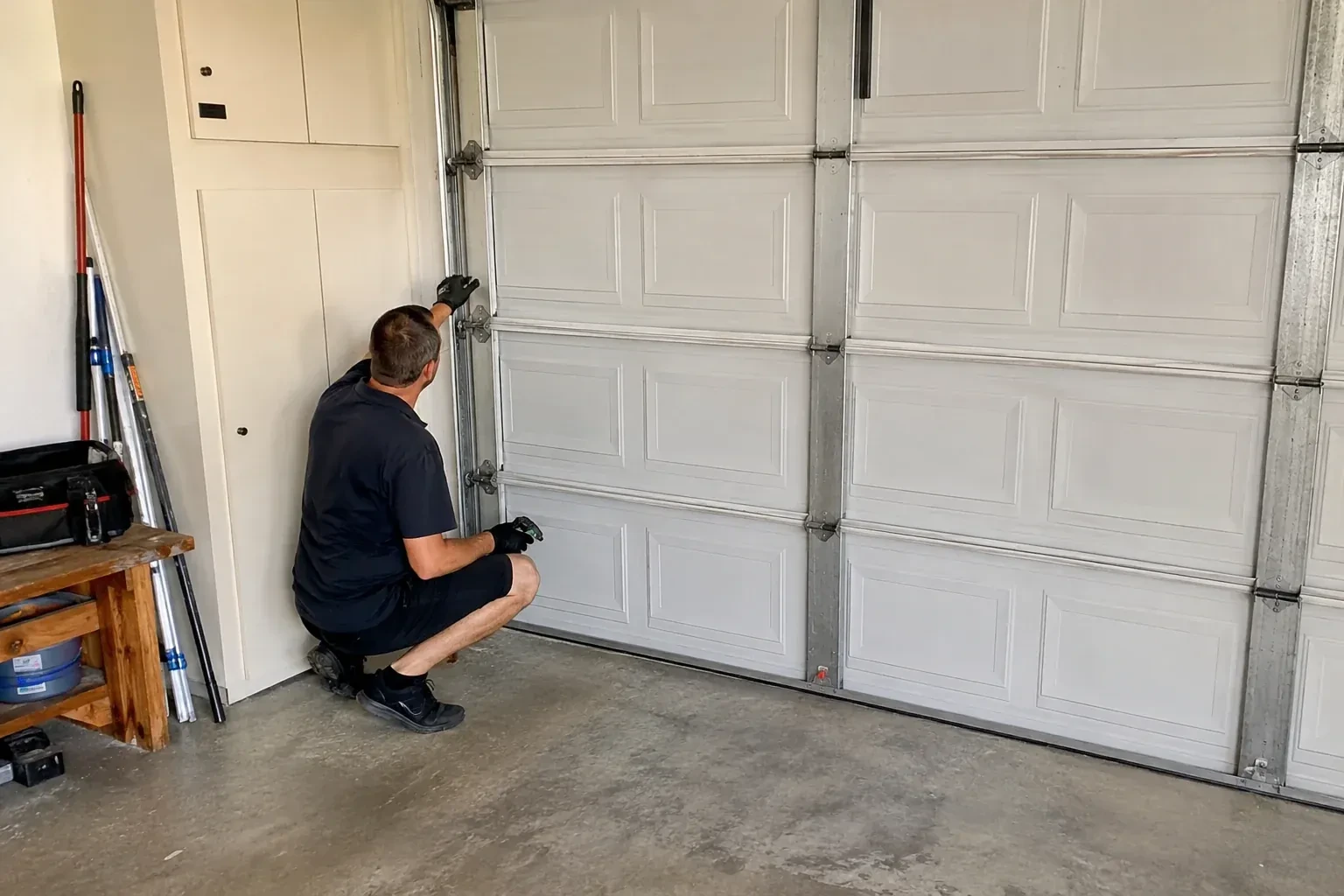
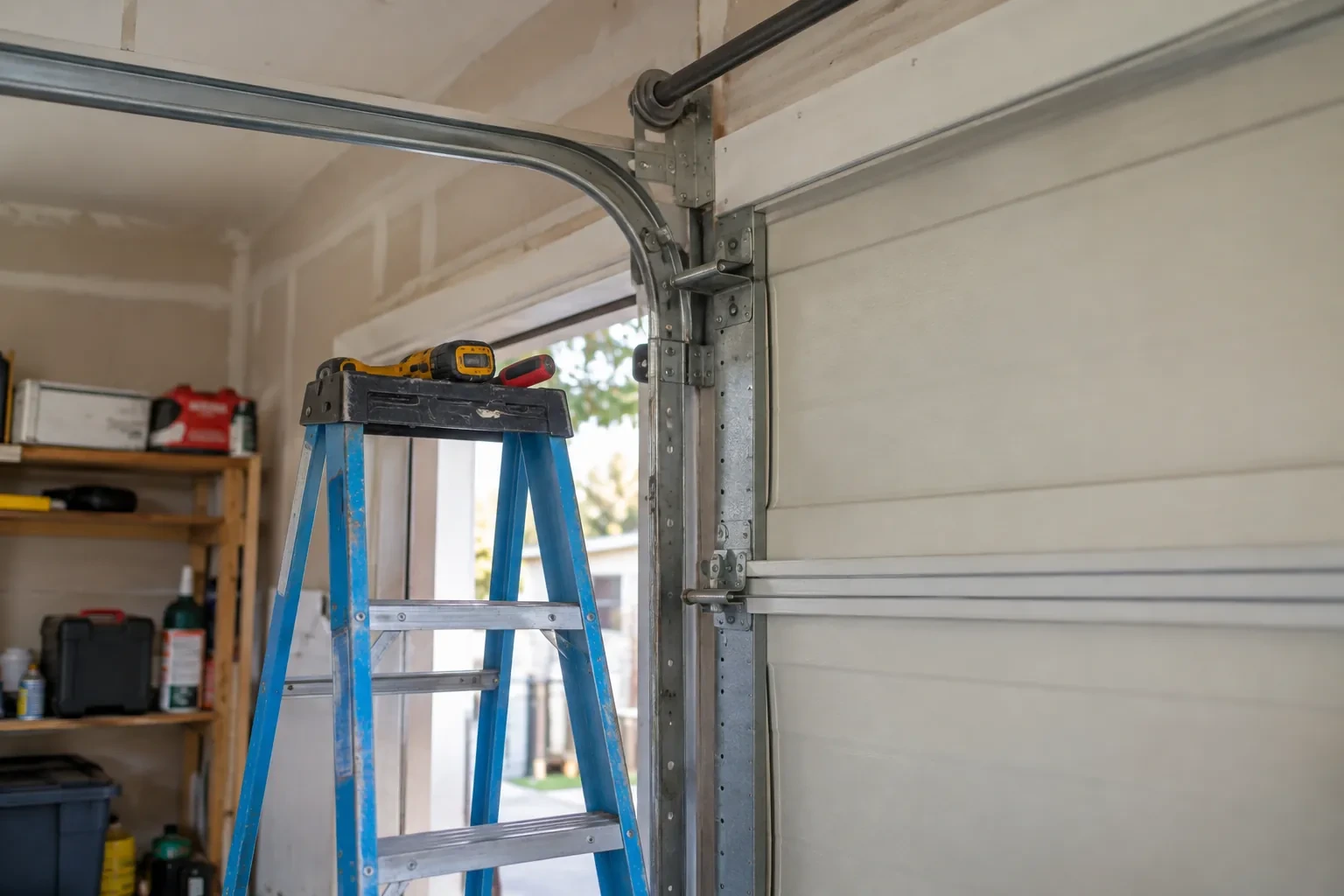
A gap that is wider at one corner is often the door rather than the seal. The technician checks that the door sits square in the opening by comparing the bottom edge to the floor at both ends and looking at how each lift cable wraps its drum. A stretched cable, a drum that has crept on its shaft or uneven spring tension drops one corner a centimetre or two, and setting the door level is what closes that wedge. If the door is out of level, the adjustment is explained as its own item and done first, and the seal is then sized to the gap that remains. Getting the order right saves fitting a seal twice.
Closing the door onto the new seal
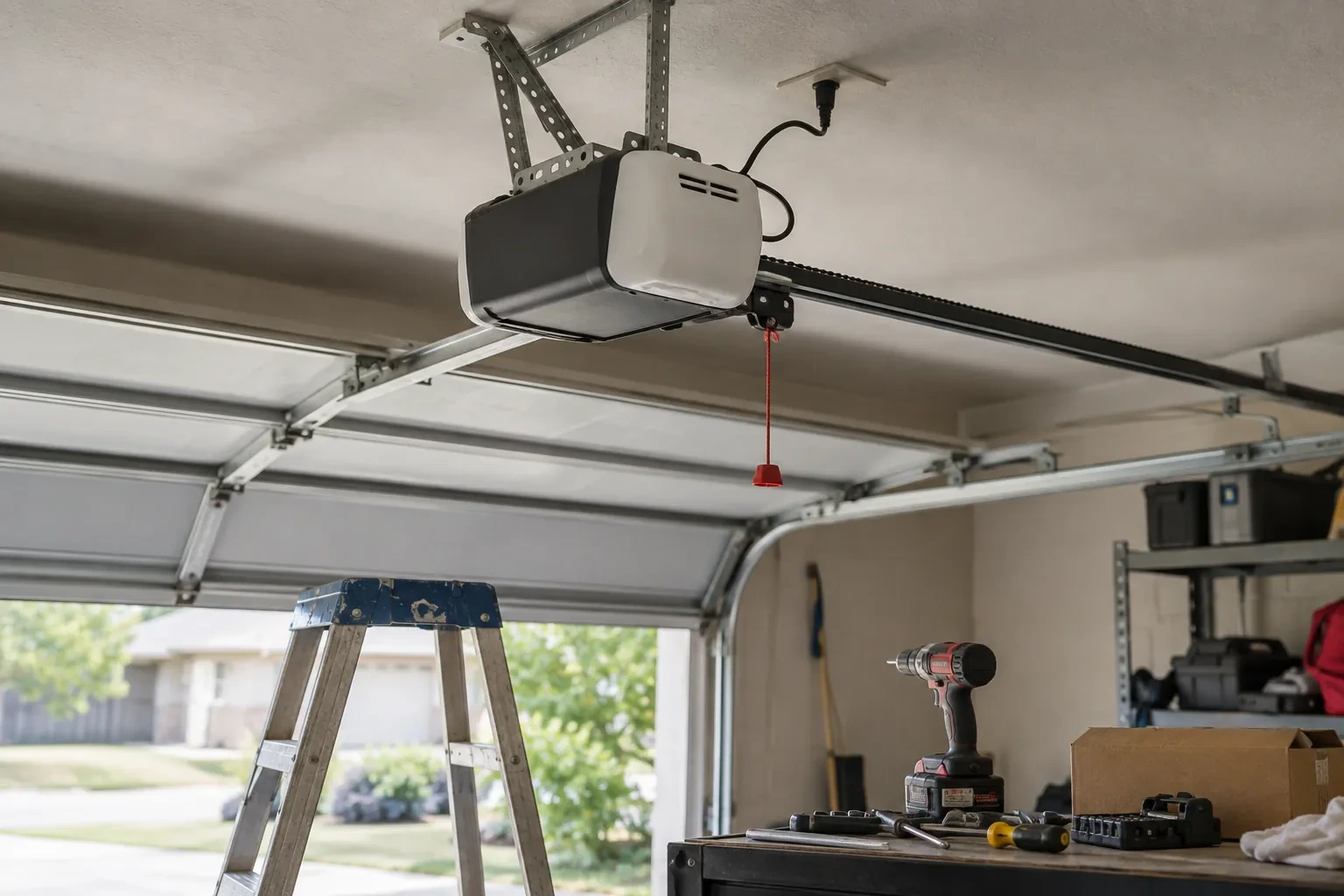
The clamps come off, the opener is reconnected, and the door is run closed under power while the technician watches the bottom edge meet the floor. The down limit is adjusted so the seal compresses gently along its full length without the section bowing, and the force setting is checked so the door settles onto the new, taller strip without reversing. From inside with the lights off, the floor line is checked again for daylight. The reversing test with a 38 mm (1.5 in) solid object, or a 2x4 laid flat under the door, and the photo-eye test finish the visit, and you are shown the door closing before the ladder is packed.
Keeping the new seal from freezing down
The habit that does the most for a bottom seal in a cold climate is a wipe of silicone spray along the seal face each autumn and again mid-winter. It leaves a film that meltwater struggles to bond to, so the strip lifts off the slab cleanly on a frosty morning. Avoid petroleum-based sprays, which soften vinyl. If the door does freeze to the floor, leave the remote alone: free the seal by hand with gentle warmth from a hair dryer or by working a plastic scraper along the line, then run the door. A minute of patience keeps the new seal whole.
Garage Door Bottom Seal Replacement
In the van
Threshold seal and adhesive
Silicone spray lubricant
Bulb or U-style bottom seal
Bead-style bottom seal
Nail-on vinyl strip for wood doors
Garage Door Bottom Seal Replacement
What affects the quote
Opener adjustment
Resetting the down limit and force and repeating the reversing test after a taller seal is fitted is a short step that the quote names whenever the door has an opener.
Rodent-resistant seal
A profile with embedded stainless mesh for a garage that has had repeated chewing costs more per length than plain vinyl and is offered where the history calls for it.
Season and conditions
A seal frozen to the slab, ice at the threshold or working in deep cold adds time for freeing the old strip, clearing the line and keeping the new roll warm enough to feed.
What to have ready
- Is the door a single or a double, and roughly how wide?
- Is the old seal hard and cracked, torn, hanging loose, or missing?
- What is getting in: light, drafts, water, snow, leaves or pests?
Garage Door Bottom Seal Replacement: questions
QuestionsShould I choose the tallest seal available?
Not as a rule. The seal should fill the measured gap with a little compression to spare. A profile far taller than the gap gets squashed flat, wears at the fold, bows the bottom section and can make the opener reverse. Where the floor dips at one end, a taller bulb is the right call for that door; where the floor is flat, a standard height lasts longer. Measuring first is what settles it.
What happens during the visit?
The technician maps the gap with the door closed, checks the door is level and the bottom section straight, and identifies the retainer and profile. The opener is disconnected and the door clamped at working height. The old seal comes out, the channels are cleaned, a new seal is cut and fed in, and any retainer work is done. The door is then closed under power, the opener reset, and the reversing and photo-eye tests run.
Is this something I can do myself?
Many homeowners do, and a technician's value lies in the parts that go wrong: identifying the exact profile so the seal seats, freeing a strip that has fused into its channel, spotting a retainer or door-level problem behind the gap, and resetting the opener's limit and force so the door lands gently and still reverses on an obstruction. If you would rather have it measured, fitted and tested in one go, that is what the visit is for.
Related services
- Garage Door Tune-UpSince the first cold snap the door has been sluggish.
- Off-Track Garage Door ResetThe morning after a thaw the opener groaned, the door stayed stuck to the icy floor for a second, then lurched up crooked.
- Garage Door Panel ReplacementRust has crept along the bottom edge of the lowest section.