Springs · Berkshire Village
Garage Door Track Repair or Replacement in Berkshire Village
After a decade of slushy winters the bottom foot of the track is flaking rust.
In plain words
What you get back is a door that runs its full height without a catch, hesitation or bang, with every roller seated in its channel and both sides rising together. The track sits plumb and firm on the jambs, the horizontal runs hold level from solid hangers, and the door seals along the stop when closed. Because the track was set to the door and the springs re-tensioned to it, the door balances by hand and the opener works lightly. You also leave with a note of the track profile, radius and lift type, which makes any later part a simple match.
How the visit goesThe door climbs crooked, one side clearly ahead of the other. Nothing looks broken, but the two tracks sit different distances from the door, and one leans in toward the opening near the top.
Garage Door Track Repair or Replacement
How the visit goes
What bent it
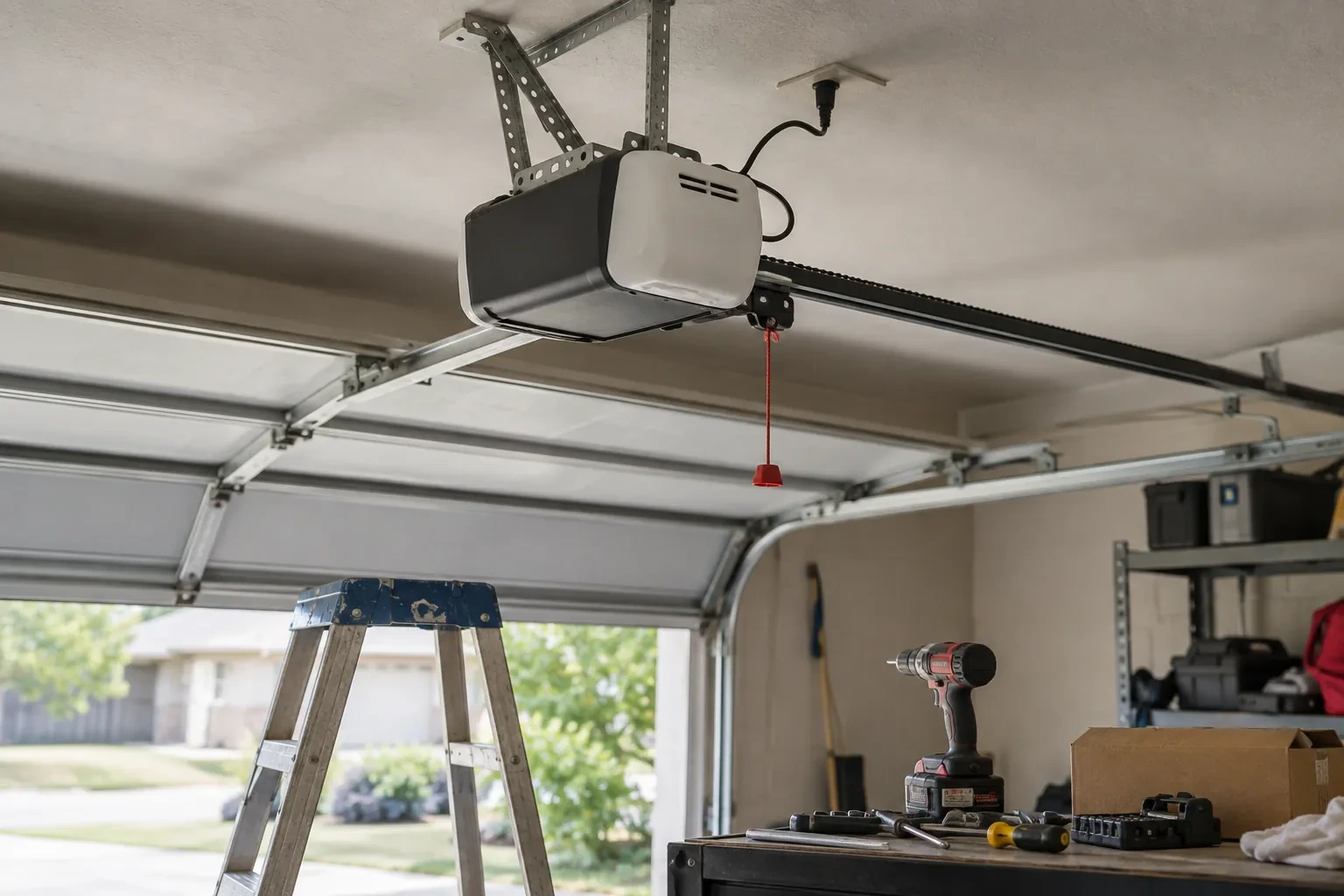
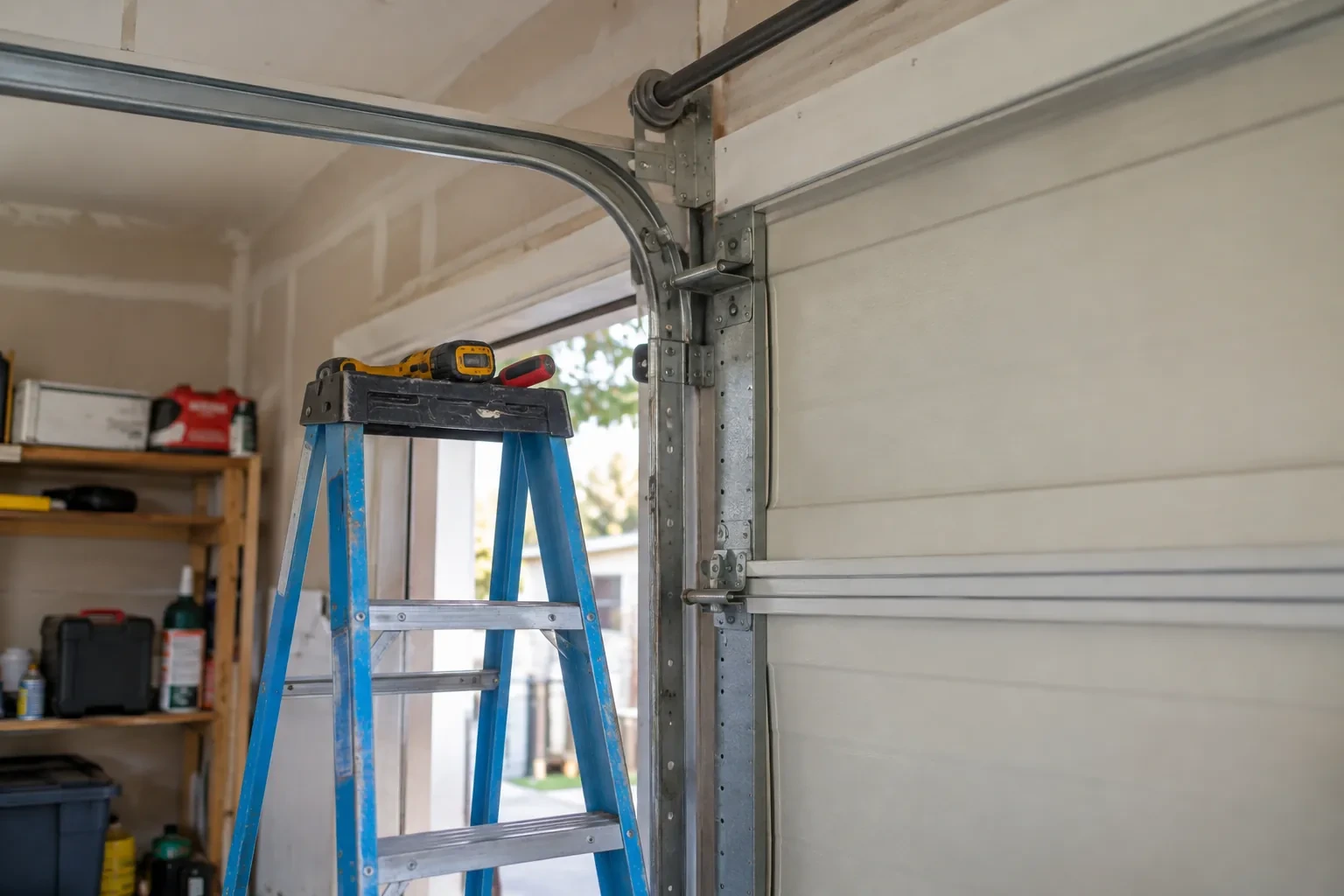
The last question is why the track moved, because the answer shapes the repair. A crease at bumper height with paint transfer is impact. A track that has crept off the jamb with screws backed out is vibration and time. Rust at the floor is winter. A twisted section on one side with a slack cable beside it usually follows a cable or spring failure that tipped the door. Overhead damage tends to trace back to storage, a ladder or a hanger that gave way. You will be asked what happened before the symptom, since a shovel in the opening or a nudge from the car is a fact only you can supply.
Replacing a vertical section
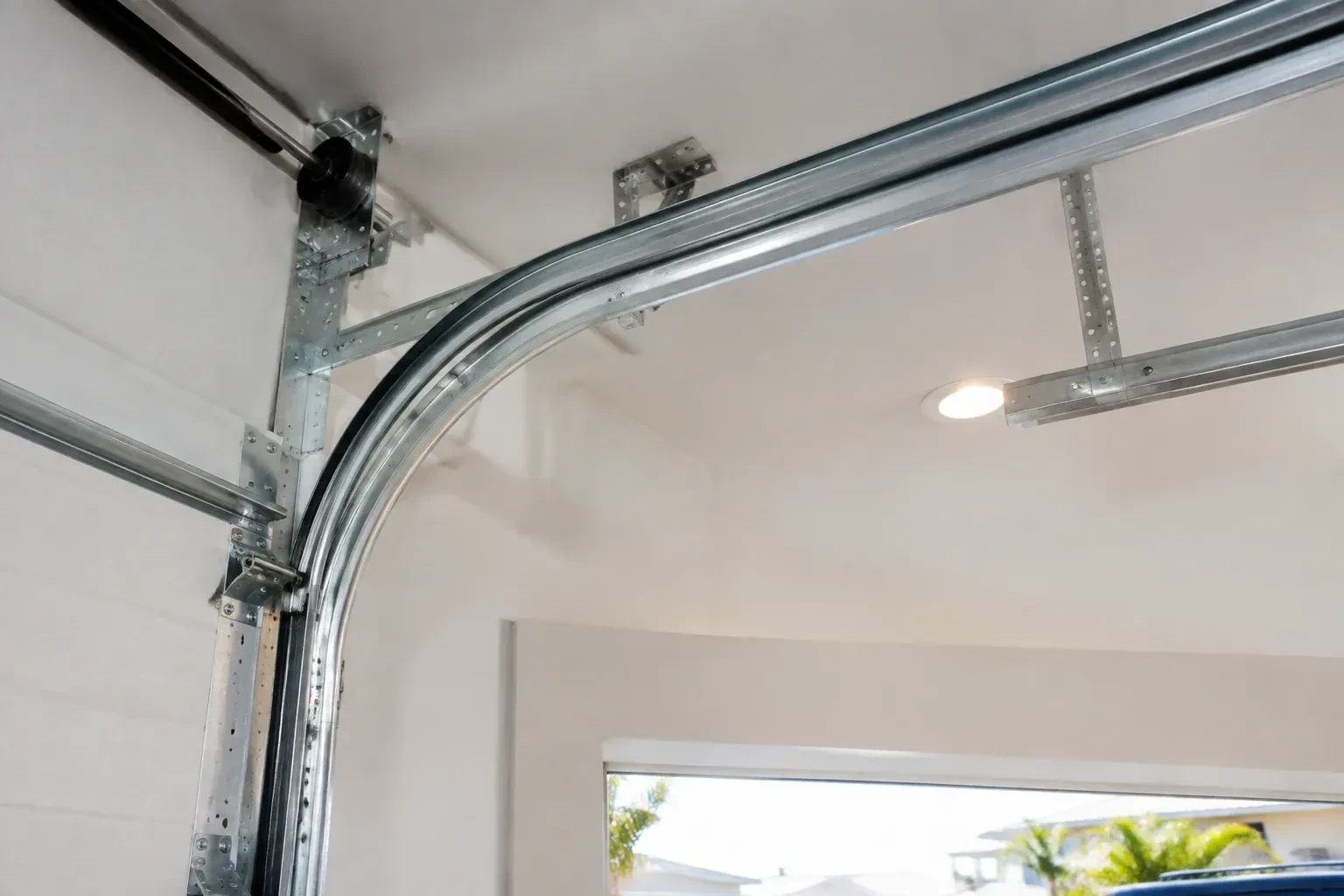
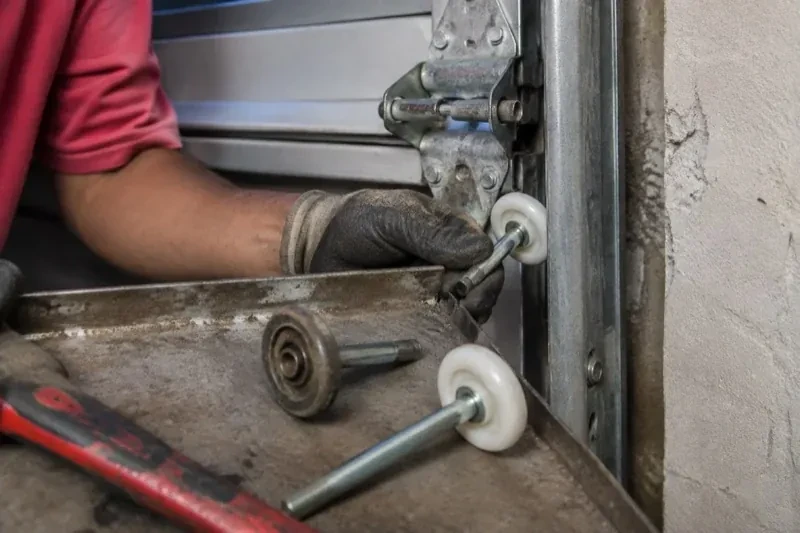
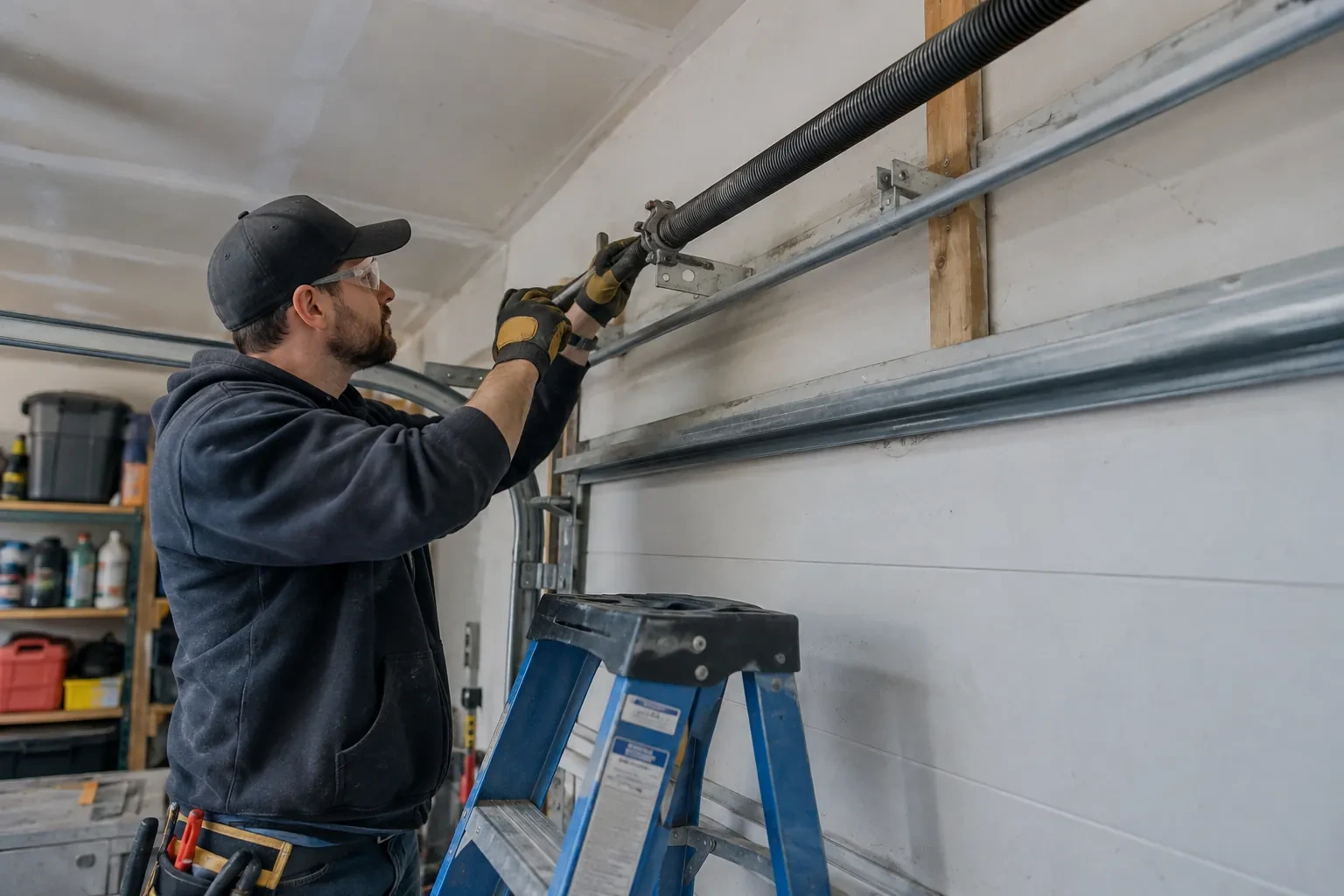
A kinked, cracked or rust-thinned vertical track comes off in one piece. The jamb brackets or continuous angle are unbolted, the old track is lifted clear with the rollers eased out of it, and the new piece, cut or ordered to the same height, profile and mounting style, is bolted to the brackets. The joint with the curve at the flag bracket is aligned so a roller passes with no step, and the track is offered up to the jamb, set plumb with the correct spacing and taper, and lag-screwed into sound wood. The rollers are threaded back in as the door is released from its clamps a little at a time.
Keep the track clean, lubricate the rest
Follow your door's own manual on the track: many makers want it kept dry and clean, since grease there collects grit and sawdust and lets a roller skid rather than turn, which is exactly how tracks get worn and spread, while others call for a lubricant at the bend specifically. Wipe the inside of each channel with a rag a couple of times a year, and clear any leaves or cobwebs from the horizontal runs. The moving parts get their own lubricant too, the roller bearings, hinge pins and springs, in the type and points the manual specifies. That division of labour keeps the newly set track smooth for a long time.
Garage Door Track Repair or Replacement
In the van
Top fixtures
Vertical track, two-inch or three-inch
Jamb brackets or continuous angle
Lag screws and track bolts
Jamb lumber and construction screws
Garage Door Track Repair or Replacement
What affects the quote
Condition of the jamb wood
Where the jamb is soft or split at the floor, sistering or replacing the lower length is carpentry added to the track work, and the lumber and fasteners are listed on their own line.
Springs that have to be unloaded
Work at the flag bracket or on the curve means winding the torsion springs down and back up. That adds time, and the quote says whether it applies to your repair.
Corrosion and seized fasteners
Lag screws and track bolts rusted solid take time to free or cut, and hardware eaten by salt is replaced rather than reused, which appears in the parts list.
What to have ready
- Is the door closed, fully open, or stuck partway?
- Has any roller come out of the channel?
- Is there rust on the track or brackets near the floor?
Garage Door Track Repair or Replacement: questions
QuestionsHow often should the track and its fasteners be checked?
A glance each month from inside the garage, with the door closed, is enough to catch a bracket standing off the jamb or a hanger starting to lean. Twice a year, snug the bracket bolts and lag screws, wipe out the channel, and watch the door make a full trip to confirm every roller stays in the track. The industry guidance also suggests an annual visit by a trained door technician, who checks the track with the rest of the system.
My door rubs the frame on one side. Is that a track problem?
Often, yes. The vertical track is meant to stand a fraction further from the jamb at the top than the bottom, so the closed door seals on its stop and swings clear as it rises. If a bracket has loosened or the track was set flat to the wood, the door drags along the stop moulding every trip. Resetting the spacing and taper, and tightening the brackets into sound wood, usually ends the rub.
What is the track made of, and what sizes are there?
It is galvanized steel folded into a channel that the roller wheels ride in. Residential doors almost always use two-inch track, with three-inch reserved for heavier or wider doors. The curved piece comes in a radius, commonly 12 or 15 inches, that sets how much headroom the door uses. Replacement pieces are ordered to the same profile, gauge and radius as the rest of the set.
Related services
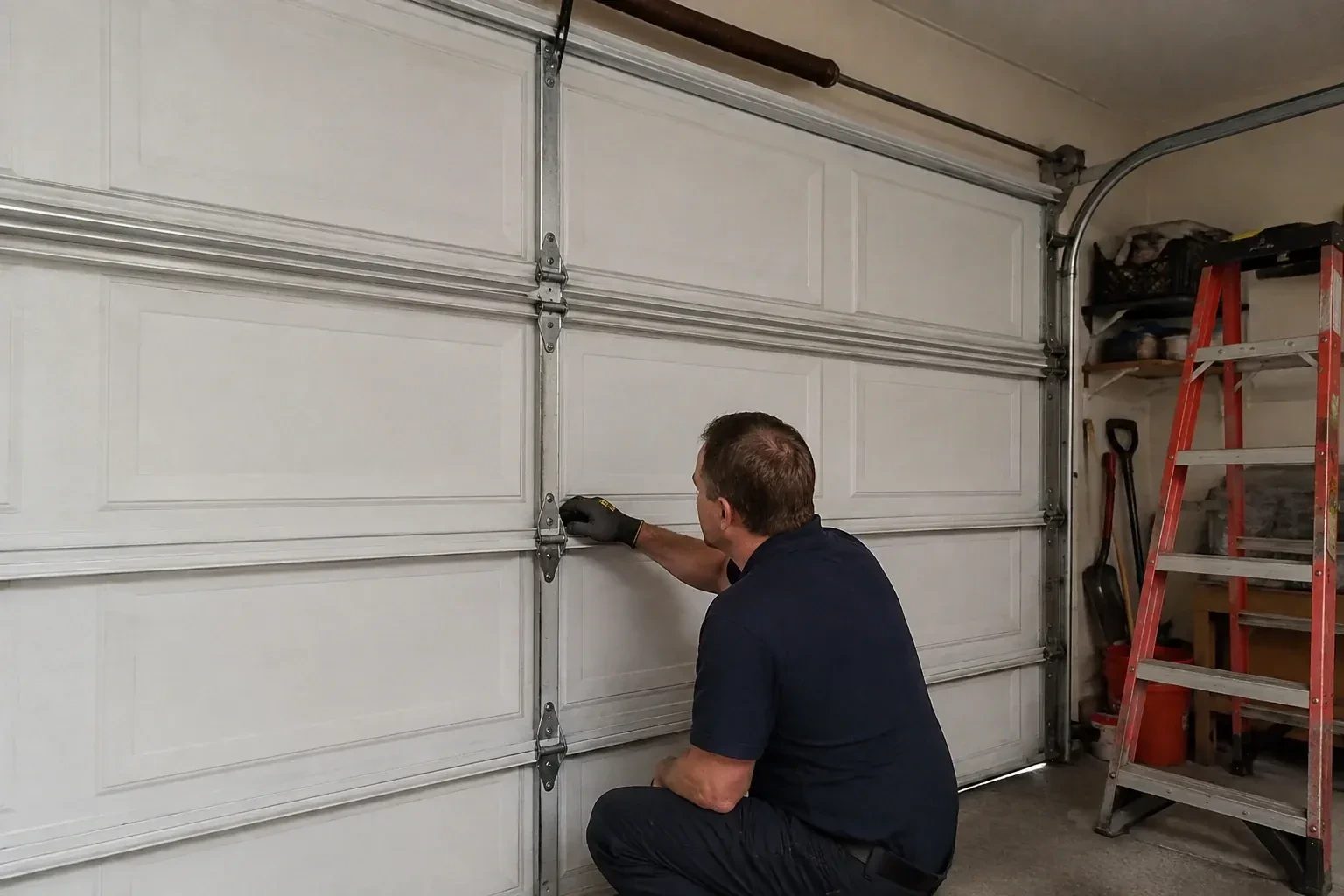
- Garage Door Hinge ReplacementPressing a hand against one of the middle hinges makes it rock on the panel.
- Garage Door Cable ReplacementThere was a sharp crack from the garage, and when you went to look the door had dropped on one side and jammed.
- Torsion Spring ReplacementThe door drops the last stretch to the floor rather than settling, and when you stop it halfway by hand it slides down instead of staying put.