Springs · Oxford Park
Garage Door Track Repair or Replacement in Oxford Park
After a decade of slushy winters the bottom foot of the track is flaking rust.
In plain words
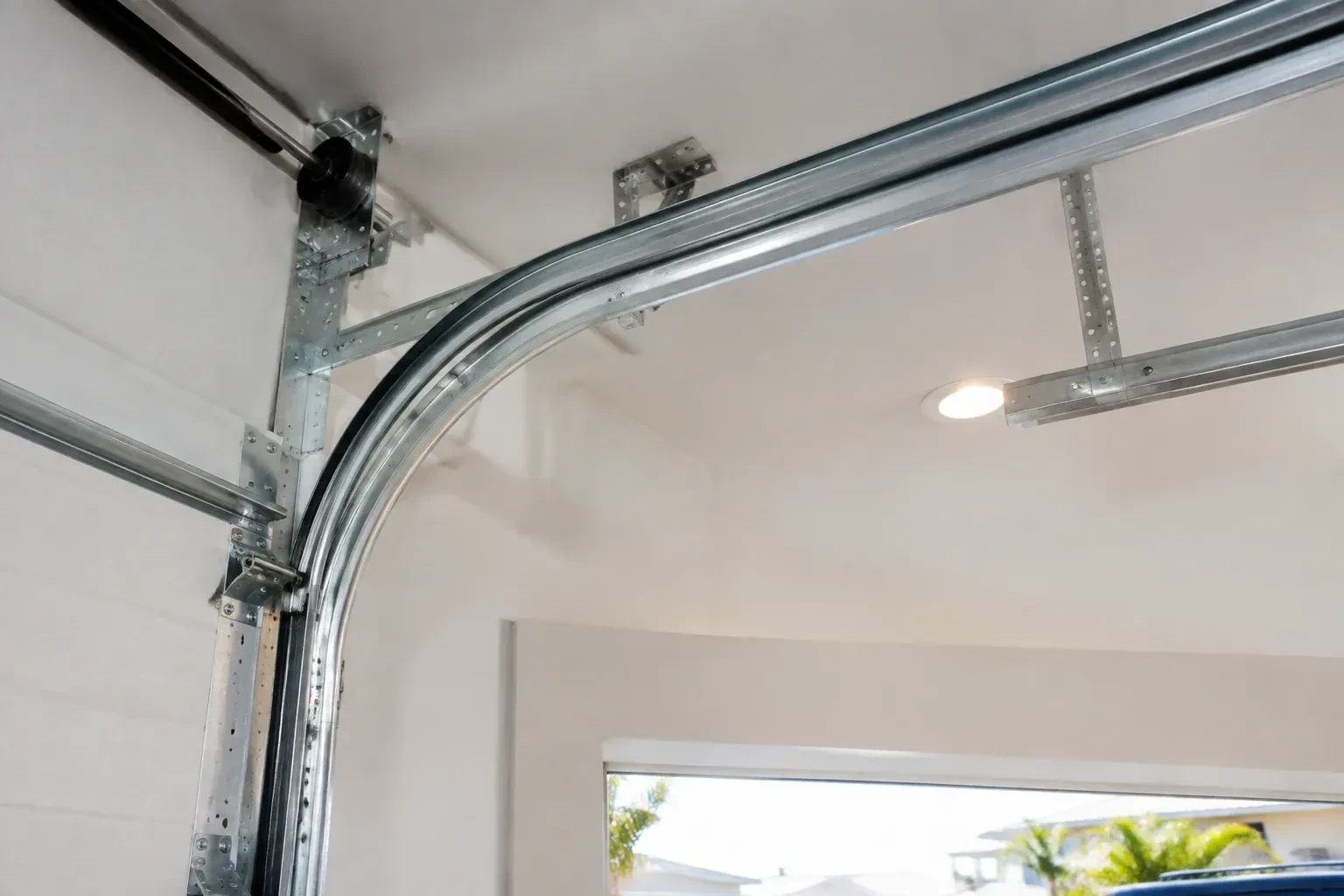
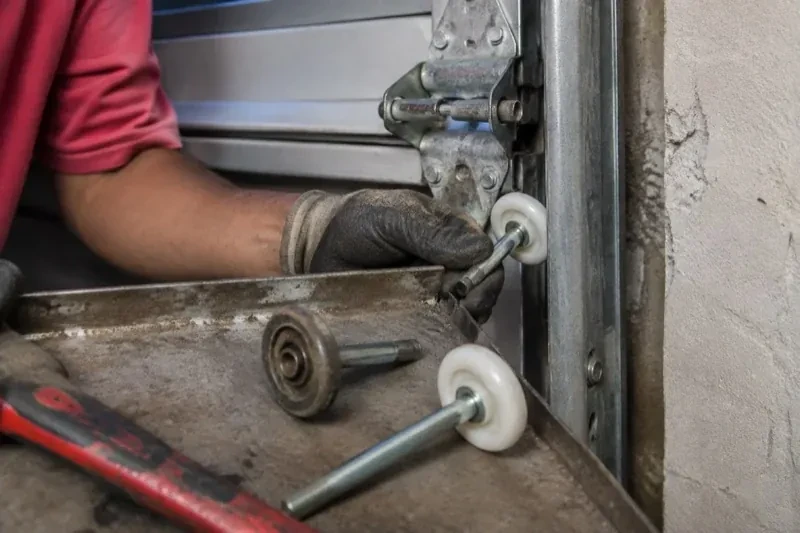
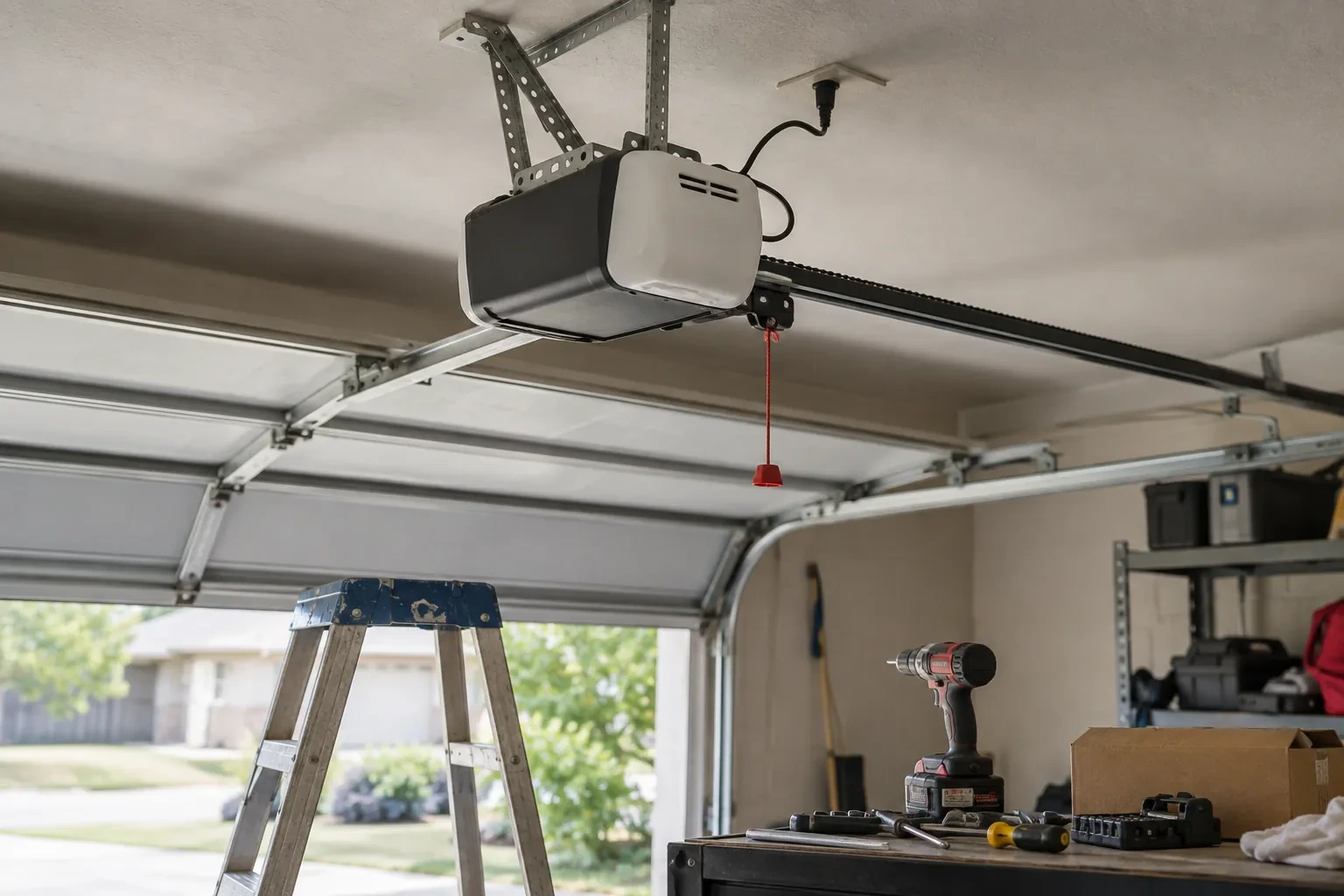
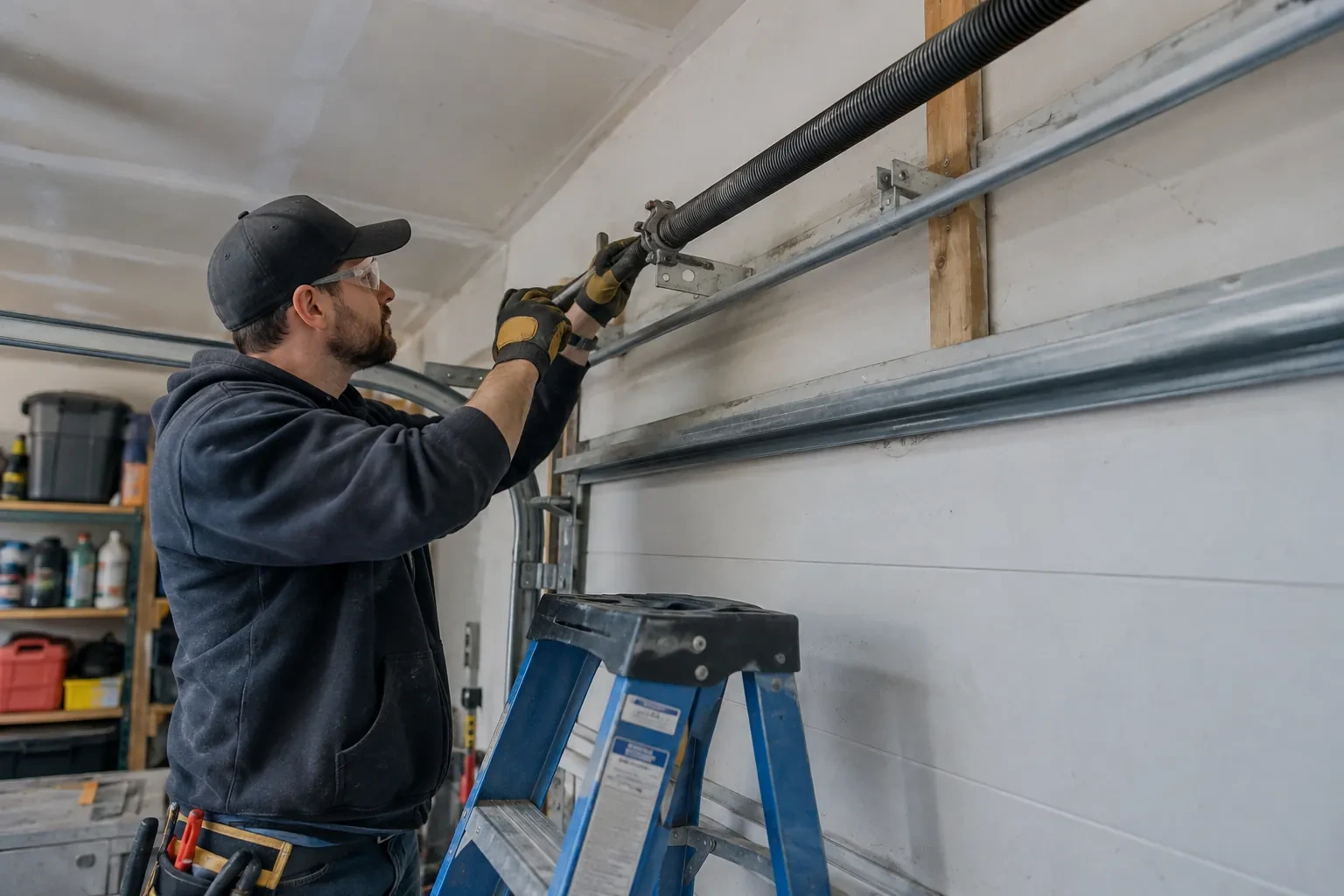
A track visit follows a set order. The opener is disconnected and the door clamped so it cannot move while hardware is loose. Then the whole path is checked: plumb and spacing of each vertical run, the state of the jamb wood and lag screws, the curve, the level of the horizontal run and the hangers holding it, and each roller's seat in the channel. Damaged pieces are dressed or replaced, brackets and hangers are refixed into solid framing, and the two sides are set square to each other. Rollers are reseated, spring tension is returned, and the door is run by hand, balanced, and the opener tested.
How the visit goesBacking out this morning, the mirror caught the track beside the door. Now there is a crease in the steel at about knee height, and the door stops with a bang every time a roller reaches it.
Garage Door Track Repair or Replacement
How the visit goes
Plumb, spacing and taper of each vertical run
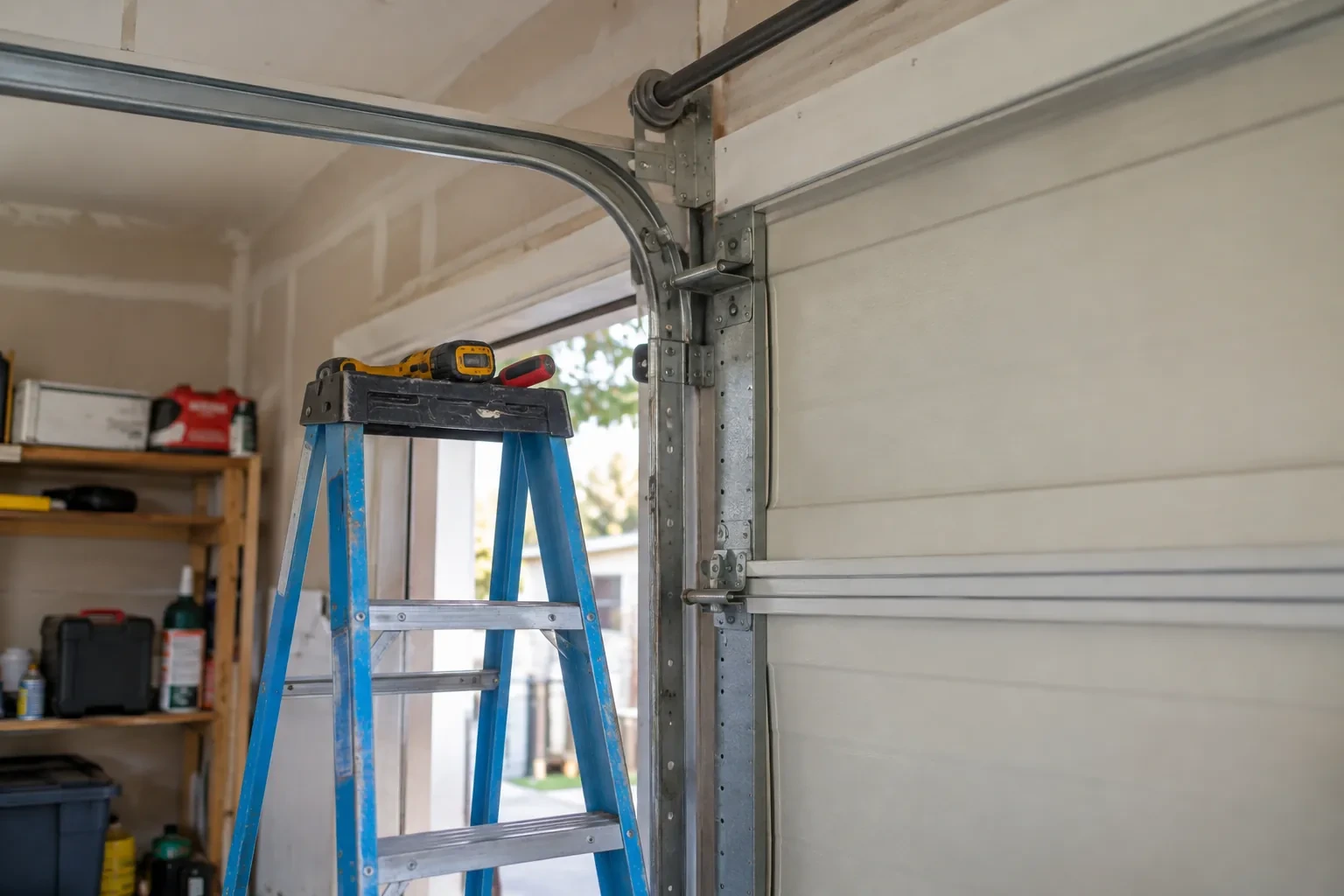
A level goes on each vertical track, and a tape measures the gap between the track and the edge of the door at the top and the bottom. The run should be plumb, and the two sides should sit the same distance from the door so both columns of rollers carry evenly. There is also a deliberate detail: the top of the vertical track stands a little further from the jamb than the bottom, so the closed door presses into its stop moulding for a seal and swings clear the moment it starts to rise. A track pushed flat to the jamb makes the door drag; one standing too far out lets it rattle.
Setting the geometry
With the pieces in place, the technician sets the track to the door rather than to the wall. Each vertical run is plumbed, the gap to the door edge is matched side to side, and the top of each run is eased away from the jamb by the small amount that lets the door seal at the stop when closed and release on opening. The horizontal runs are levelled to each other and squared to the verticals, and the distance between the two tracks is checked at the floor, at the curve and at the rear so the door is neither pinched nor loose anywhere in its travel. Every bracket is then tightened in that position.
Parking and storage habits around the track
Most creased tracks are met by a bumper or a mirror, and most bent horizontal runs by a ladder, a bike or a shelf. It is worth walking the garage after the repair and noticing what sits close to the track: move the recycling bins and the hockey bags a hand's width further in, hang nothing from the back hangs, and leave the horizontal runs clear of stacked boxes. Inside the car, a strip of tape on the floor or a tennis ball on a string marks where to stop. None of this is a chore, and it addresses the single most common reason a straightened track needs straightening again.
Garage Door Track Repair or Replacement
In the van
Top fixtures
Vertical track, two-inch or three-inch
Jamb brackets or continuous angle
Lag screws and track bolts
Jamb lumber and construction screws
Garage Door Track Repair or Replacement
What affects the quote
Straighten or replace, piece by piece
A dent dressed in place is labour only, while a kinked, cracked or rusted length means a new piece of track. The quote lists which pieces get which treatment.
Door size and weight
A tall or double door has longer runs of track and heavier loads on the brackets, and a heavy insulated or wood door may call for heavier-gauge track and more substantial hangers.
How the door is sitting
A door resting closed is straightforward. One jammed partway on a bent section, or with rollers out of the channel, has to be supported and freed before the track can be measured.
What to have ready
- Is the wood beside the door soft, split or discoloured at the floor?
- Is it a single or a double door, and roughly how tall?
- Can you see a bracket standing away from the wood or screws backing out?
Garage Door Track Repair or Replacement: questions
QuestionsHow often should the track and its fasteners be checked?
A glance each month from inside the garage, with the door closed, is enough to catch a bracket standing off the jamb or a hanger starting to lean. Twice a year, snug the bracket bolts and lag screws, wipe out the channel, and watch the door make a full trip to confirm every roller stays in the track. The industry guidance also suggests an annual visit by a trained door technician, who checks the track with the rest of the system.
My door rubs the frame on one side. Is that a track problem?
Often, yes. The vertical track is meant to stand a fraction further from the jamb at the top than the bottom, so the closed door seals on its stop and swings clear as it rises. If a bracket has loosened or the track was set flat to the wood, the door drags along the stop moulding every trip. Resetting the spacing and taper, and tightening the brackets into sound wood, usually ends the rub.
What is the track made of, and what sizes are there?
It is galvanized steel folded into a channel that the roller wheels ride in. Residential doors almost always use two-inch track, with three-inch reserved for heavier or wider doors. The curved piece comes in a radius, commonly 12 or 15 inches, that sets how much headroom the door uses. Replacement pieces are ordered to the same profile, gauge and radius as the rest of the set.
Related services
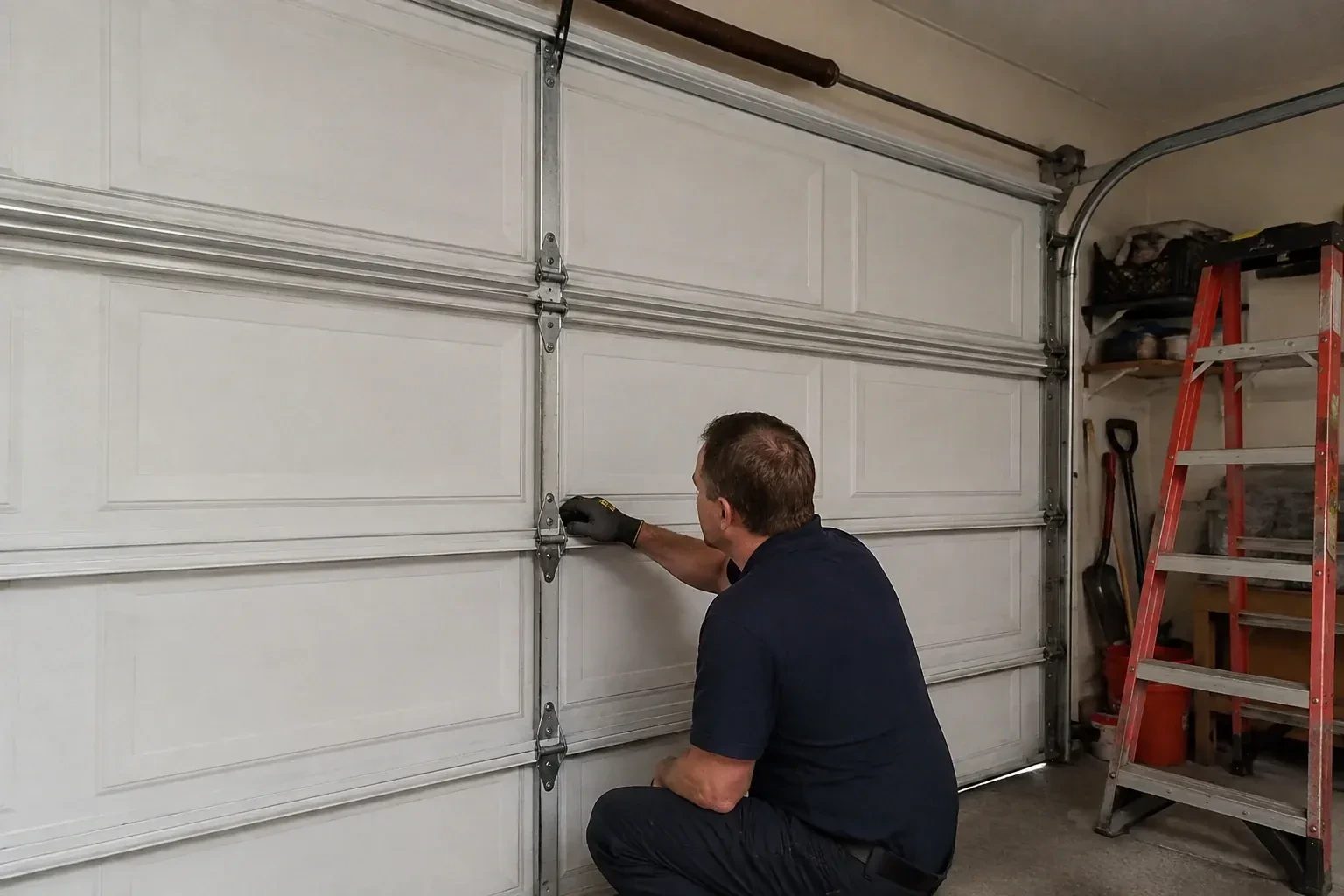
- Garage Door Hinge ReplacementPressing a hand against one of the middle hinges makes it rock on the panel.
- Garage Door Cable ReplacementThere was a sharp crack from the garage, and when you went to look the door had dropped on one side and jammed.
- Torsion Spring ReplacementThe door drops the last stretch to the floor rather than settling, and when you stop it halfway by hand it slides down instead of staying put.