Repairs · Oakridge Park
Garage Door Tune-Up in Oakridge Park
Since the first cold snap the door has been sluggish.
In plain words
What you receive from a tune-up is a door that runs better and a written picture of its condition. The technician records what was tightened, lubricated and adjusted, how the balance and reversal tests came out, and which parts are still healthy, which are worth watching and which have reached the point of a separate repair quote. That record turns the next visit into a comparison instead of a fresh start, and it lets you describe a new sound precisely when it appears. Maintenance and repair stay two different decisions, and you make the second one with the facts in front of you.
How the visit goesHalfway up, the door shudders. The sections seem to catch for a moment, the whole assembly shakes, then it carries on as if nothing happened. You have started holding your breath at that spot each time.
Garage Door Tune-Up
How the visit goes
Hardware, bracket by bracket
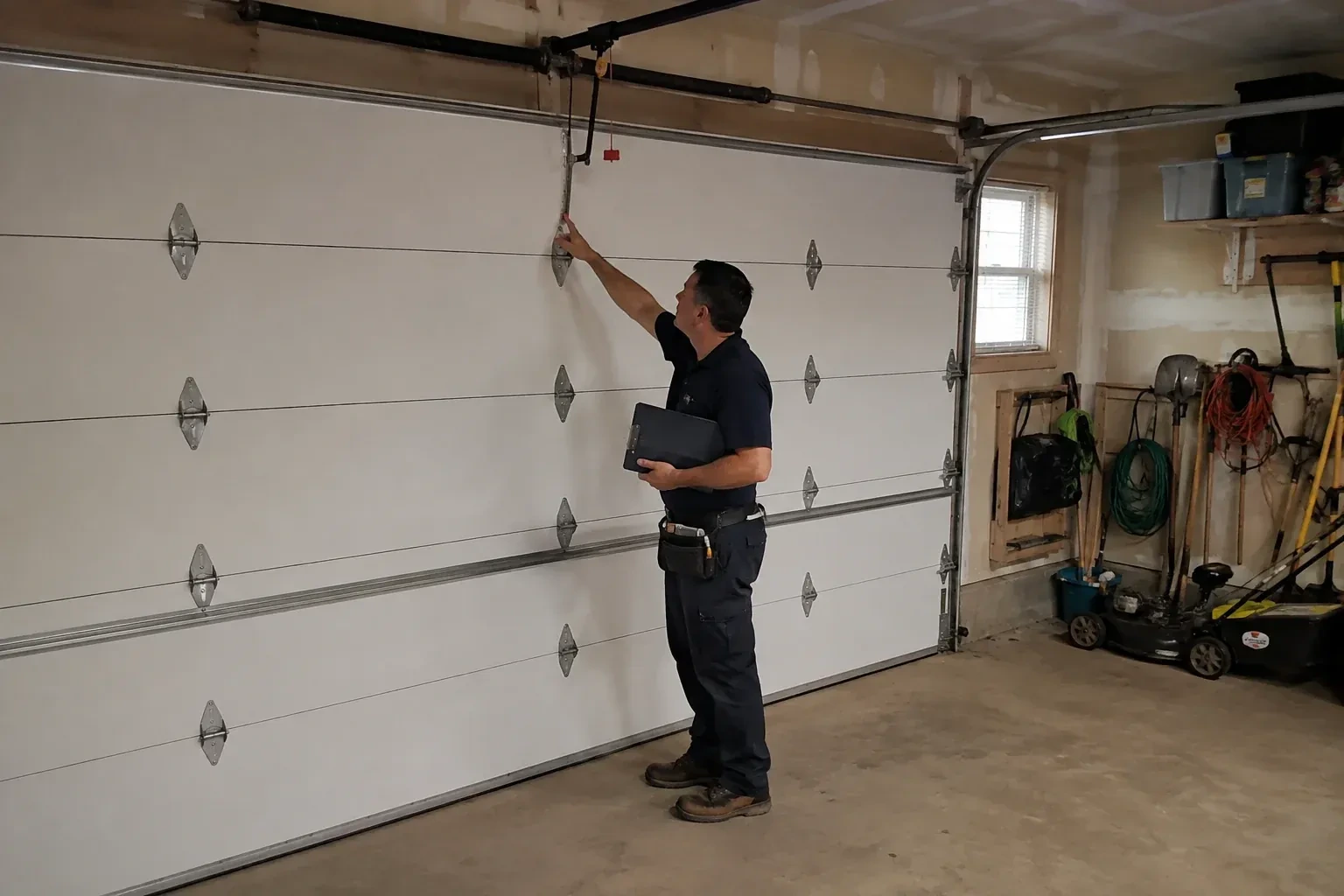
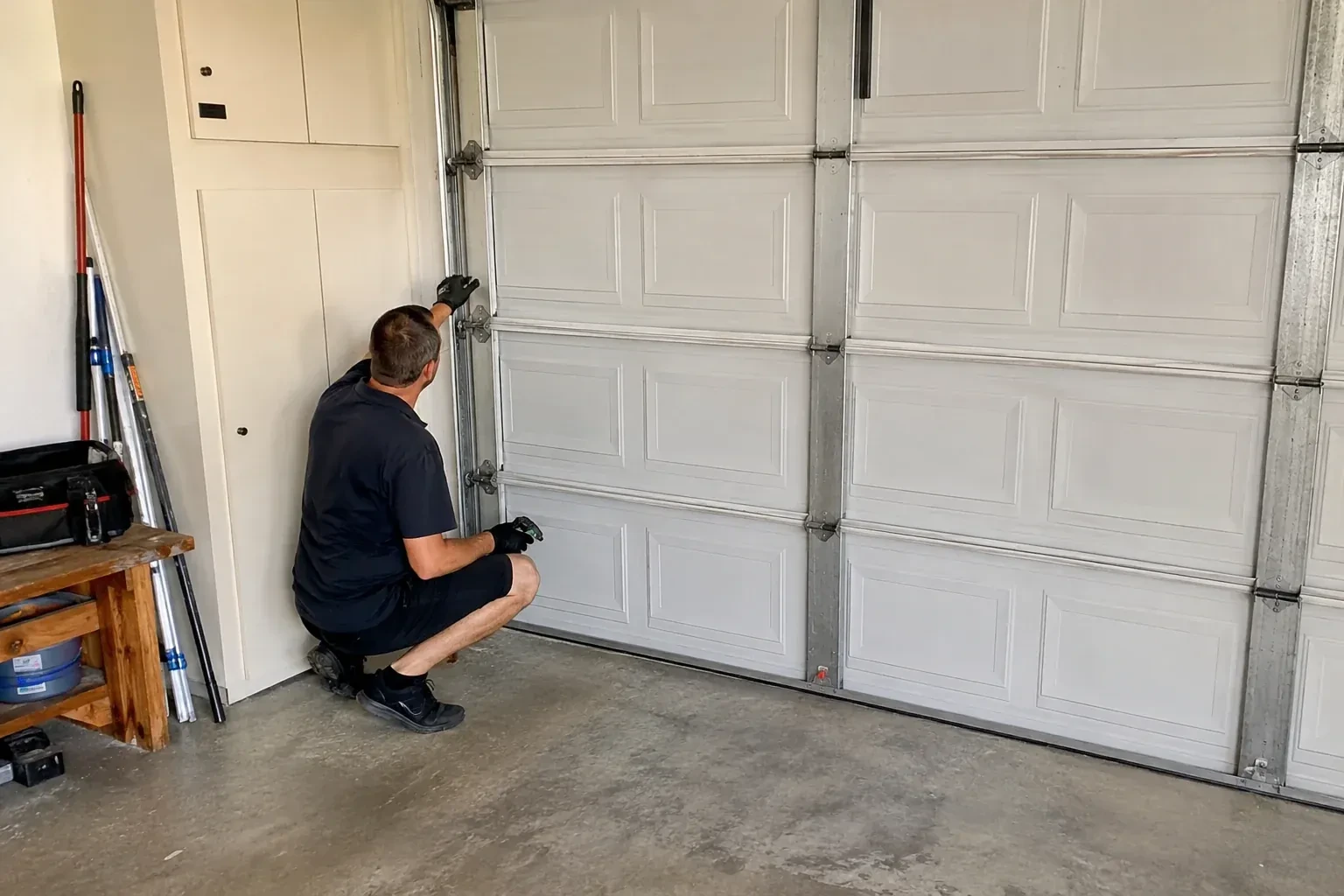
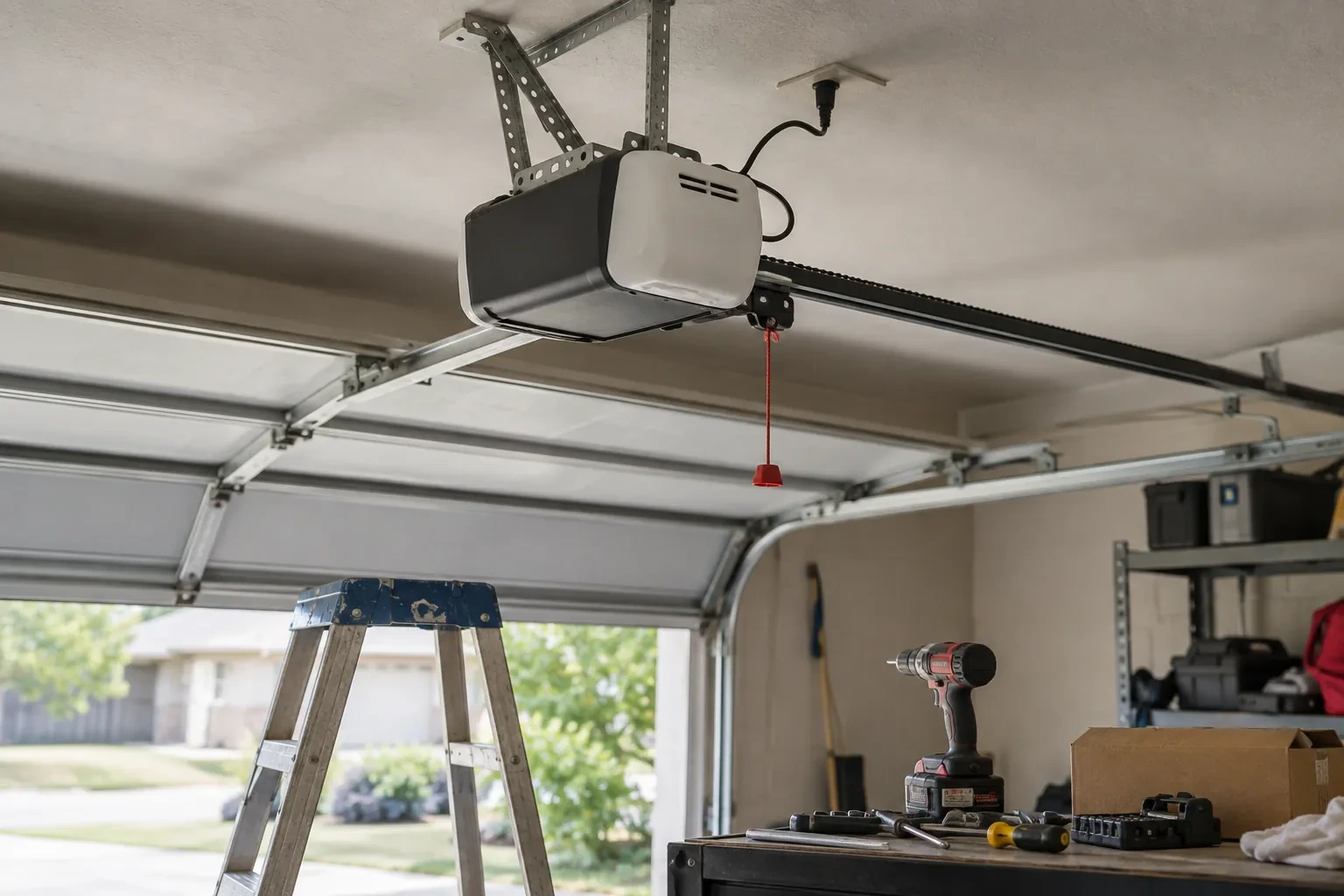
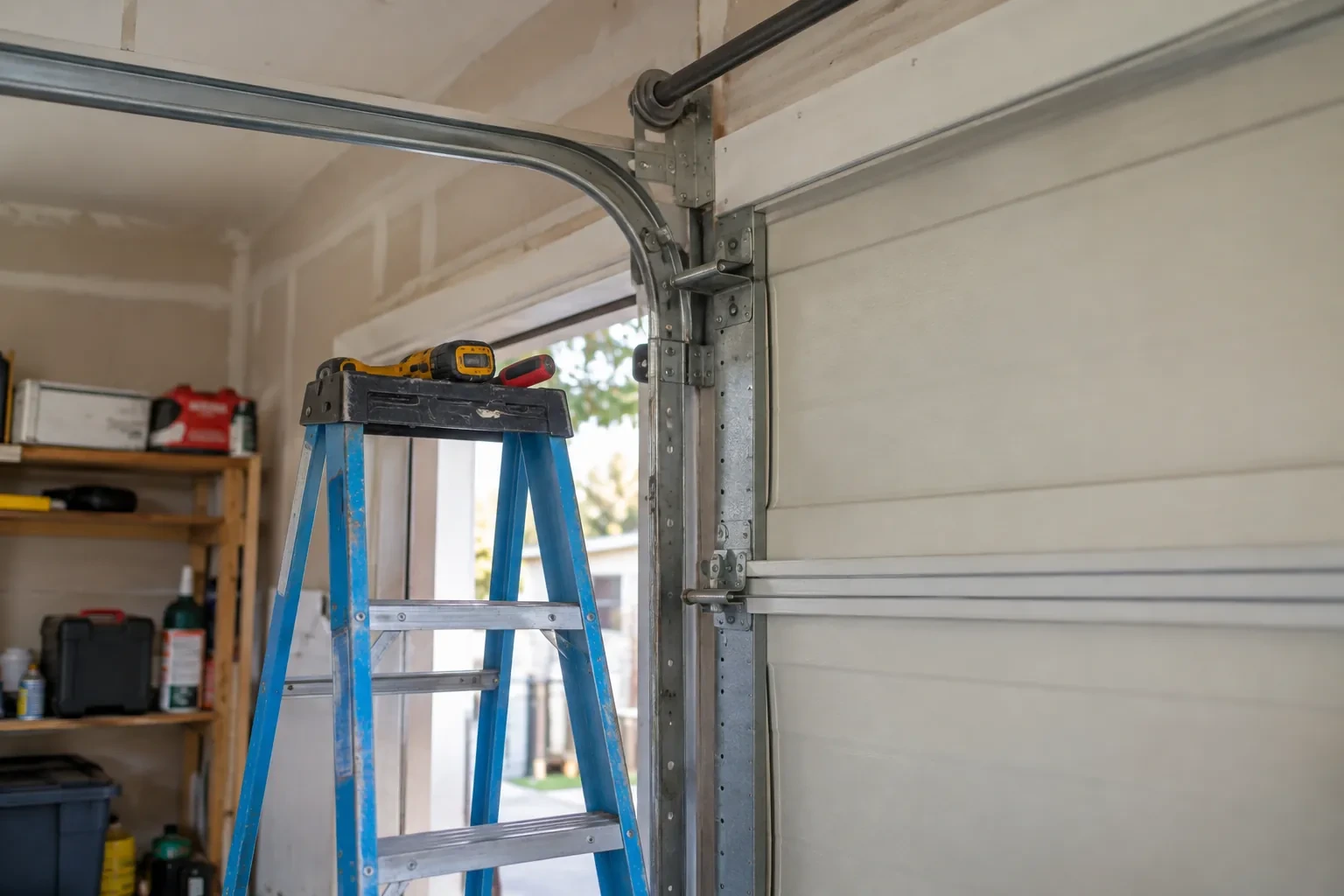
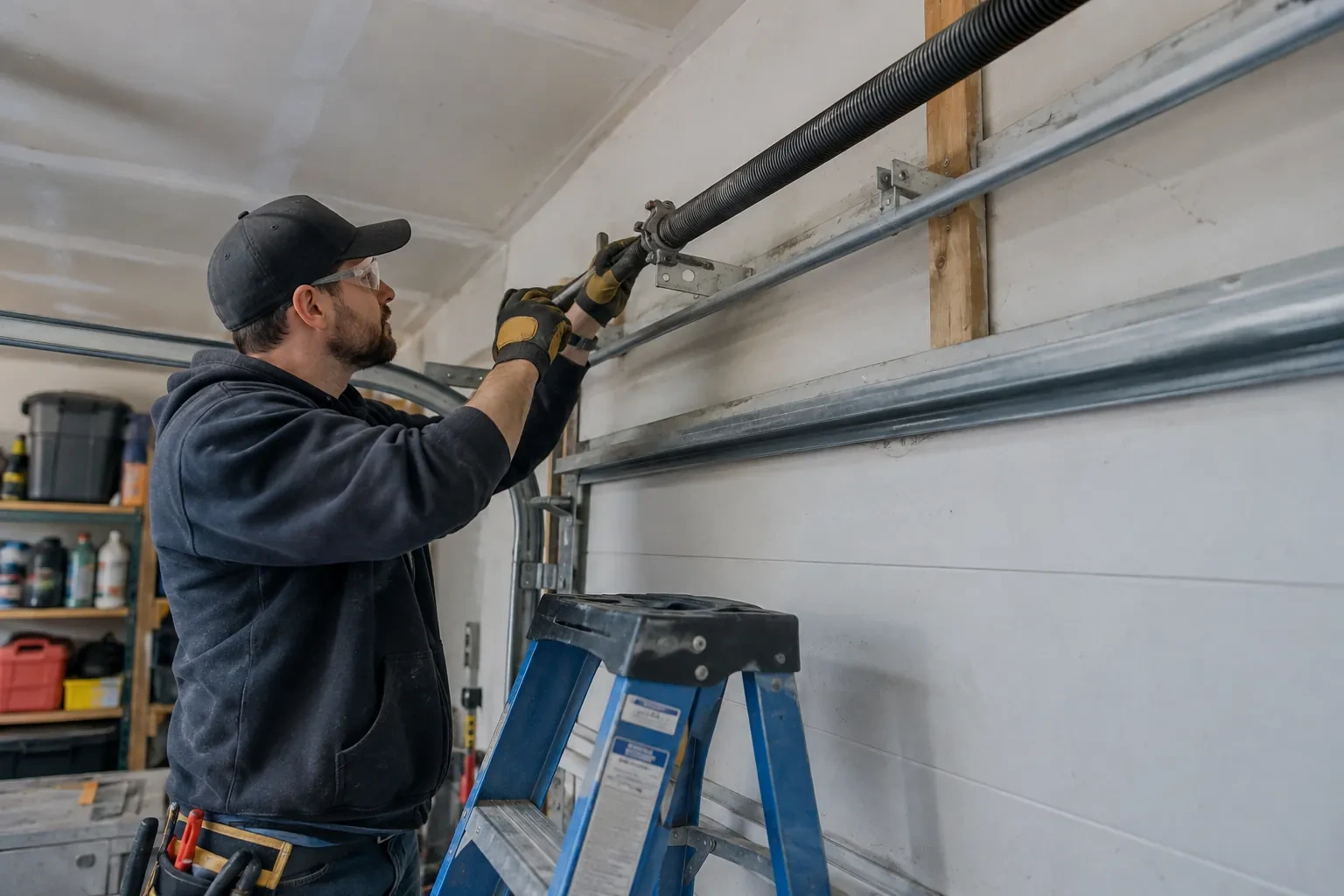
With the door closed and still, the inspection moves along the panels from the bottom up. Bottom brackets and cable attachments are looked at for rust, cracks and cable fraying but not touched, because they hold spring tension. Hinges are checked for cracked knuckles and elongated screw holes. Rollers are spun and wiggled to feel for flat spots, loose stems and worn bearings. Track brackets and lag bolts are tested for movement. At the top, the springs, drums, bearing plates and centre bracket are examined, and the opener's header bracket and the door arm's connection to the top section are confirmed solid. Every loose or worn item is noted before anything is tightened.
Lubricating the right points and skipping the wrong ones
Each moving joint gets a small amount of silicone- or lithium-based lubricant: hinge pins, steel roller bearings, spring coils, the bearing plates at the torsion shaft ends, the centre bearing and the lock. The technician works the door a few centimetres by hand so the lubricant spreads into the bearings. What is not lubricated matters just as much: track surfaces are wiped clean and left dry so rollers roll rather than slide on a film that gathers grit. Nylon tires are left untreated, though an exposed nylon-roller bearing gets lubricant where its maker calls for it. The chain or belt is handled only as the opener maker directs, and excess is wiped off so it never drips onto a vehicle.
Care between visits
A tuned door stays tuned longer with a little attention from you. Every few months, put a small amount of the same silicone- or lithium-based garage door lubricant on the hinge pins and roller bearings and work the door a few times. Wipe the tracks clean and leave them dry. Keep the photo-eye lenses clear of dust and cobwebs, and keep bins and bicycles from leaning on their brackets. Rinse the door and the lower hardware after winter and treat the seals with silicone spray. Listen once a month as the door runs; a new sound is easier to address early. Anything to do with springs, cables or bottom brackets is left for the technician.
Garage Door Tune-Up
In the van
Silicone spray for seals
Jamb and header weatherstrip
Lag screws for brackets and header
2x4 test block and tape measure
Photo-eye brackets and wire
Garage Door Tune-Up
What affects the quote
Condition of rollers and hinges
Worn rollers or a cracked hinge found during inspection can be replaced on the spot if you choose, and each replaced part is listed as its own line on the quote.
Height and access
A tall door with the opener and springs high on the header, or a garage packed with storage along the tracks, adds ladder work and time compared with a clear standard-height bay.
Upgrades you choose on the day
Quieter nylon rollers, a new bottom seal profile, a keypad or a battery backup for the opener are options some customers add while the technician is there, each priced as a separate line.
What to have ready
- Is the door worse in cold weather or after rain?
- Has the door been struck by a vehicle or damaged in a storm?
- What have you noticed: noise, shaking, hesitation, slamming, or reversing on its own?
Garage Door Tune-Up: questions
QuestionsWhat kind of doors and openers do you service?
Residential sectional doors of every common construction: steel, insulated steel, aluminum and glass, wood and composite, single and double width, with torsion springs above the header or extension springs beside the horizontal tracks. Openers of all the usual types are covered too, including chain drive, belt drive, screw drive and wall-mounted jackshaft units. If the door is a one-piece tilt-up or a commercial rolling door, mention that when booking so the right hardware comes along.
How long does a tune-up take?
For a single or double residential door with an opener, allow roughly an hour to two hours on site. The inspection and the two observed cycles take a fixed amount of time; the rest depends on how many fasteners have loosened, whether the sensors need realigning and whether you approve a small part replacement, such as a worn roller, during the same visit. Spring or cable work, if found necessary, is scheduled as its own job.
Can you replace my rollers with quieter ones during the tune-up?
Often, yes, if you decide you want them and stock is on the truck. Nylon rollers with sealed bearings run noticeably quieter than plain steel rollers and need no lubricant. Rollers on the middle sections can be changed with the door clamped in the track; the bottom rollers sit in the bottom brackets, which hold spring tension, and are changed as part of a separate job. The technician can tell you how many are worn and what the change would involve.
Related services
- Off-Track Garage Door ResetThe morning after a thaw the opener groaned, the door stayed stuck to the icy floor for a second, then lurched up crooked.
- Garage Door Panel ReplacementRust has crept along the bottom edge of the lowest section.
- Garage Door Bottom Seal ReplacementOne end of the bottom seal has slipped out of its channel and hangs down like a loose shoelace.