Openers · Oakridge Park
Emergency Release Repair in Oakridge Park
Your garage is detached and has no side door.
In plain words
The release only earns its keep on a door that behaves once it is free of the opener, so the visit starts with the door closed and a balance test rather than with the handle. Disconnected, a healthy door lifts with modest effort, holds around a metre off the floor and stays put at the top. That is the door the release is designed for. If the door is heavy, drifts down or shoots up, the springs need attention first, work done with winding bars by a technician trained for tensioned hardware. Once the door passes, the release work goes ahead and the system is proven together.
How the visit goesHalfway up, the door lets go of the opener with a clunk and sinks back to the floor while the trolley carries on to the top alone. It has happened three times this month, and each time the release lever is found half-cocked.
Emergency Release Repair
How the visit goes
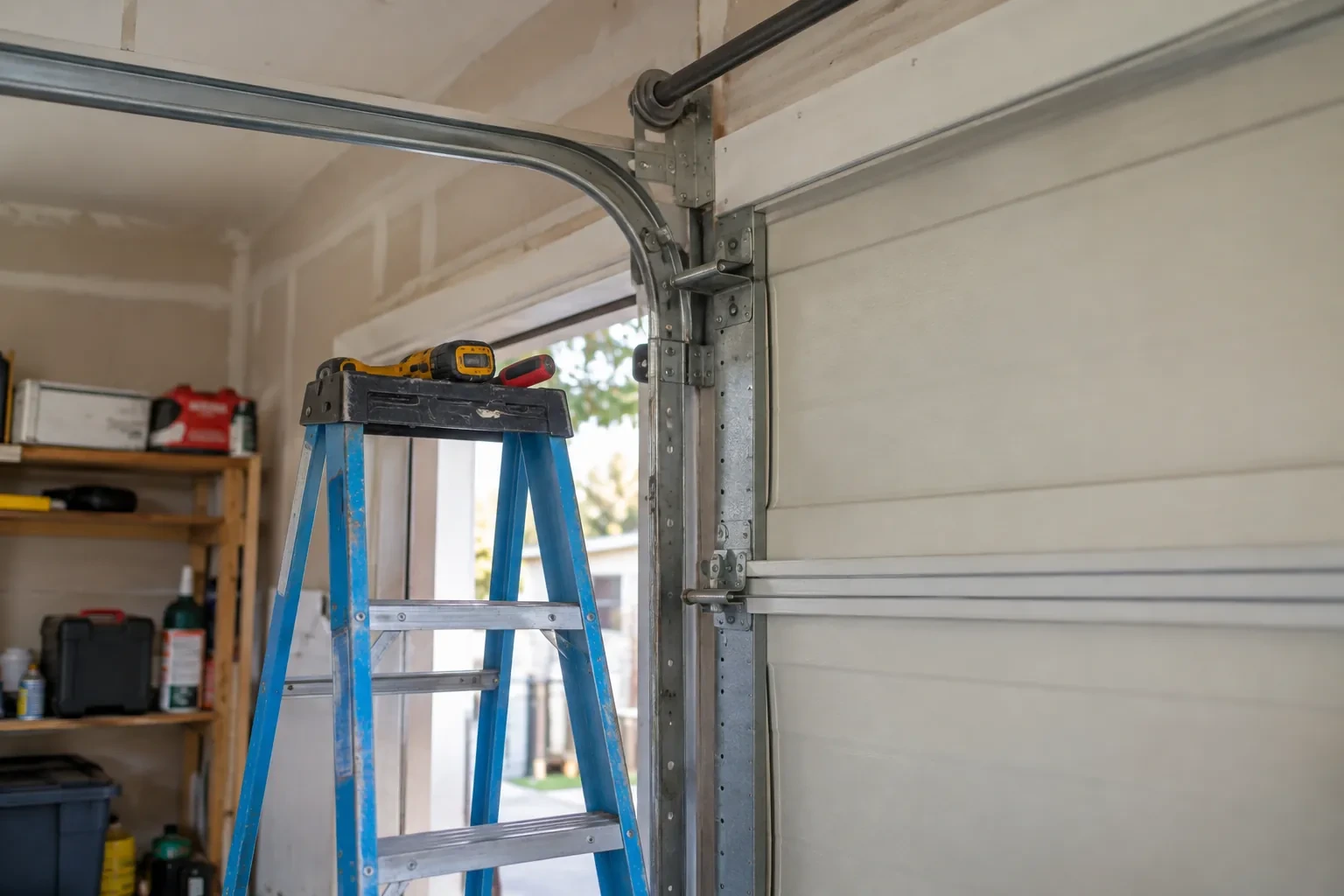
Where the handle hangs
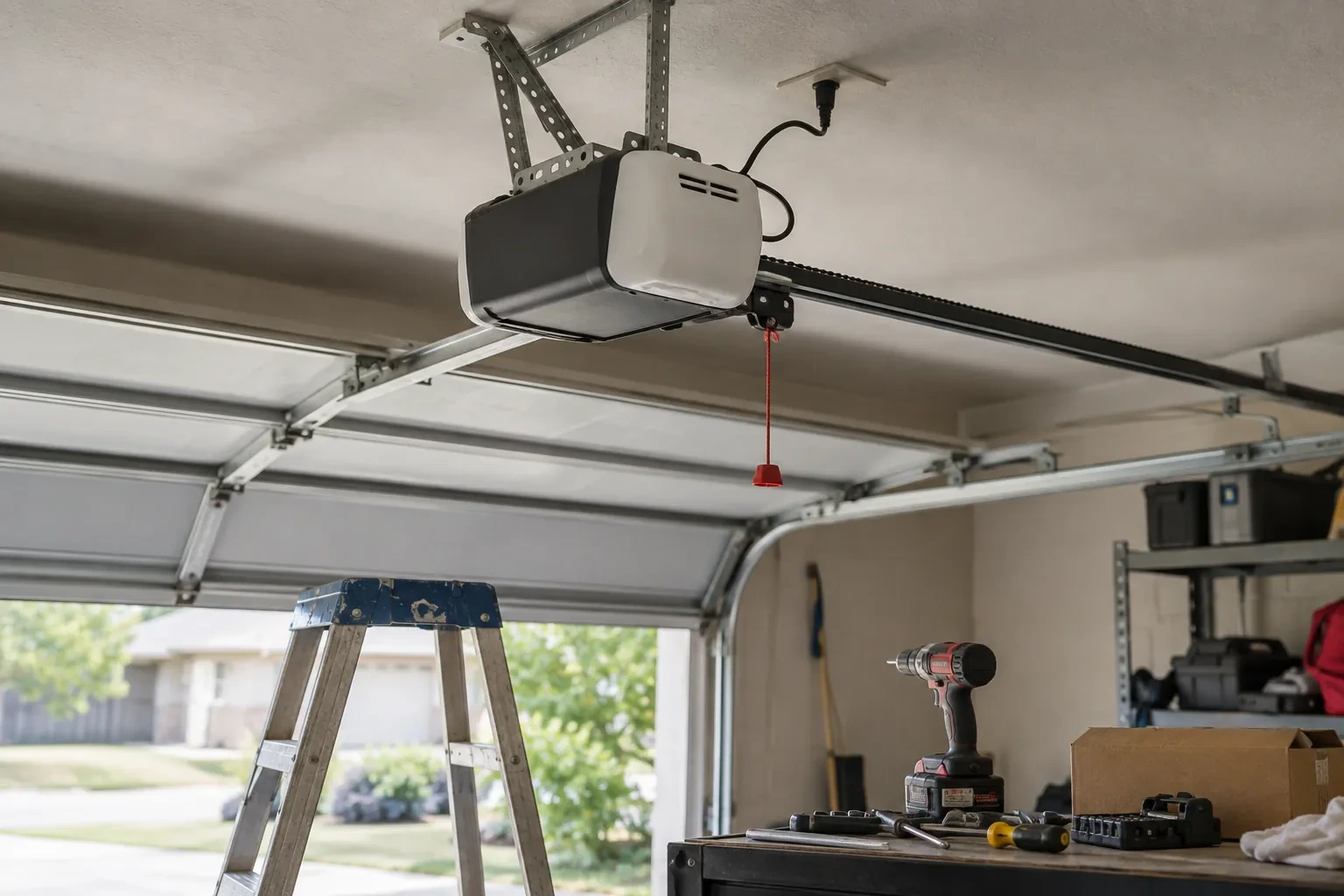
Height and position are measured, not guessed. The handle should hang no more than about 1.8 metres above the floor so a person standing on the slab can reach it, and it should clear the roof and antenna of the vehicle parked beneath. The technician also looks at what surrounds it: shelving, bikes on hooks, a storage loft, a cord tied up around the rail by a previous owner. A handle nobody can find in the dark is as good as no handle at all, so obstructions and a cord that was shortened after a door change are recorded as part of the fault, not as clutter.
Door work first when the balance test fails
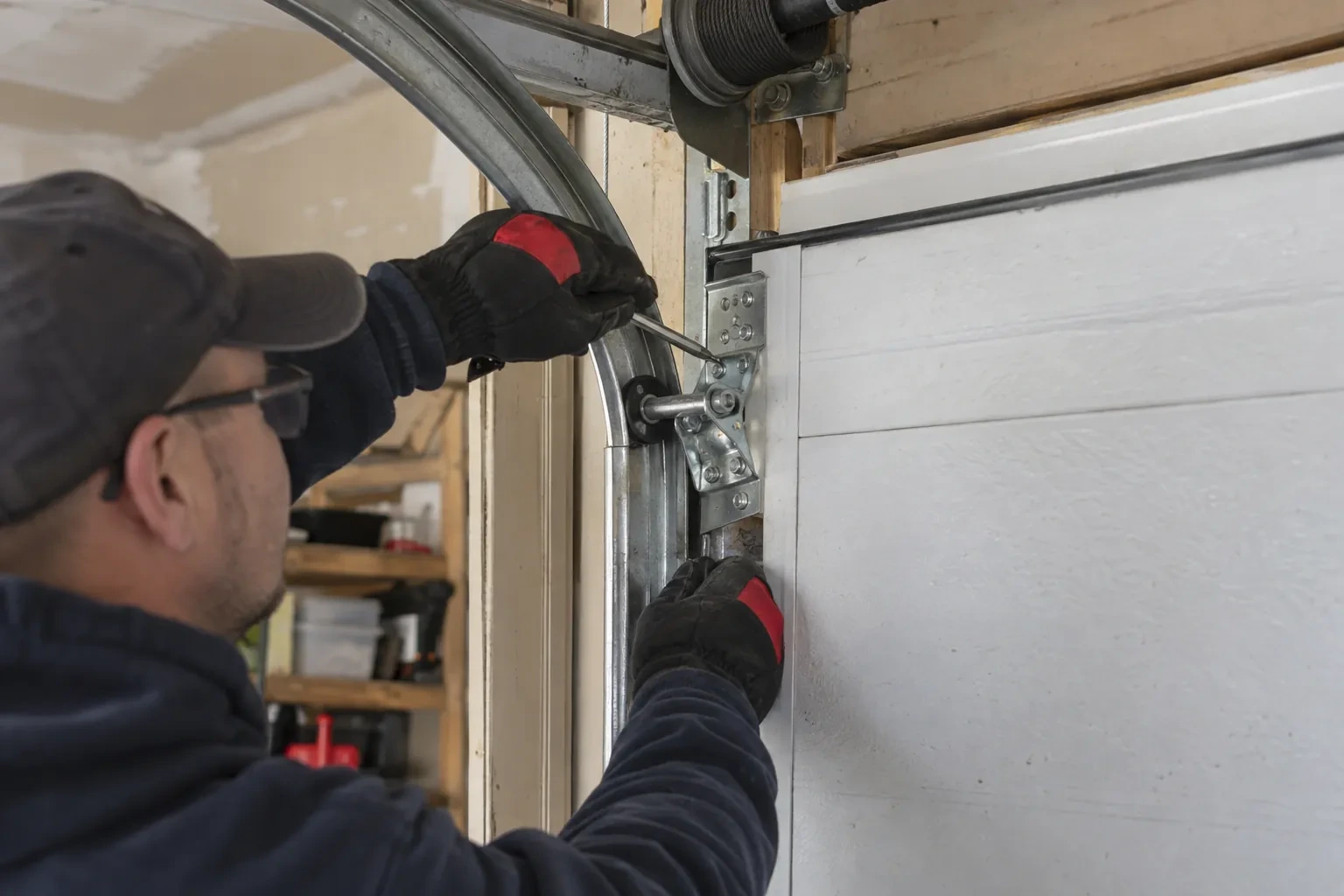
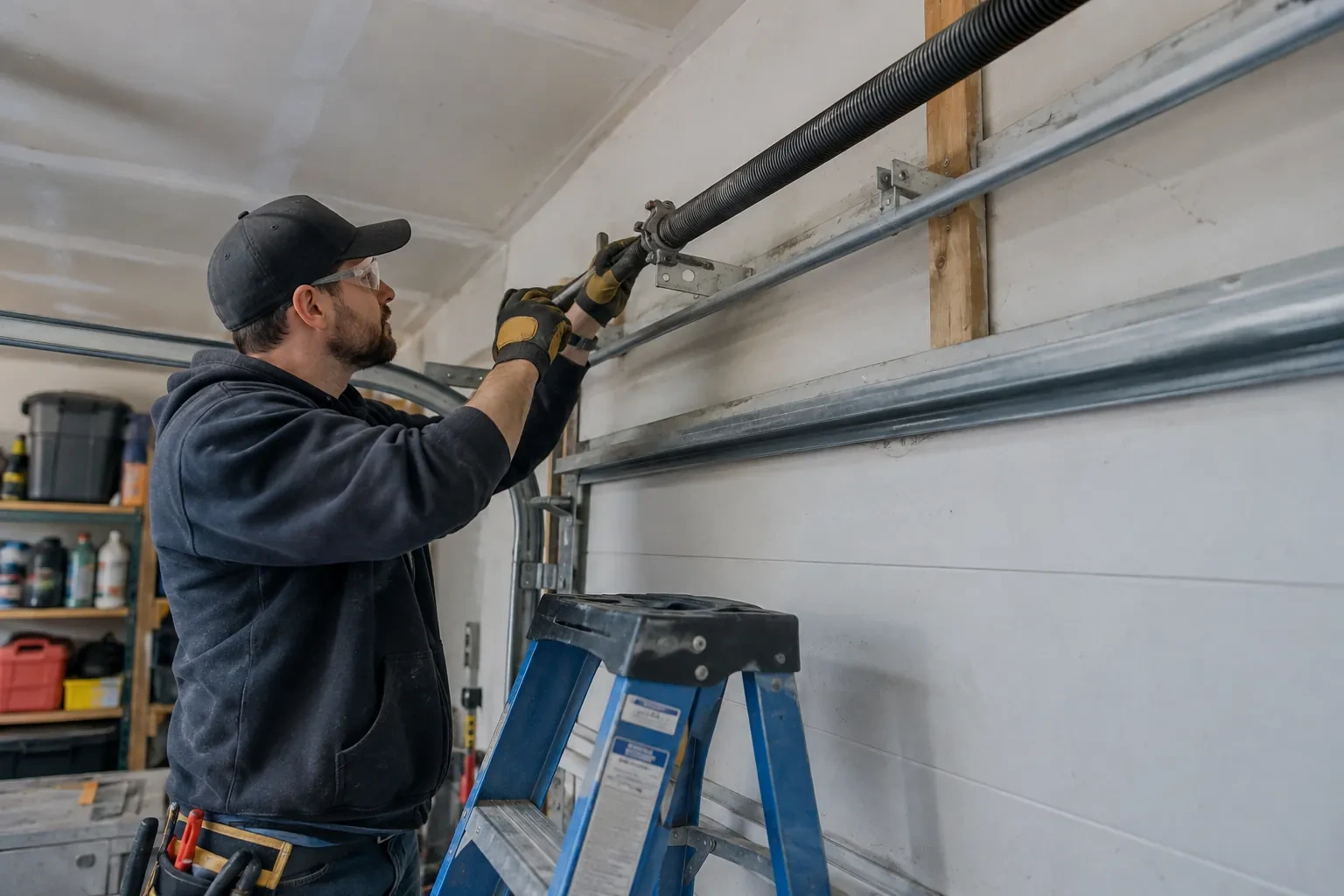
When the disconnected door proves heavy, drifts or binds, the technician changes the order of the visit. The opener stays disconnected, and the door side is put right first: springs re-tensioned or replaced with winding bars by a technician trained for tensioned hardware, frayed cables replaced, dry rollers and hinges lubricated, a bent track straightened. Only when the door lifts and holds by hand is the release work finished and the trolley reconnected. This keeps the release honest: it is meant to hand you a door you can move, and it can only do that once the springs are carrying the weight.
A monthly minute of checking
The industry advice is to look over the door and opener about once a month, and the release fits into that habit. With the door closed, pull the handle and raise the door by hand to about halfway to feel that it moves freely and holds where you leave it; then lower it and reconnect. Follow with the reversal checks: the door should back off a length of 2x4 laid flat on the floor and reverse when something passes through the sensor beam. If the door ever feels heavier than it did today, or the trolley stops clicking home, that is the moment to call rather than to keep using it.
Emergency Release Repair
In the van
Dry lock lubricant and de-icer
Door arm, clevis pins and clips
Hole saw for the top section
Track clamps to hold the door
Outside key release kit (lock, cable, keys)
Emergency Release Repair
What affects the quote
Extra keys and a lockbox
Two keys come with an outside release. Additional keys cut for family members, or a small lockbox for the spare, are small add-ons listed as separate lines.
Cord, lever or trolley
A rope and handle is the smallest item; a lever and spring sits in the middle; a complete trolley or carriage assembly is the larger part, and the diagnosis says which one you need.
Door material for the outside release
Cutting a cylinder hole through a thin steel section is routine; an insulated door, a wood door or a glass-panel top section takes more care and sometimes a reinforcing plate.
What to have ready
- Has the door or the opener been replaced since the release was last used?
- Does the garage have a side door or a door into the house?
- Does the opener run along the rail on its own without moving the door?
Emergency Release Repair: questions
QuestionsHow long does an emergency release repair take?
A cord and handle, a lever spring or a trolley freed from the stop bolt is a modest part of an hour, including the balance test and reversal tests. Replacing a trolley or fitting an outside key release takes longer, since the drive is slackened and re-tensioned or a hole is cut in the door. If the balance test finds the springs need work first, that is a separate piece of the visit, and you are told before it starts.
Why does the trolley run but never reconnect to the door?
Three usual causes. On many rails, pulling the cord back toward the opener deliberately holds the lever out for a spell of manual use, and someone forgot to return it. Or the trolley latch teeth or the release arm are worn or bent, so the two parts pass without catching. Or the carriage sits at the wrong point for the powered trolley to meet, since reconnecting is meant to happen during an opener cycle, not by pushing the door shut by hand. Each is a short fix once identified.
Should I test the release regularly?
Once a month is the industry rhythm for the door and opener, and the release fits into it. With the door closed, pull the handle, raise the door by hand to about halfway, feel that it moves freely and holds, then lower it and reconnect. It takes a minute and tells you two things: the release works and the door is balanced. Follow with the 2x4 and beam reversal checks so the whole system is proven together.