Repairs · Oakridge Park
Garage Door Safety Inspection in Oakridge Park
On bright afternoons the door goes down a metre, stops, and climbs back up while the light on the opener blinks.
In plain words
A garage door safety inspection is a systematic look at everything that moves the door and everything meant to stop it. The technician identifies the door and opener from their labels, then examines the sections, hinges, rollers, tracks, springs, cables, drums, brackets and seals, watches a full cycle, tests the door's balance by hand, and runs the reversal and photo-eye tests the opener manual calls for. Nothing tensioned is adjusted during the inspection. What you receive is a dated record of the door's condition, with anything that needs attention sorted by how soon it matters.
How the visit goesYour toddler has discovered the wall button. You want to know, from someone who checks these things for a living, that the door will stop and reverse if a small person is under it.
Garage Door Safety Inspection
How the visit goes
A slow walk along the closed door
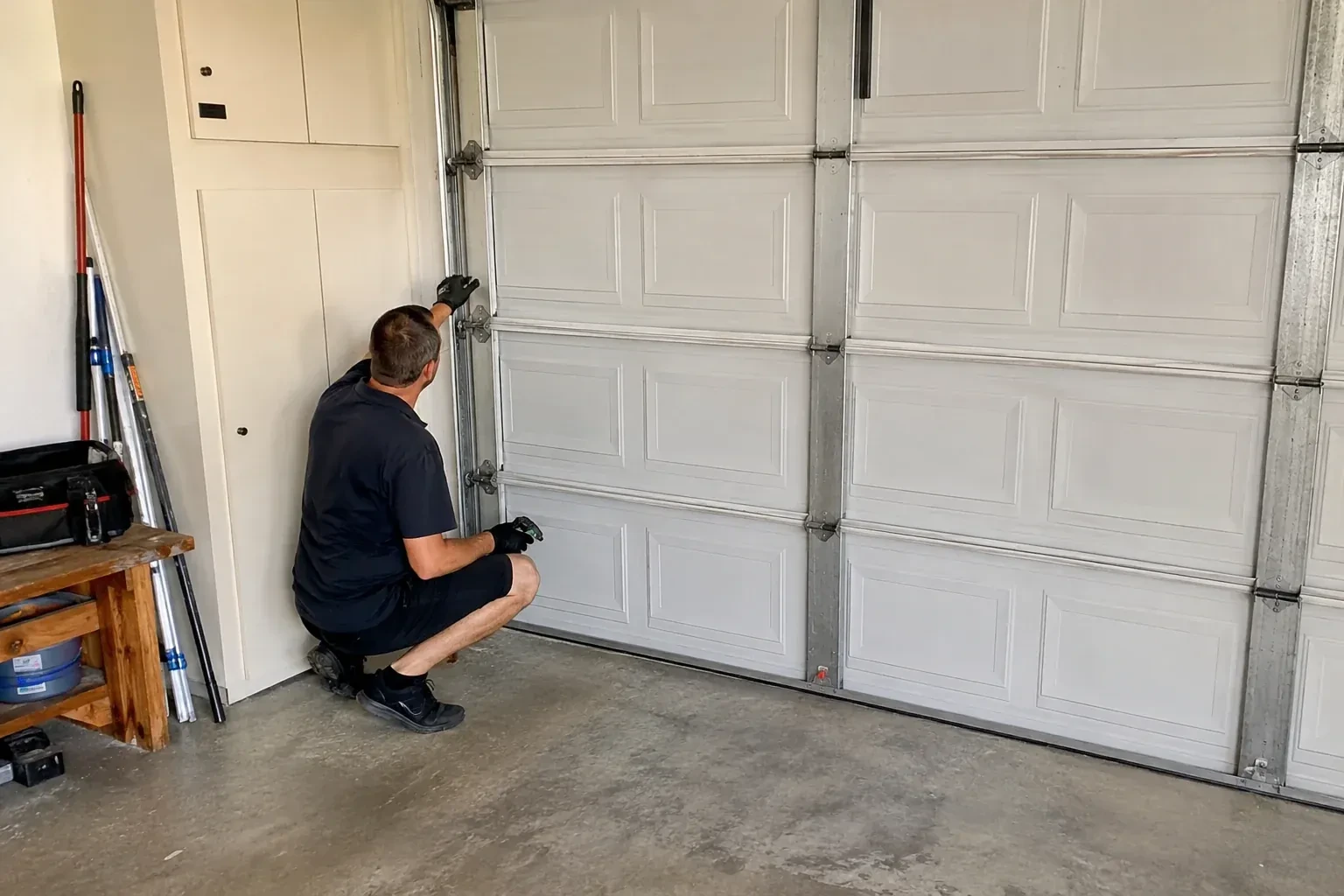
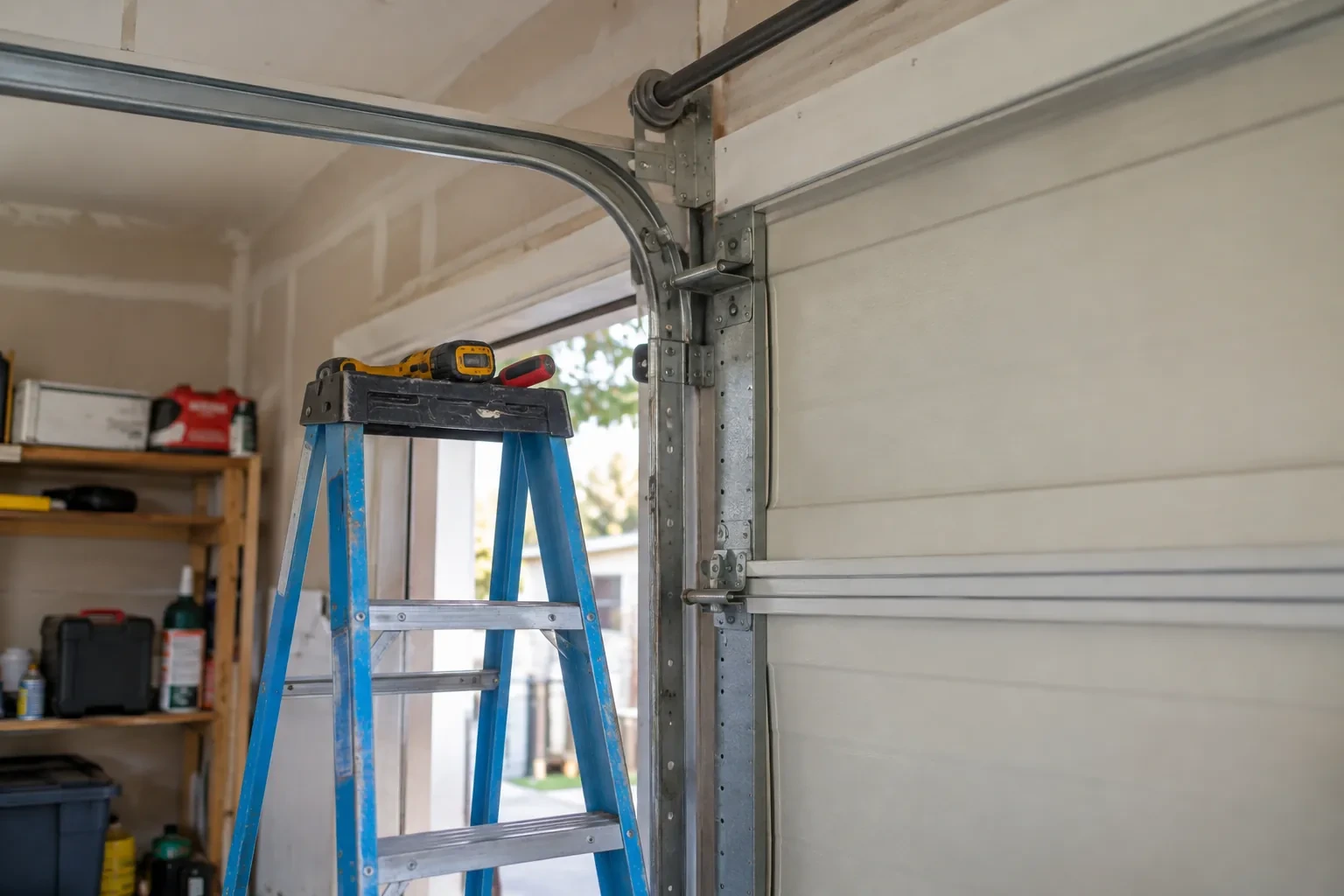
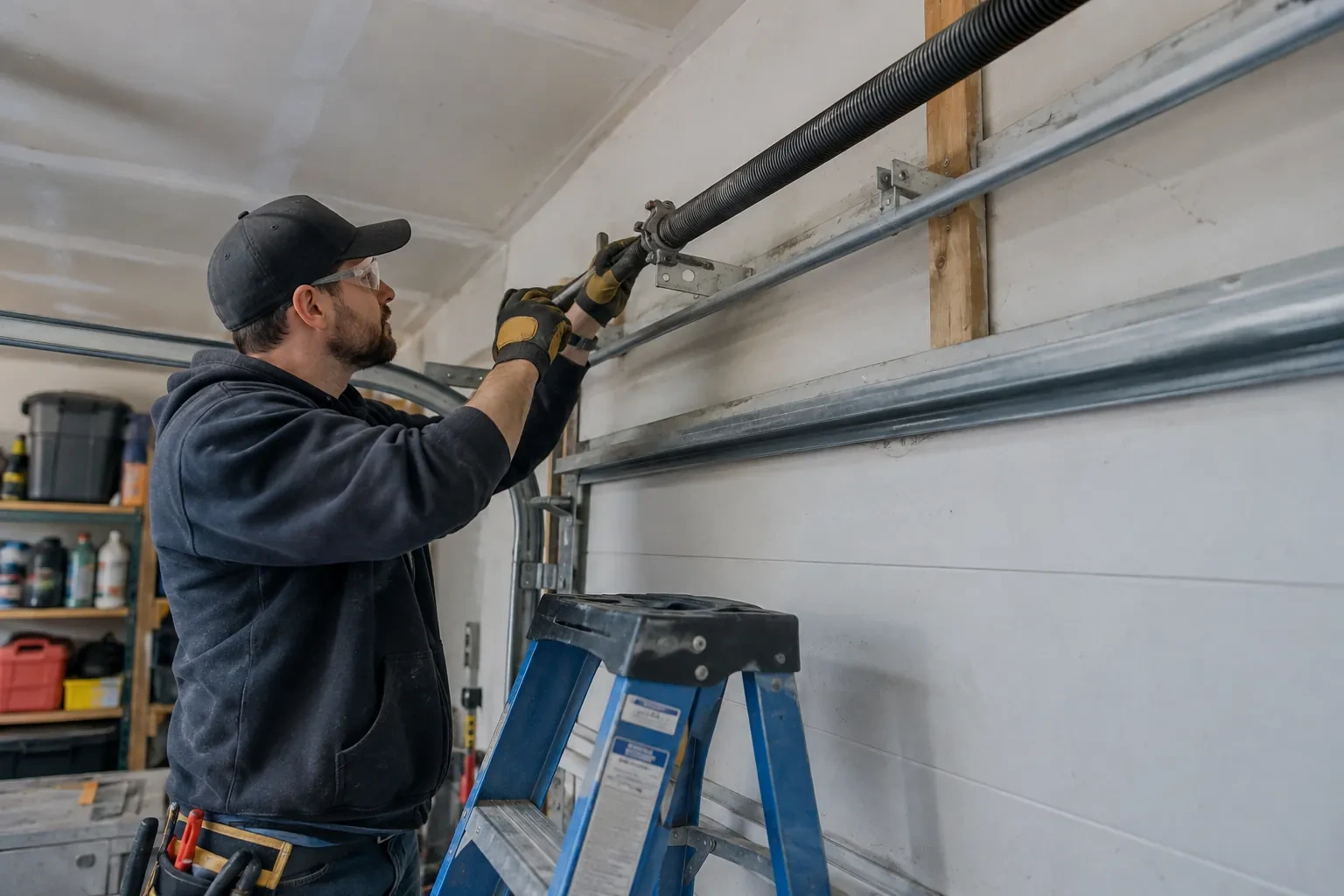
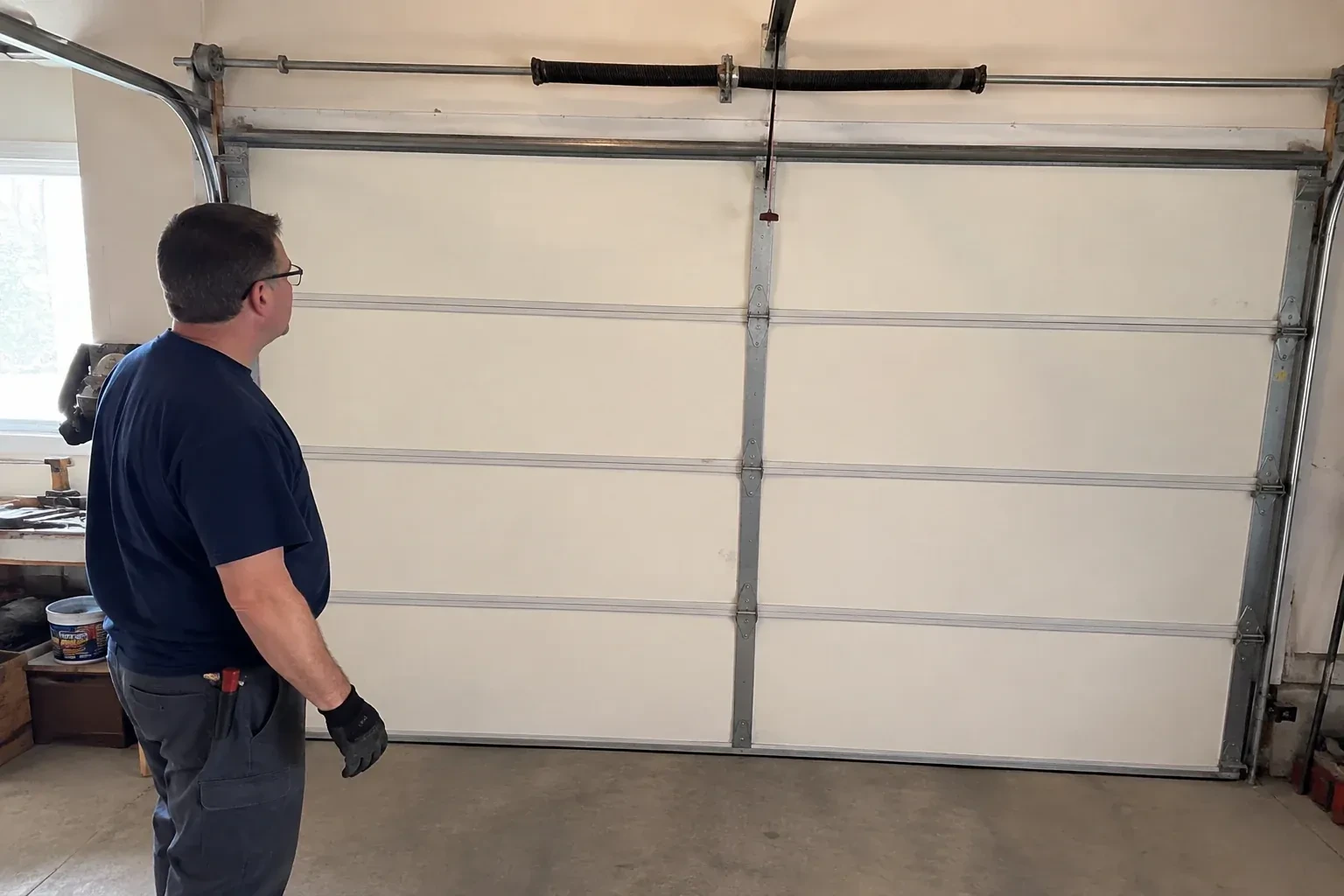
With the door down and the light on, the technician looks at every section from the top down: dents, bowing, cracked stiles, a strut that has come loose. Each hinge is checked for a split leaf or a missing bolt, each roller for a cracked wheel, a bent stem or one that slides instead of turns. The tracks are sighted for plumb and even spacing from the door, and each track bracket and lag into the jamb is checked for tightness. This is unhurried work with a light and a mirror, and it finds the small things, a hinge working loose, a roller stem walking out, that become the big noise next season.
The balance test, by hand
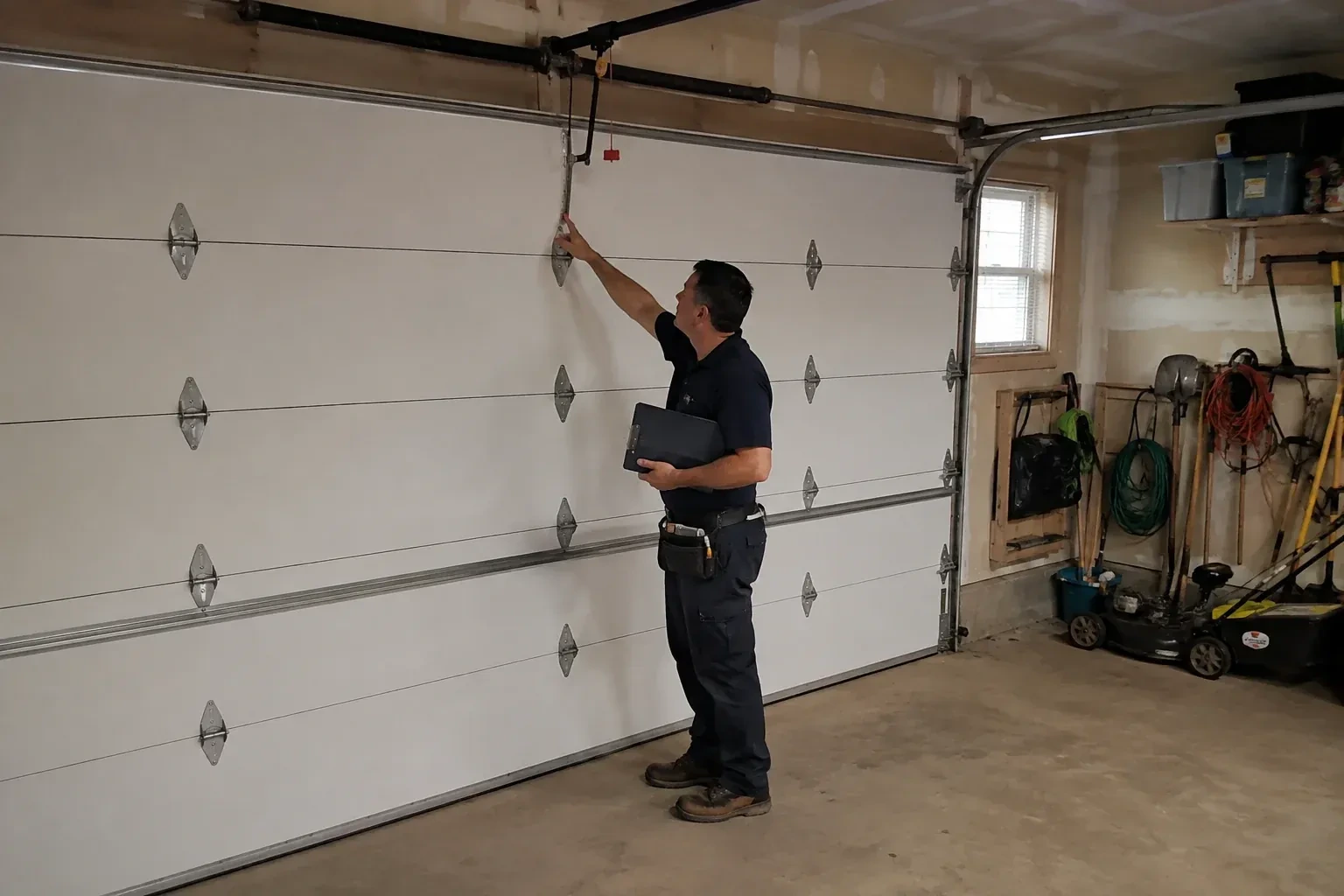
With the door fully closed, the technician pulls the release cord to disconnect the opener, then lifts the door by its handle or a safe grip on the bottom section. It should rise with light, even effort, stay put when let go around waist height, and lower to the floor without slamming. A door that drifts up is over-sprung; one that sinks or feels heavy is under-sprung or bound somewhere in its travel. Binding at a particular height points at a roller, a hinge or a track rather than the springs. The result is recorded as a finding; any change to spring tension is quoted as separate work, done under controlled torque with proper winding bars and the door secured.
Three checks you can repeat each month
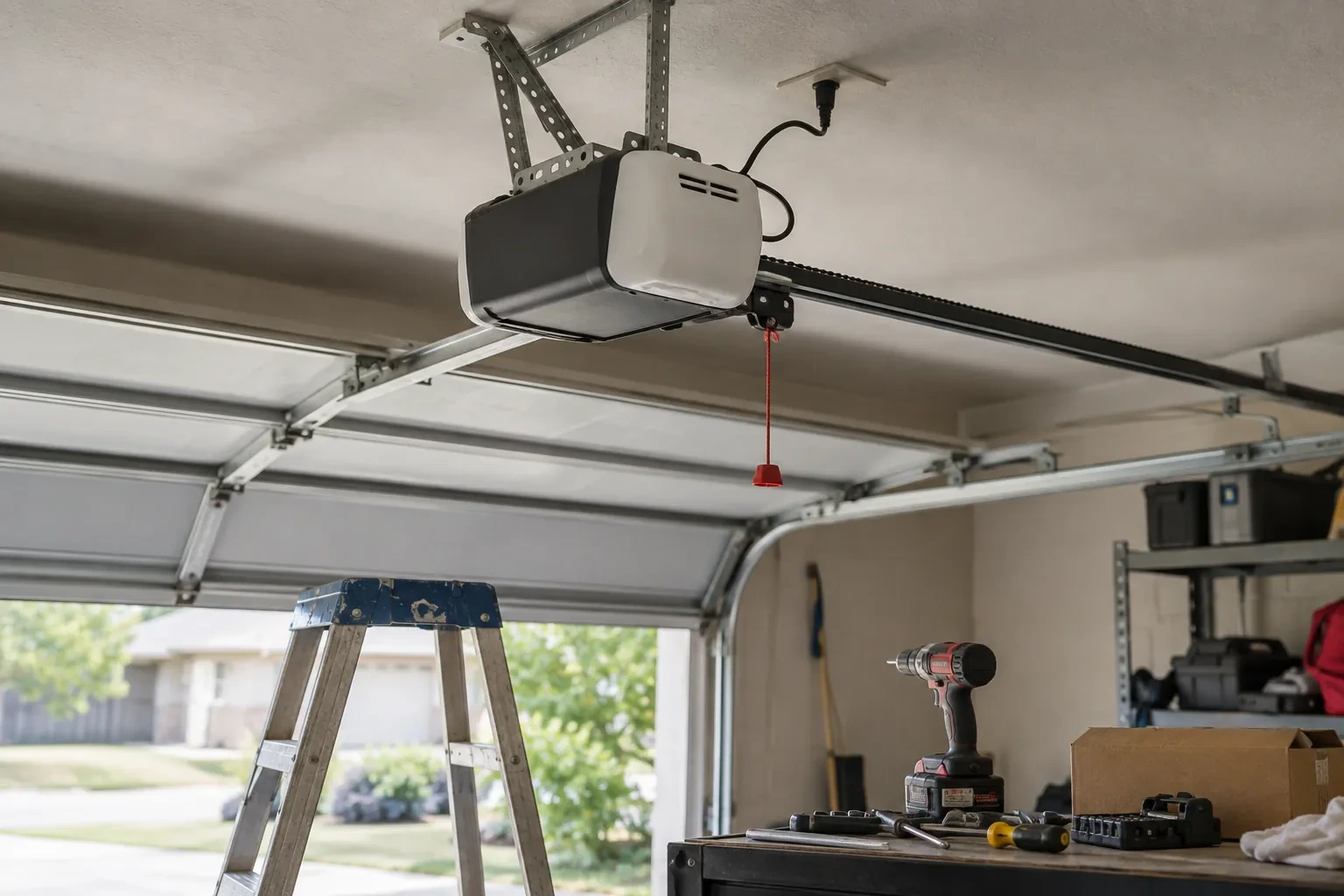
The inspection leaves you with a short routine. Once a month, with the door closed, pull the release cord and lift the door by hand; it should move easily and hold at waist height. Reconnect the opener, lay a flat board on the floor and send the door down; it should reverse when it touches. Then start it closing and wave a broom handle through the photo-eye beam; it should reverse before contact. Each of these takes under a minute and mirrors what the technician did. If any of the three behaves differently from the day of the inspection, that is the moment to call, while it is still a small job.
Garage Door Safety Inspection
In the van
Weatherstrip samples for matching
Tape measure and level
Socket set and nut drivers
Camera for findings
Lens cloth and cleaner
Garage Door Safety Inspection
What affects the quote
Distance to the property
Travel is part of every visit. A property across town and one at the end of a rural road involve different driving time, and the quote reflects the trip.
Torsion or extension counterbalance
Extension-spring doors add pulleys, cable clips and containment cables to the list, while torsion doors call for spring measurements at the shaft; the parts examined shape the time.
What is stored around the door
Shelving under the spring shaft, bikes along the tracks or a car left inside slow the visual walk. Clearing the area beforehand keeps the inspection to its planned length.
What to have ready
- Is the door a single or a double, and roughly how tall is it?
- How many doors need inspecting, and are they all at the same address?
- Is there a spring on a shaft above the opening, or springs stretched along the tracks?
Garage Door Safety Inspection: questions
QuestionsWhat gets lubricated, and what is left dry?
The moving metal-on-metal points get a light coat: the spring coils, the hinge knuckles, the roller bearings and the pins at the bottom brackets. A silicone or lithium product made for doors is used, then the door cycles a few times to carry it in. The tracks are the exception; they are cleaned and left bare, since a slick track lets the wheels skid and holds grit against them.
Is the inspection a repair visit?
It is a look and a record first. Small maintenance items such as lubrication, cleaning and aligning the photo eyes and tightening fasteners can be done on the spot if you wish. Anything involving spring tension, cables, drums, worn rollers or damaged sections is written up with a clear explanation and quoted as its own job, so you decide with the full picture in front of you.
What information helps when I call to book?
Whether the door is single or double and roughly how tall; whether there is a spring on a shaft above the opening or springs along the tracks; the opener make if you can see it; how many doors need looking at; what prompted the call and when it began; and whether anything happened to the door lately. A photo of the opener label and of the spring area is a useful extra.
Related services
- Off-Track Garage Door ResetThe morning after a thaw the opener groaned, the door stayed stuck to the icy floor for a second, then lurched up crooked.
- Garage Door Panel ReplacementRust has crept along the bottom edge of the lowest section.
- Garage Door Bottom Seal ReplacementOne end of the bottom seal has slipped out of its channel and hangs down like a loose shoelace.