Springs · Manor Park
Garage Door Balance Adjustment in Manor Park
The opener has started to groan on the way up.
In plain words
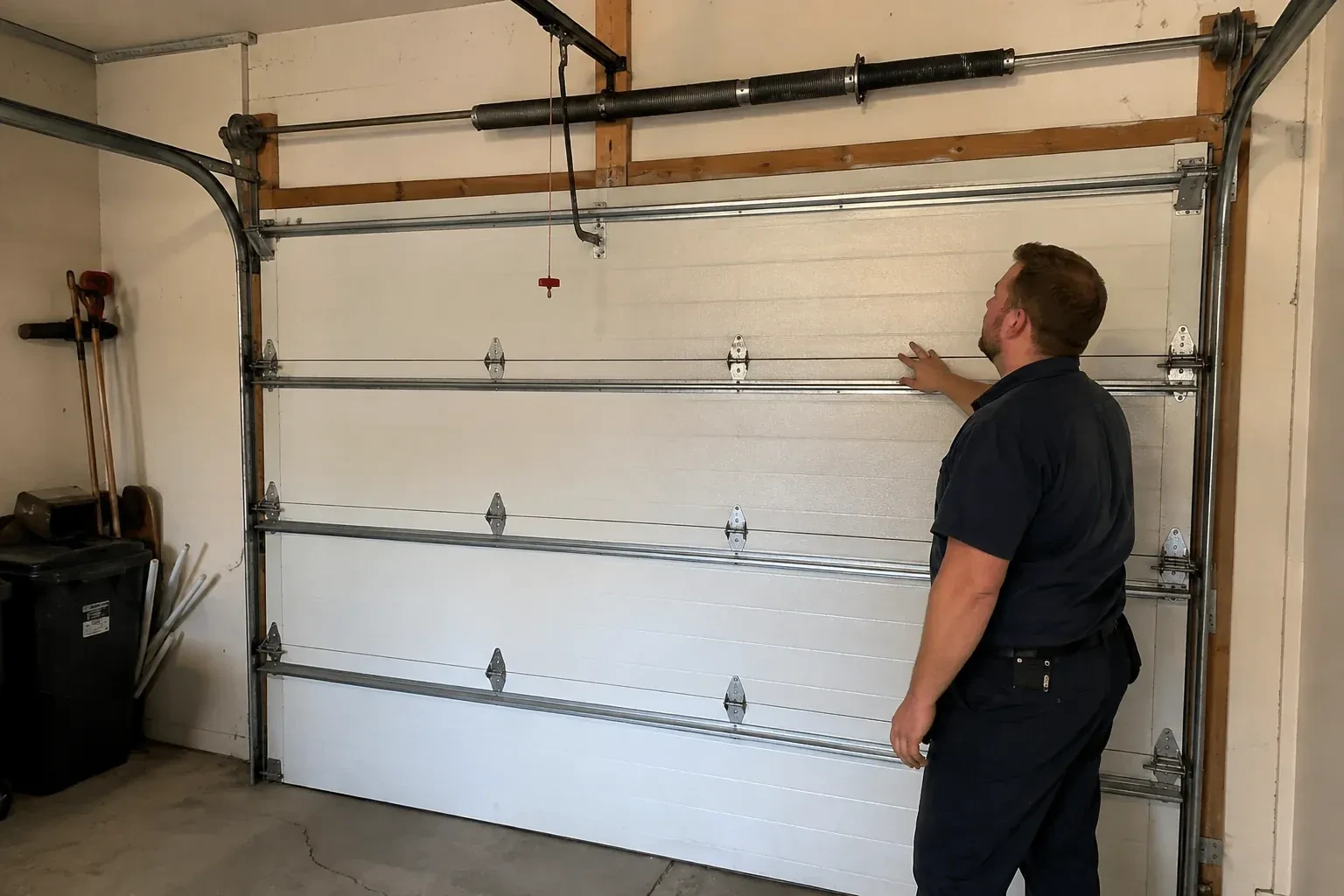
Balance changes for ordinary reasons. Springs are rated for a certain number of cycles and lose a little tension as they age. A new bottom seal, insulated panels, a window section or a decorative overlay adds weight the original springs were never sized for. Rollers stiffen, hinges wear, and in a cold snap the whole system feels heavier for a few weeks. Any of these tips the door from weightless to a chore. A balance adjustment starts by identifying which of them is at work, then resets the springs to suit the door as it is today, and corrects the friction so the adjustment holds.
How the visit goesSomeone replaced the springs a while back and the door has bounced at the top ever since. It slams open against the stops, then creeps down a few inches, and the opener trolley rattles because the door is pushing where it should be resting.
Garage Door Balance Adjustment
How the visit goes
What the door weighs now, and what changed
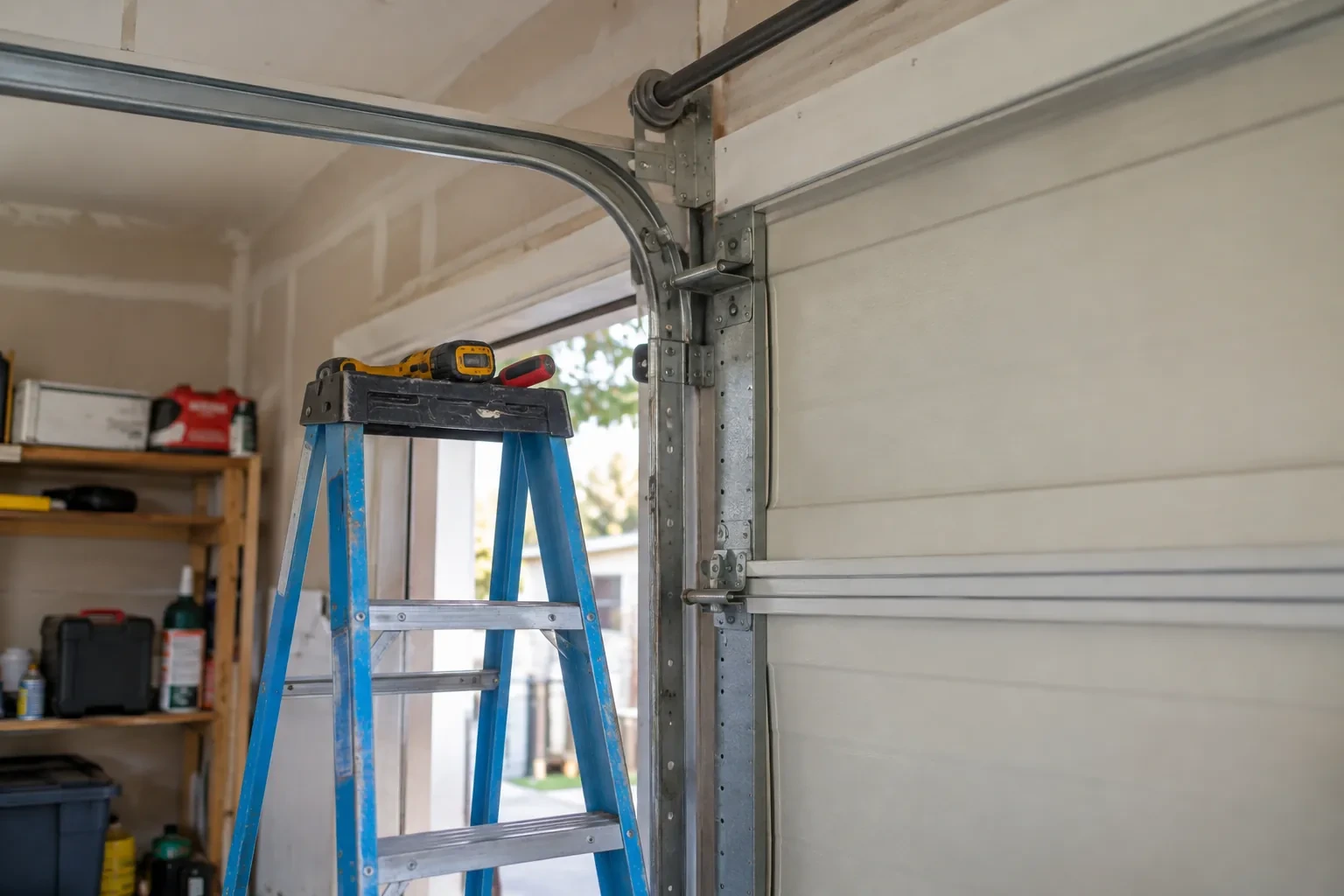
Springs are sized to a door's weight, so the technician asks what has changed since the door was installed. Insulated panels fitted over the original skins, a section replaced after a bump, a row of windows, a heavier bottom seal or decorative hardware all add weight, and even a fresh coat of paint on a wood door counts. Where the history is uncertain, the door can be weighed with the springs relaxed, using a scale under the bottom section. That figure tells the technician whether the existing springs can be adjusted to carry the door or whether the door has outgrown them and needs a different spring specification.
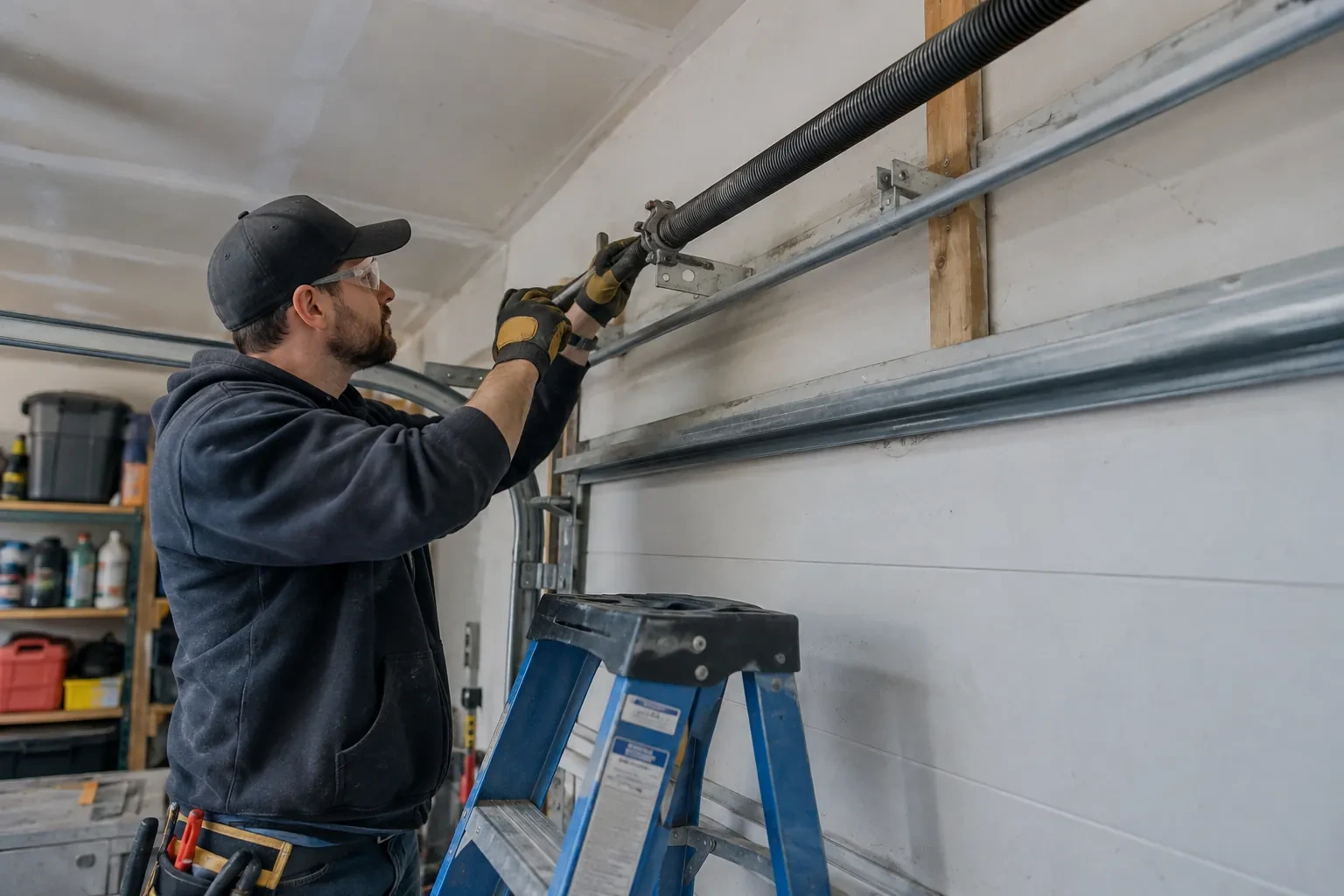
Adjusting extension springs at the hook
On an extension system the door is opened fully and clamped so each spring hangs slack, and the tension is changed by moving the S-hook or the cable clip to a different hole in the track hanger, or by shortening the cable at the clip. A hole further back stretches the spring more when the door closes and adds lift; a hole further forward reduces it. Both sides are moved the same amount so the door stays level, and the pulleys and containment cables are checked as the hooks are reset. The clamps come off and the door is tested by hand at several heights, then adjusted again if needed.
A record of the setting
Before leaving, the technician tells you how the door was set: the number of turns on each torsion spring or the hook position on each extension spring, the spring dimensions, the door's measured weight if it was weighed, and any parts that were replaced. Writing this on a card by the opener or inside the manual saves a future technician from starting from scratch, and it gives a reference point if the door ever starts to drift. Springs age gradually, so a note that says the door held at a certain number of turns tells a later visit how far things have moved.
Garage Door Balance Adjustment
In the van
Door scale
Containment cables
Cable drums
Track clamps or locking pliers
Replacement hinges
Garage Door Balance Adjustment
What affects the quote
Opener adjustment and tests
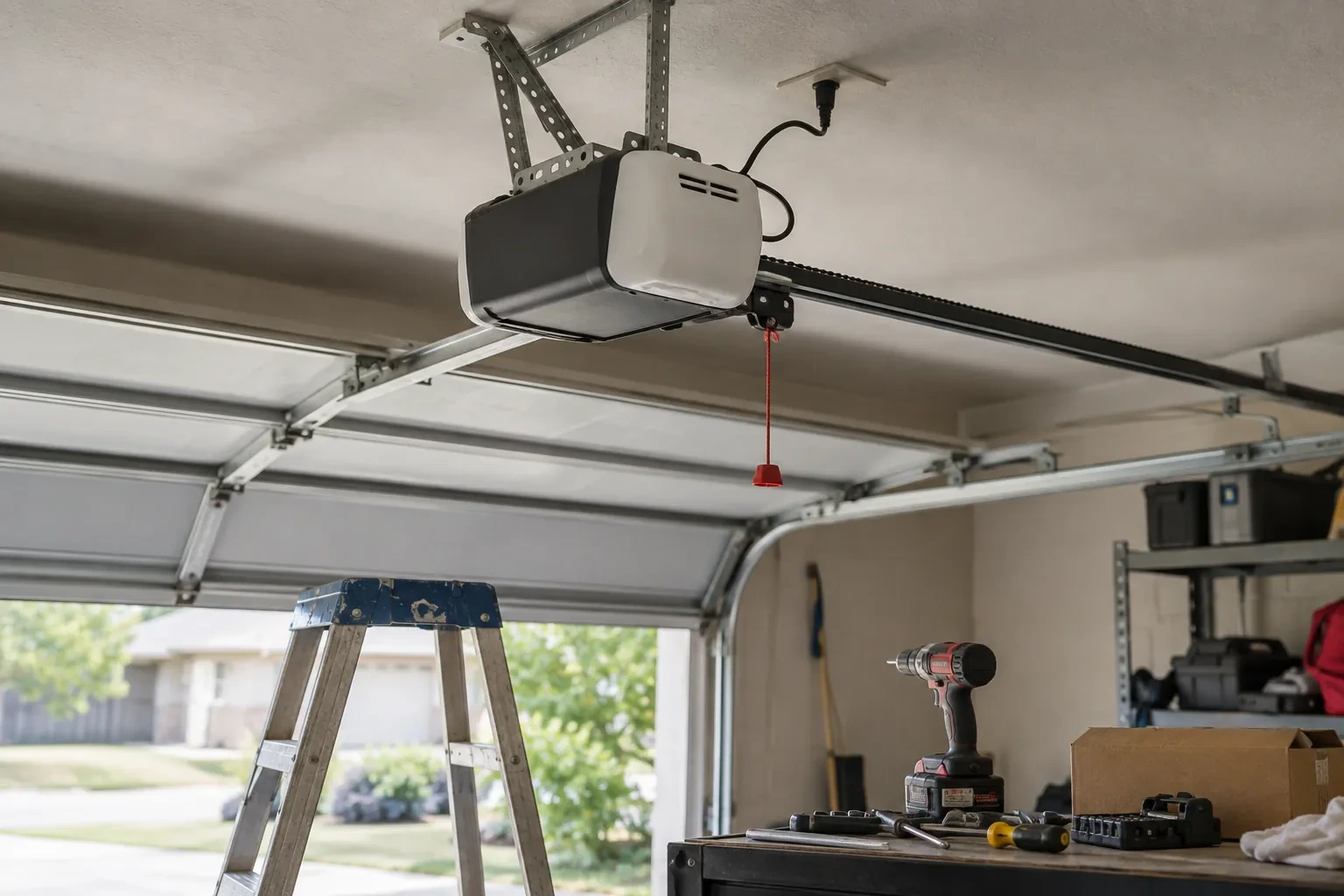
Resetting travel limits and force settings on the opener and running the reversal tests is a short step that follows every balance job and is named in the quote when needed.
Weight added to the door
Insulation kits, windows or replacement sections may have taken the door beyond what its springs can carry. Weighing the door and specifying new springs to suit is quoted separately from a simple adjustment.
Rollers, hinges and friction repairs
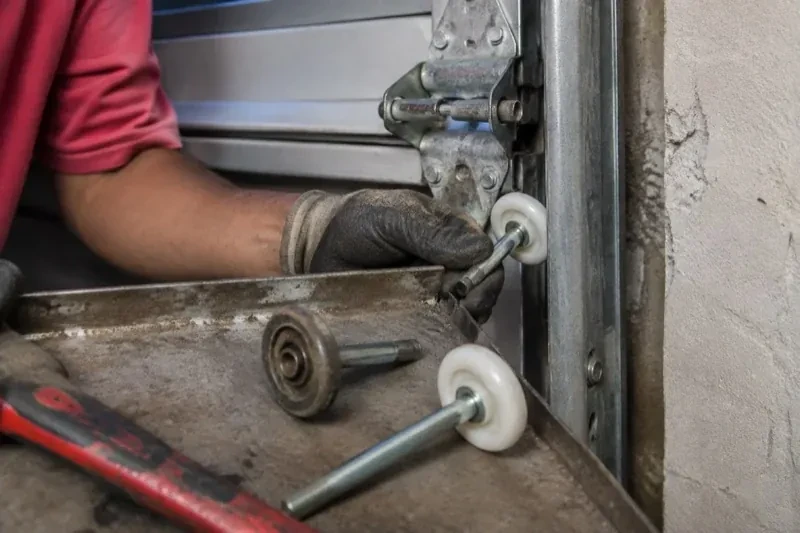
Seized rollers or worn hinges that made the door heavy are pointed out and offered as optional items, since replacing them while the technician is at the door is efficient.
What to have ready
- Has anything been added to the door, such as insulation, windows or a new section?
- Is there a spring on a shaft above the door, or springs along the tracks?
- Is it a single or a double door, and roughly how tall?
Garage Door Balance Adjustment: questions
QuestionsWhat safety tests are done after the adjustment?
Two are standard. A piece of two-by-four is laid flat on the floor in the door's path and the door closed onto it; it must reverse and return to open. Then, as the door closes, an object is passed through the photo-eye beam near the floor, and again the door must reverse. Both depend on a balanced door, which is why they come after the adjustment rather than before.
I added insulation panels to my door. Does that affect balance?
Yes, and it is one of the most common reasons a door starts to sink. Springs are matched to the door's weight, and insulation kits, replacement sections, windows or a heavier seal add weight the original springs were not sized for. A technician can weigh the door and either add tension to suit it or, if the added weight is beyond what the springs can carry, specify new ones.
How long does a balance adjustment take?
A straightforward tension adjustment on a sound door is generally about an hour, including the inspection, the hand tests and the opener checks at the end. Resetting cables to level the door, replacing rollers to remove friction, or moving to a spring replacement adds time. The technician will tell you what the inspection found and how the visit is shaping up before the work continues.
Related services
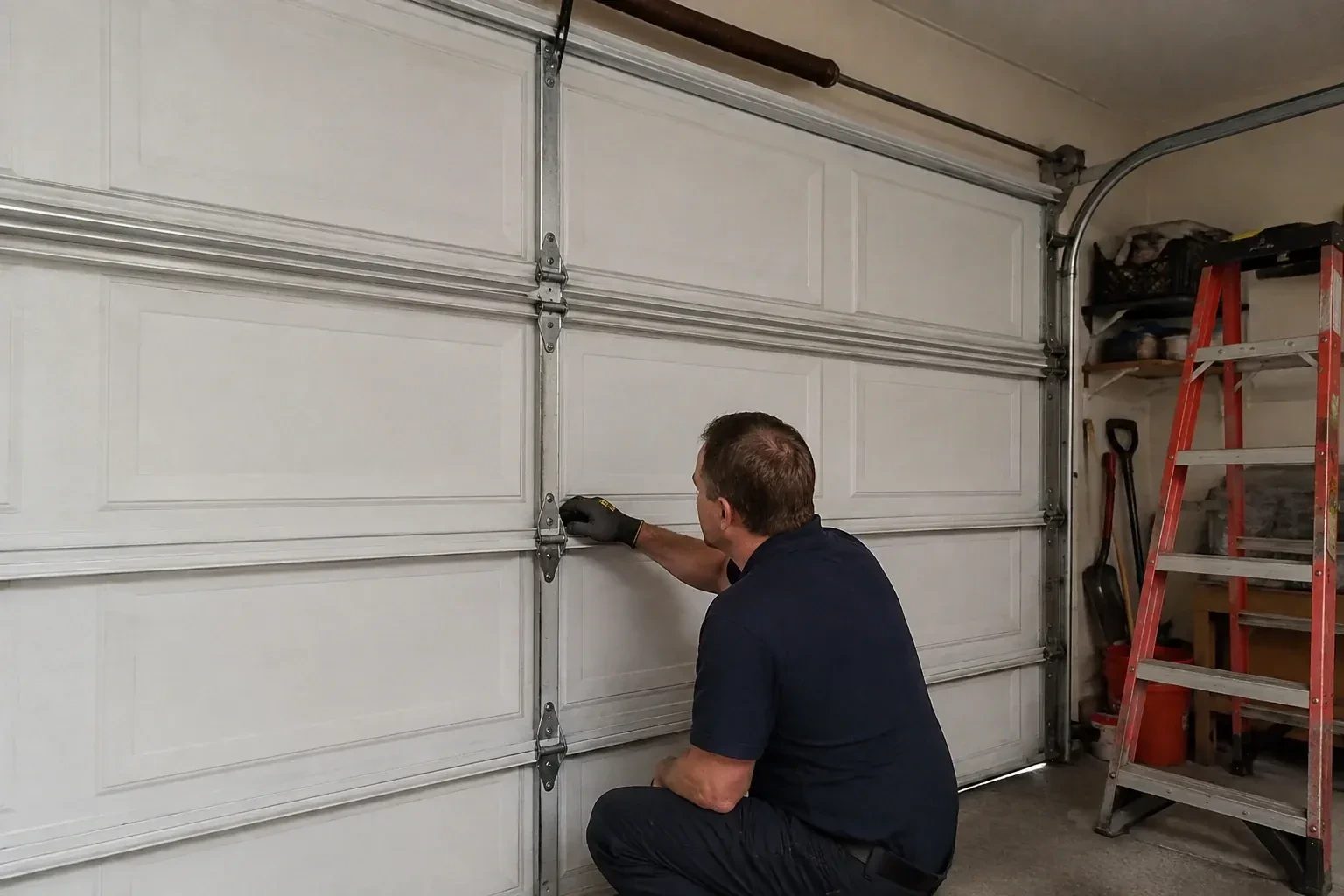
- Garage Door Hinge ReplacementPressing a hand against one of the middle hinges makes it rock on the panel.
- Garage Door Track Repair or ReplacementAfter a decade of slushy winters the bottom foot of the track is flaking rust.
- Garage Door Cable ReplacementThere was a sharp crack from the garage, and when you went to look the door had dropped on one side and jammed.