Springs · Westmount
Garage Door Balance Adjustment in Westmount
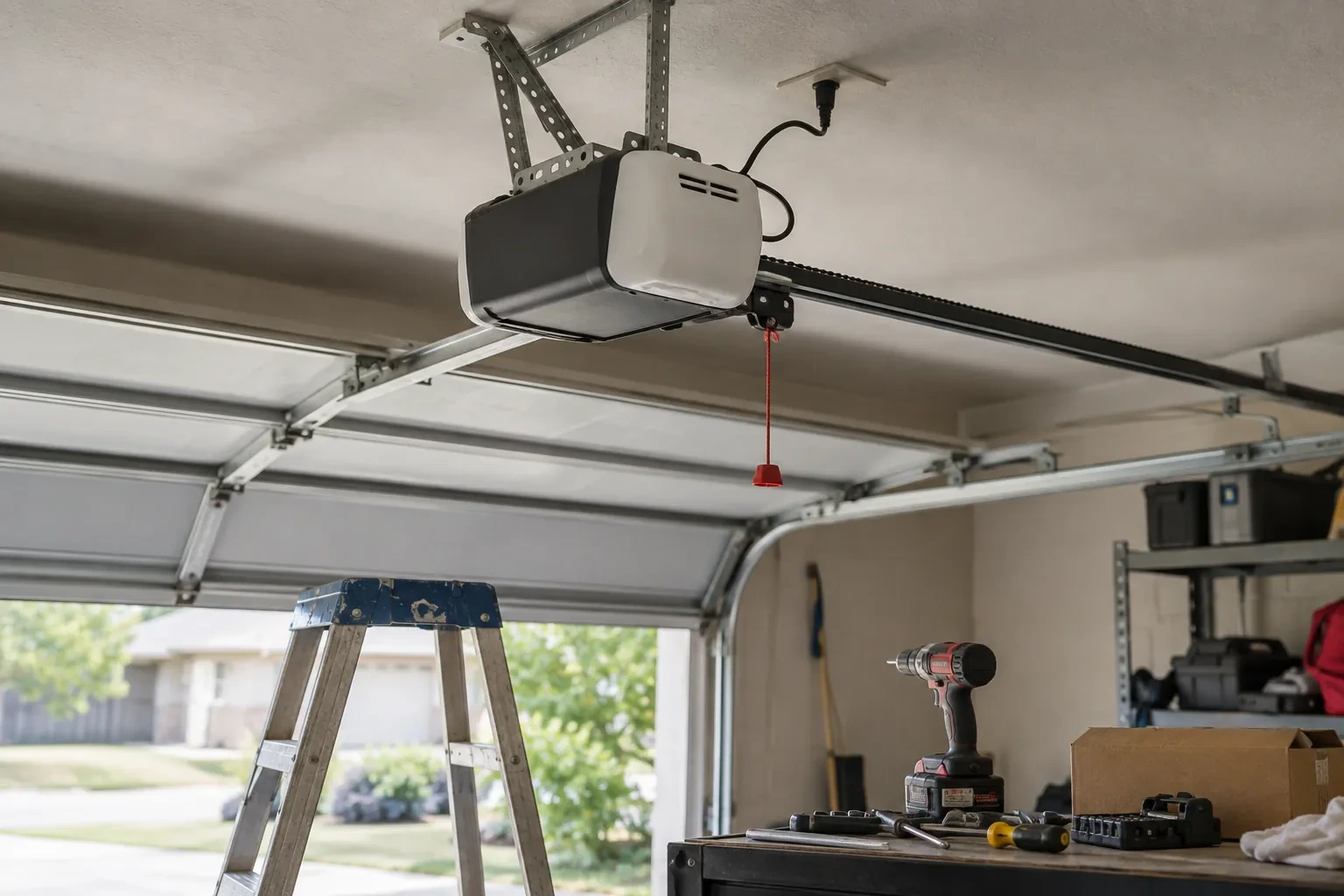
The opener has started to groan on the way up.
In plain words
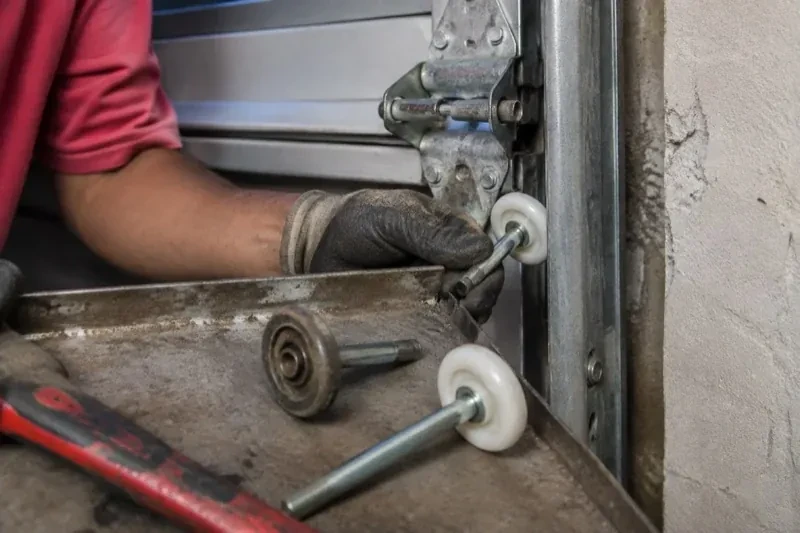
Balance changes for ordinary reasons. Springs are rated for a certain number of cycles and lose a little tension as they age. A new bottom seal, insulated panels, a window section or a decorative overlay adds weight the original springs were never sized for. Rollers stiffen, hinges wear, and in a cold snap the whole system feels heavier for a few weeks. Any of these tips the door from weightless to a chore. A balance adjustment starts by identifying which of them is at work, then resets the springs to suit the door as it is today, and corrects the friction so the adjustment holds.
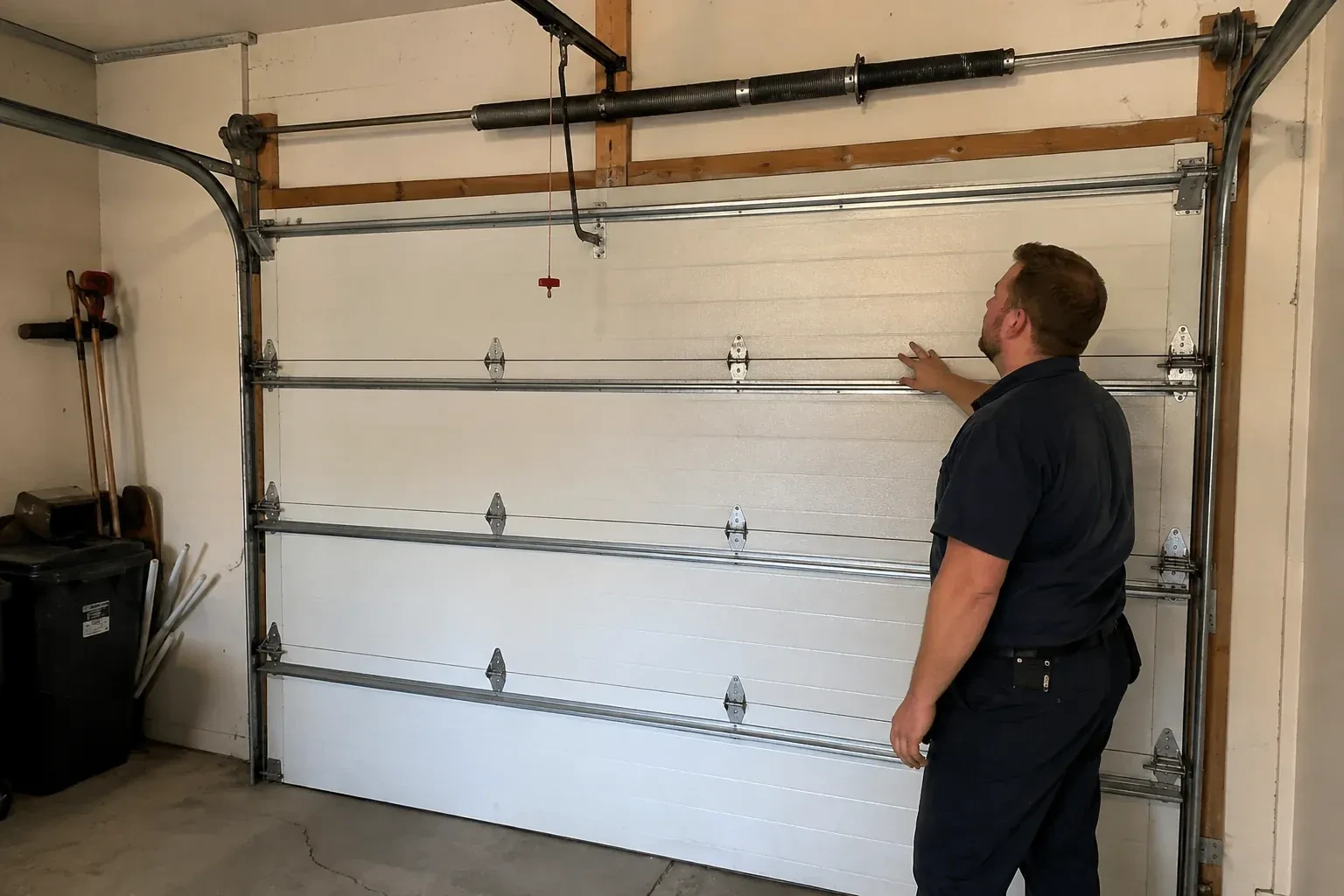
How the visit goesSomeone replaced the springs a while back and the door has bounced at the top ever since. It slams open against the stops, then creeps down a few inches, and the opener trolley rattles because the door is pushing where it should be resting.
Garage Door Balance Adjustment
How the visit goes
Inspecting the springs before any turns are added
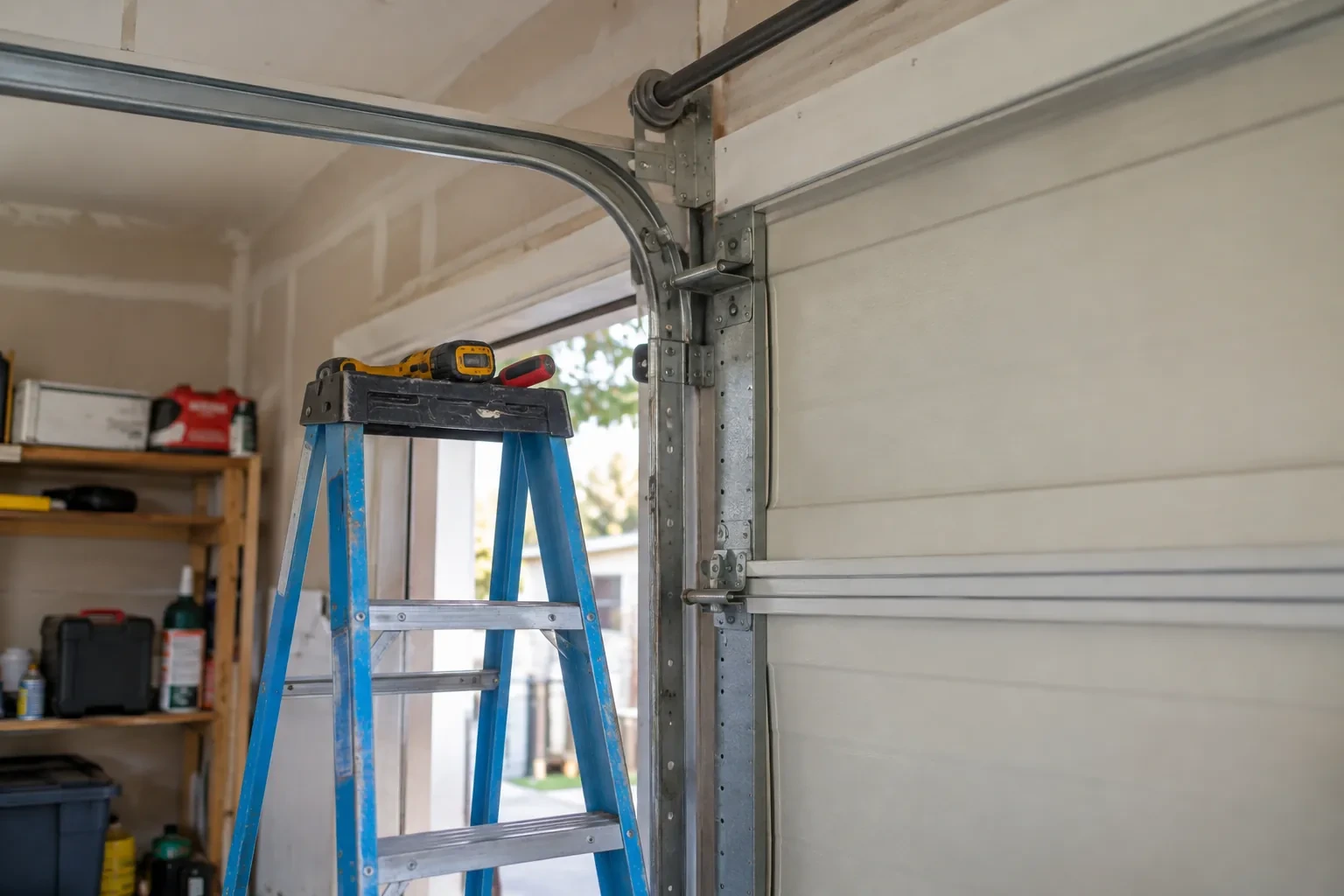
Adjustment only makes sense on a spring that is sound, so each one is examined closely. On a torsion system the technician looks for a gap in the coil, rust pitting, uneven coil spacing and a cone that has slipped on the shaft, and measures the wire size, inside diameter and length to confirm the spring suits the door's weight. On extension springs the check is for stretched or opened coils, a broken end loop and the presence of a containment cable. A spring that has simply lost a little tension can be wound up; one that is undersized or near the end of its cycle life is explained and offered as a replacement instead.
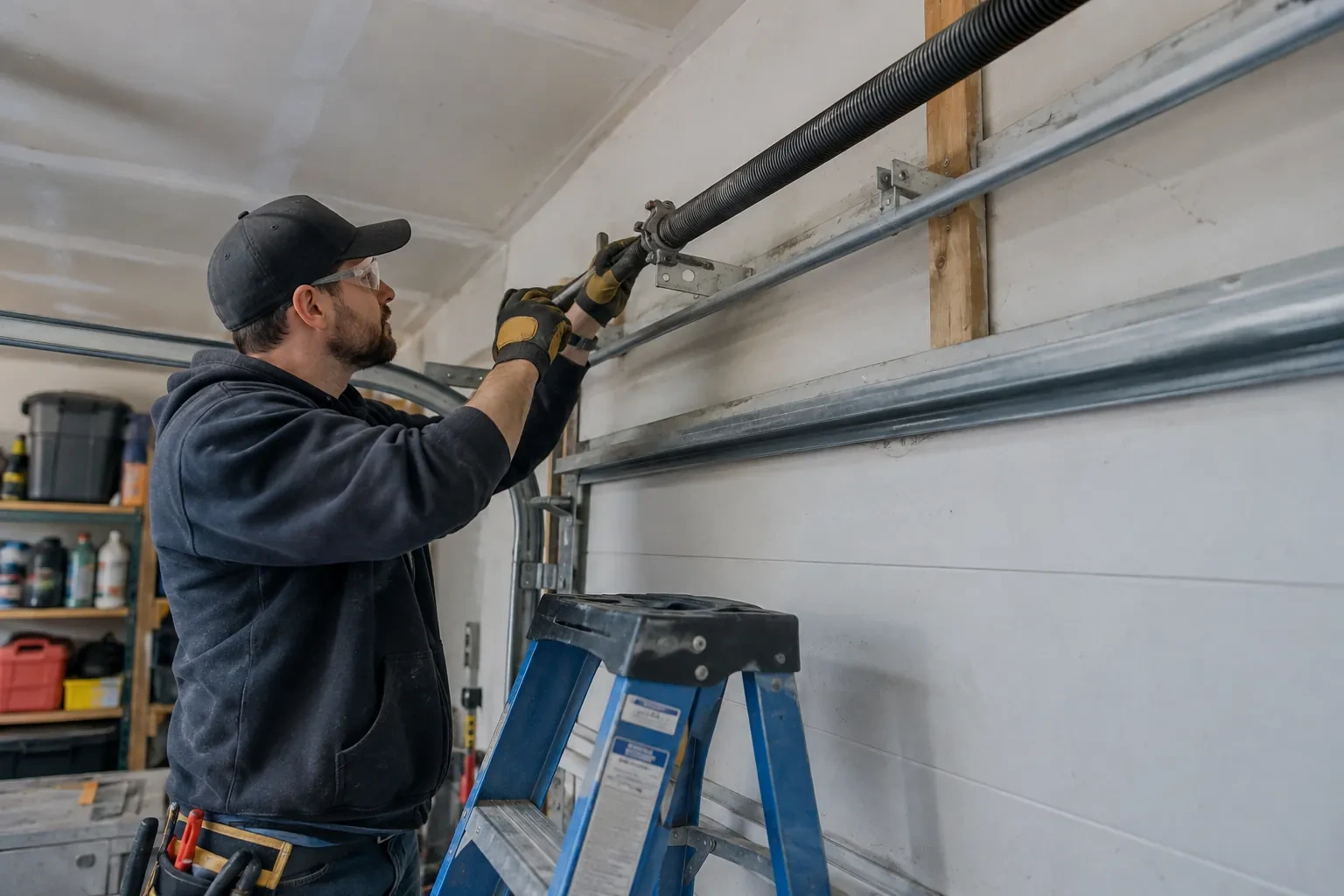
Adding or releasing quarter turns on a torsion spring
With one winding bar seated firmly in the winding cone and a second ready, the technician loosens the cone's set screws and either adds tension by levering the bar upward or releases it by letting the bar down, always a quarter turn at a time, always with a bar in the cone. After each quarter turn the set screws are tightened onto the shaft, the clamp is removed and the door is lifted by hand to test. A door that sank now holds a little higher; a door that climbed now settles. On a two-spring door the same change is made to both springs so they share the load equally.
Watching for the early signs of drift
You will now know what the door feels like when it is right, which makes small changes easy to spot. A door that begins to close with a heavier thud, an opener that pauses at the top or hums a little longer, a gap appearing under one corner, or a door that no longer quite stays fully open when released are all early signs. Cold weather can make the door feel a little heavier for a few weeks without anything being wrong. But a door that stalls, races or no longer passes its balance check is telling you to stop using it and book an inspection promptly rather than waiting out the season, since the cause is not always minor.
Garage Door Balance Adjustment
In the van
Door scale
Containment cables
Cable drums
Track clamps or locking pliers
Replacement hinges
Garage Door Balance Adjustment
What affects the quote
Corroded or seized fasteners
Set screws and cone screws that have rusted solid take time to free, and badly corroded hardware is replaced rather than reused, which shows in the parts list.
Weight added to the door
Insulation kits, windows or replacement sections may have taken the door beyond what its springs can carry. Weighing the door and specifying new springs to suit is quoted separately from a simple adjustment.
Single or double door
A double door commonly carries more spring than a single, but the exact count follows the manufacturer's engineered hardware package for that door's weight rather than width alone: one, two or more torsion springs, or one or two extension springs per side. More springs means more adjustment and testing.
What to have ready
- Does the door sit level when closed, or is one corner higher?
- Do you have the door or opener manual, or a label with the model?
- Is there a spring on a shaft above the door, or springs along the tracks?
Garage Door Balance Adjustment: questions
QuestionsWhat safety tests are done after the adjustment?
Two are standard. A piece of two-by-four is laid flat on the floor in the door's path and the door closed onto it; it must reverse and return to open. Then, as the door closes, an object is passed through the photo-eye beam near the floor, and again the door must reverse. Both depend on a balanced door, which is why they come after the adjustment rather than before.
I added insulation panels to my door. Does that affect balance?
Yes, and it is one of the most common reasons a door starts to sink. Springs are matched to the door's weight, and insulation kits, replacement sections, windows or a heavier seal add weight the original springs were not sized for. A technician can weigh the door and either add tension to suit it or, if the added weight is beyond what the springs can carry, specify new ones.
How long does a balance adjustment take?
A straightforward tension adjustment on a sound door is generally about an hour, including the inspection, the hand tests and the opener checks at the end. Resetting cables to level the door, replacing rollers to remove friction, or moving to a spring replacement adds time. The technician will tell you what the inspection found and how the visit is shaping up before the work continues.
Related services
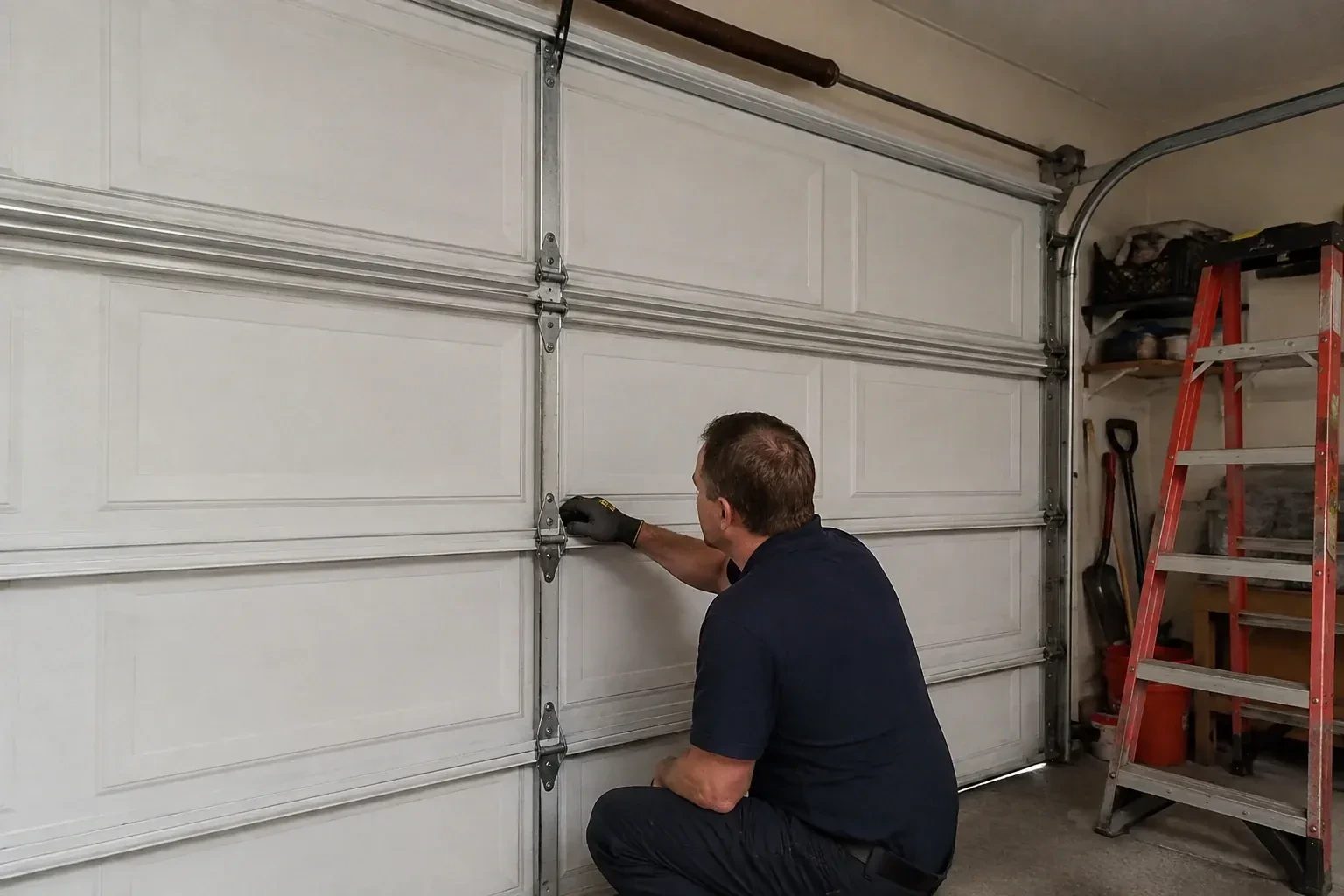
- Garage Door Hinge ReplacementPressing a hand against one of the middle hinges makes it rock on the panel.
- Garage Door Track Repair or ReplacementAfter a decade of slushy winters the bottom foot of the track is flaking rust.
- Garage Door Cable ReplacementThere was a sharp crack from the garage, and when you went to look the door had dropped on one side and jammed.