Springs · Kensal Park
Extension Spring Replacement in Kensal Park
The door climbs with the left corner ahead of the right, then twists as it turns into the ceiling track.
In plain words
What you have afterwards is a door that behaves like a much lighter object. Both corners leave the floor together, the door holds still when you stop it at waist height, and it settles onto the floor instead of slamming. The opener runs quietly, because it is guiding a balanced door rather than hauling a heavy one, and its safety reversing works as designed. Both springs are new, both carry a containment cable, the pulleys turn freely and both S-hooks sit in the same hole. You also get the spring rating and door weight written down, so the next set can be ordered without measuring everything again.
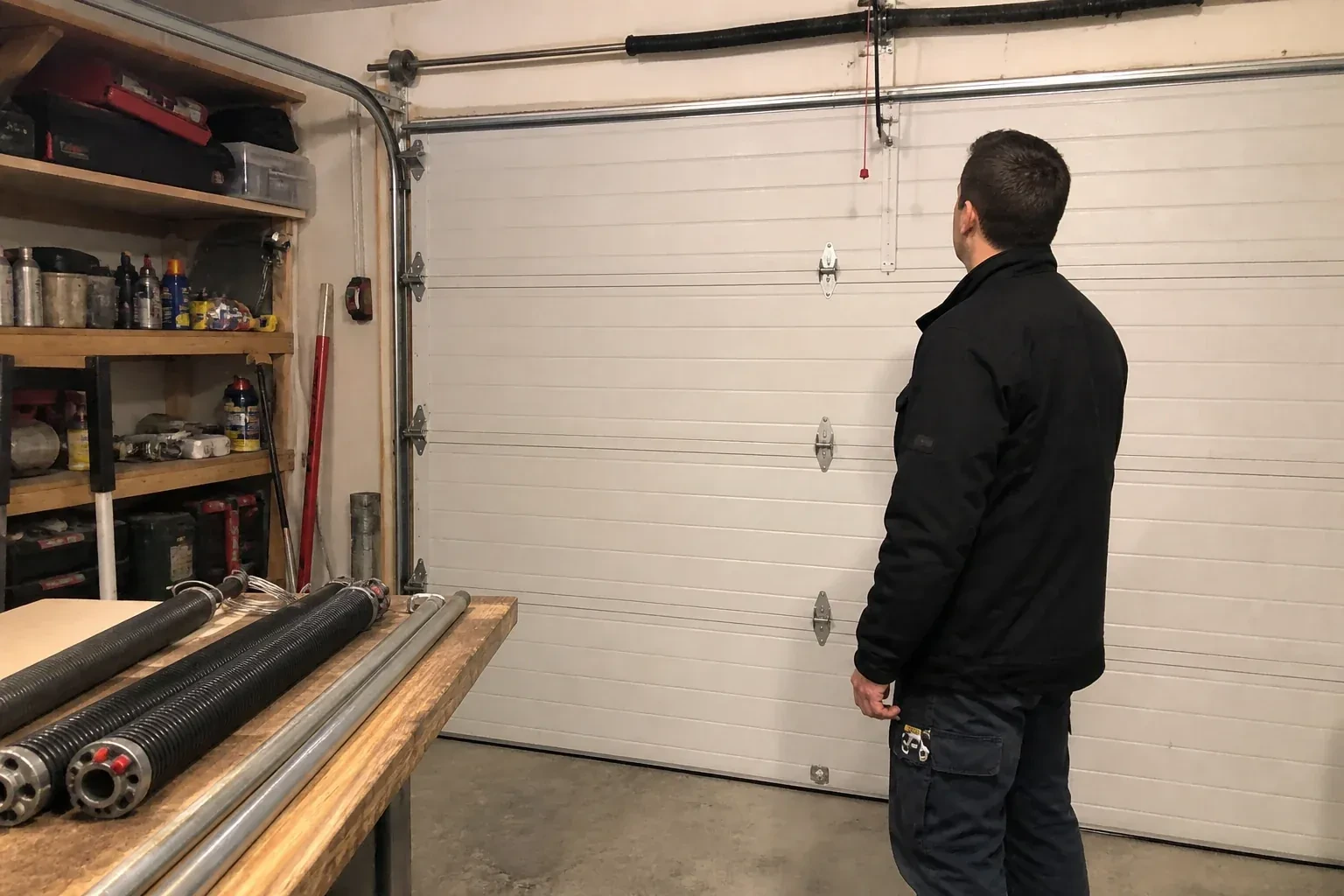
How the visit goesIt is the first hard frost of the year and the door on the old detached garage has stopped halfway, squealing at one pulley. The springs are the ones that came with the door decades ago, orange with rust where they hang near the back wall.
Extension Spring Replacement
How the visit goes
Containment cables, present or missing
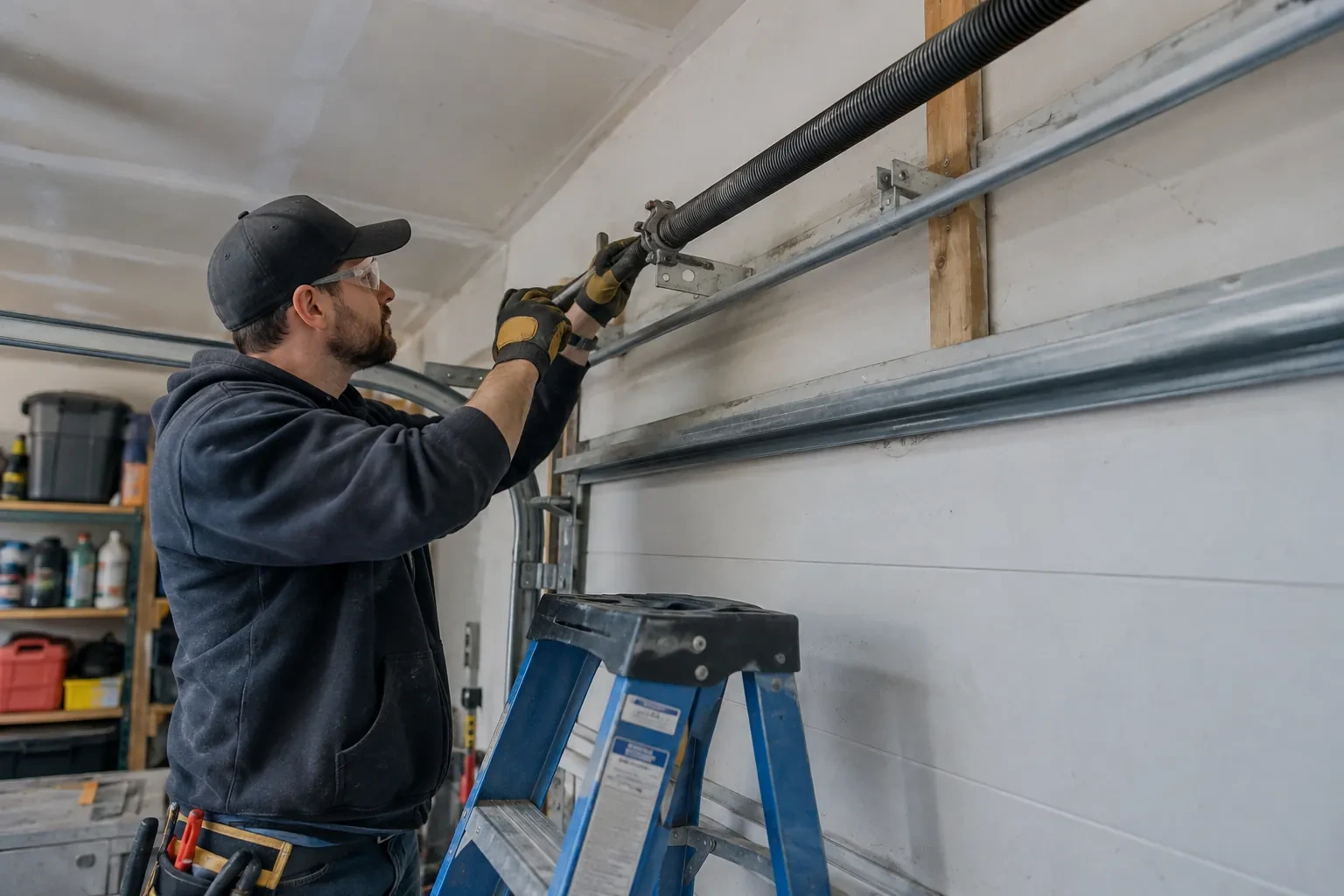
The question the industry's own inspection checklist asks of every extension-spring door is whether each spring has a cable running through its centre, anchored at both ends. The technician checks for it on both sides, then checks its condition: a cable that is frayed, kinked, anchored to a loose screw or simply tied off to the hanger is not doing its job. Doors installed decades ago often have none at all, and doors that had a spring changed by a previous owner sometimes have one side fitted and one forgotten. Fresh containment cables go on with the new springs, and their anchor points are set into solid framing so that a spring which breaks stays on its cable.
Setting both sides to the same hole
The initial tension is set with the door open and clamped, so the technician is adjusting slack springs rather than loaded ones. Each cable's S-hook is placed in a hole on the hanger, or its clip set to a mark, and the two sides are put at the same position. The cables are drawn to the same snugness so that neither corner of the door is being pulled ahead of the other. A level across the top section confirms the door is square in its tracks. Only when both sides read the same do the clamps come off and the door come down for its first balance check.
The numbers that stay with the door
Before leaving, the technician tells you what the door weighed, which spring rating and length went on, whether the pulleys and cables were renewed, and which hook position the cables were set to. Write it on a card by the opener or inside the door's manual. Extension springs are sold by rating and length, so the next set can be ordered from that card without weighing the door again, and a technician arriving later can see at a glance whether the door has been altered since. Add the date and roughly how many times a day the door is used; together those two facts give a fair idea of when the springs will be due again.
Extension Spring Replacement
In the van
Door-weighing scale
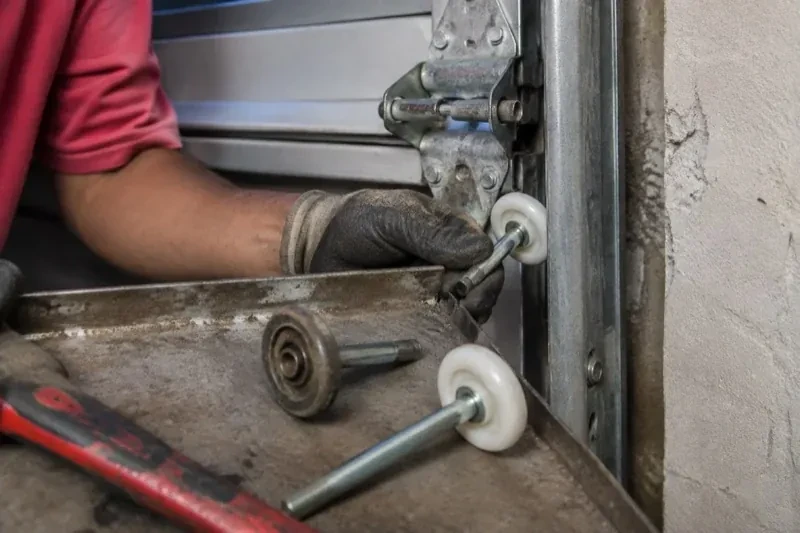
Pulleys (sheaves) and forks
Garage-door spray lubricant
Lift cables
Bottom brackets and clevis pins
Extension Spring Replacement
What affects the quote
Corroded fasteners
In an unheated garage the bolts through pulley forks and hanger brackets rust solid; freeing or cutting them and fitting new hardware takes time and shows in the parts list.
Hangers and anchor points
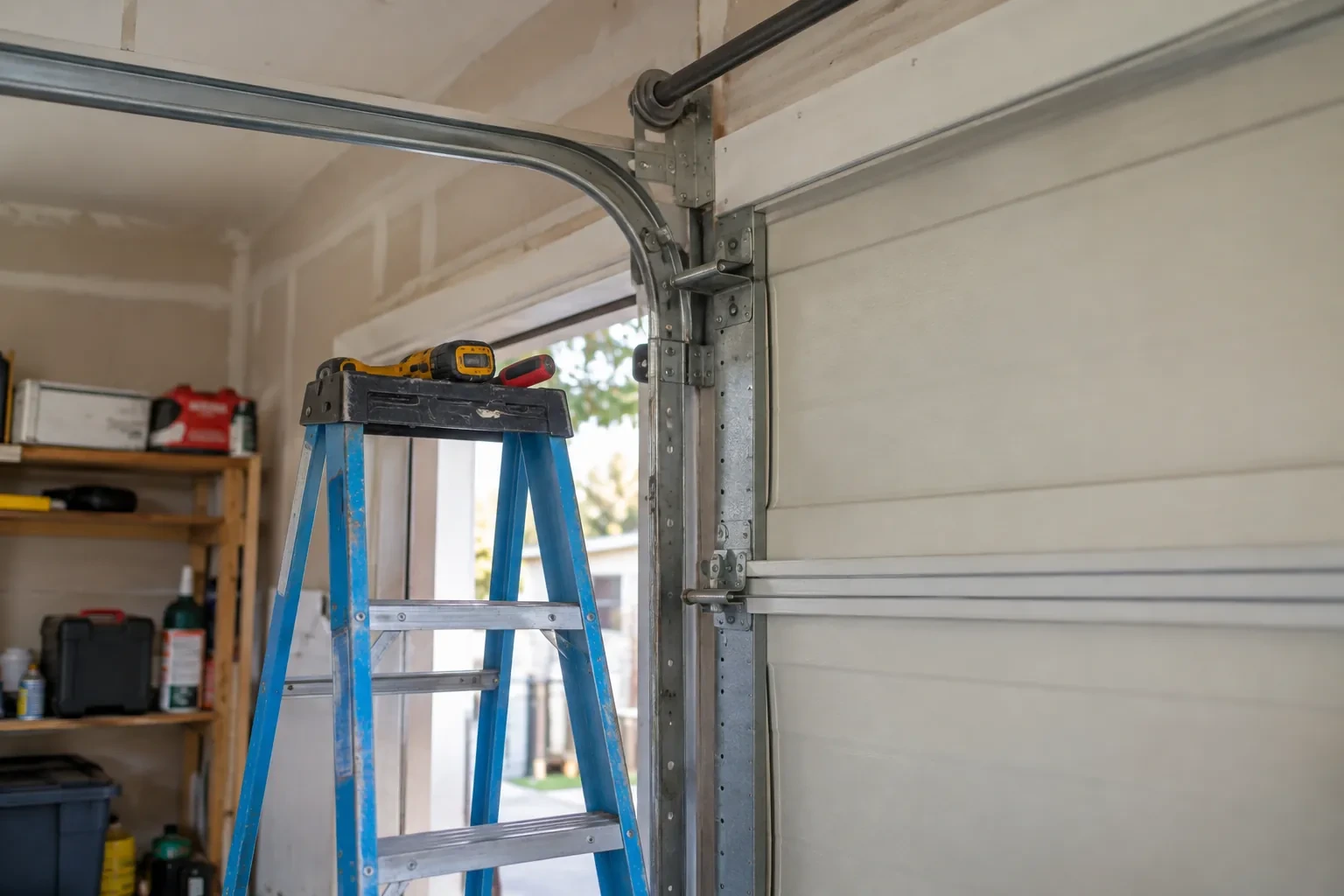
A rear hanger that has loosened, a front bracket bent by a jumped cable, or framing that needs a new anchor point adds fasteners, angle iron and a little time.
Containment cables to add
A door that never had containment cables gets them with the new springs, along with anchor hardware into the framing. It is a small parts line and a worthwhile one.
What to have ready
- Is a car parked inside that will need to come out first?
- Does the door drop the last bit, or drift up on its own?
- Is there a thin cable running through the middle of each spring?
Extension Spring Replacement: questions
QuestionsI added insulation and windows to the door. Does that affect the springs?
Yes, and it is one of the more common reasons a pair of springs is suddenly found wanting. Insulation panels, glazed sections, a wood overlay or a new steel skin all add weight the original springs were never chosen for, so the door grows heavy and the opener strains. When the springs are replaced, the door is weighed as it is now, and the new pair is rated for the door you actually have.
What are the early signs that the springs are wearing out?
The door starts to feel heavier when lifted by hand and the opener sounds as though it is working harder. Released from the opener, the door sinks from halfway instead of holding. With the door open, gaps show between coils that used to sit tight together, or one spring hangs longer than the other. Rust bloom on the coils and a squeal from a pulley round out the list. Any of these is a good time to call.
Can I use the door as soon as the work is done?
Yes. The last steps of the visit are the balance test by hand, several full cycles under power and the opener's reversal checks, so the door is ready for normal use when the technician leaves. New springs need no settling period. It is worth running it yourself once or twice while the technician is still there, so you know what a properly balanced door sounds and feels like from now on.
Related services
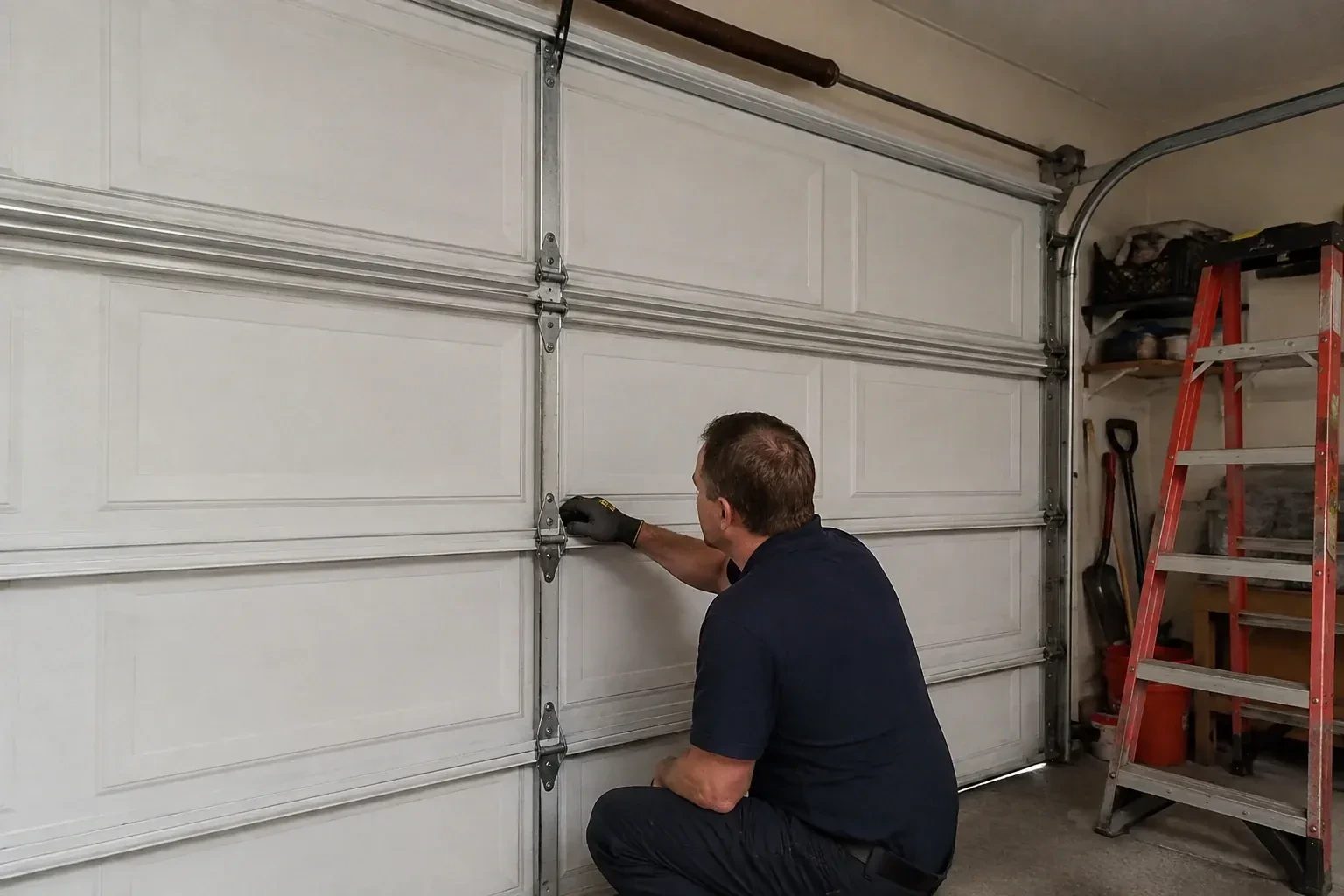
- Garage Door Hinge ReplacementPressing a hand against one of the middle hinges makes it rock on the panel.
- Garage Door Track Repair or ReplacementAfter a decade of slushy winters the bottom foot of the track is flaking rust.
- Garage Door Cable ReplacementThere was a sharp crack from the garage, and when you went to look the door had dropped on one side and jammed.